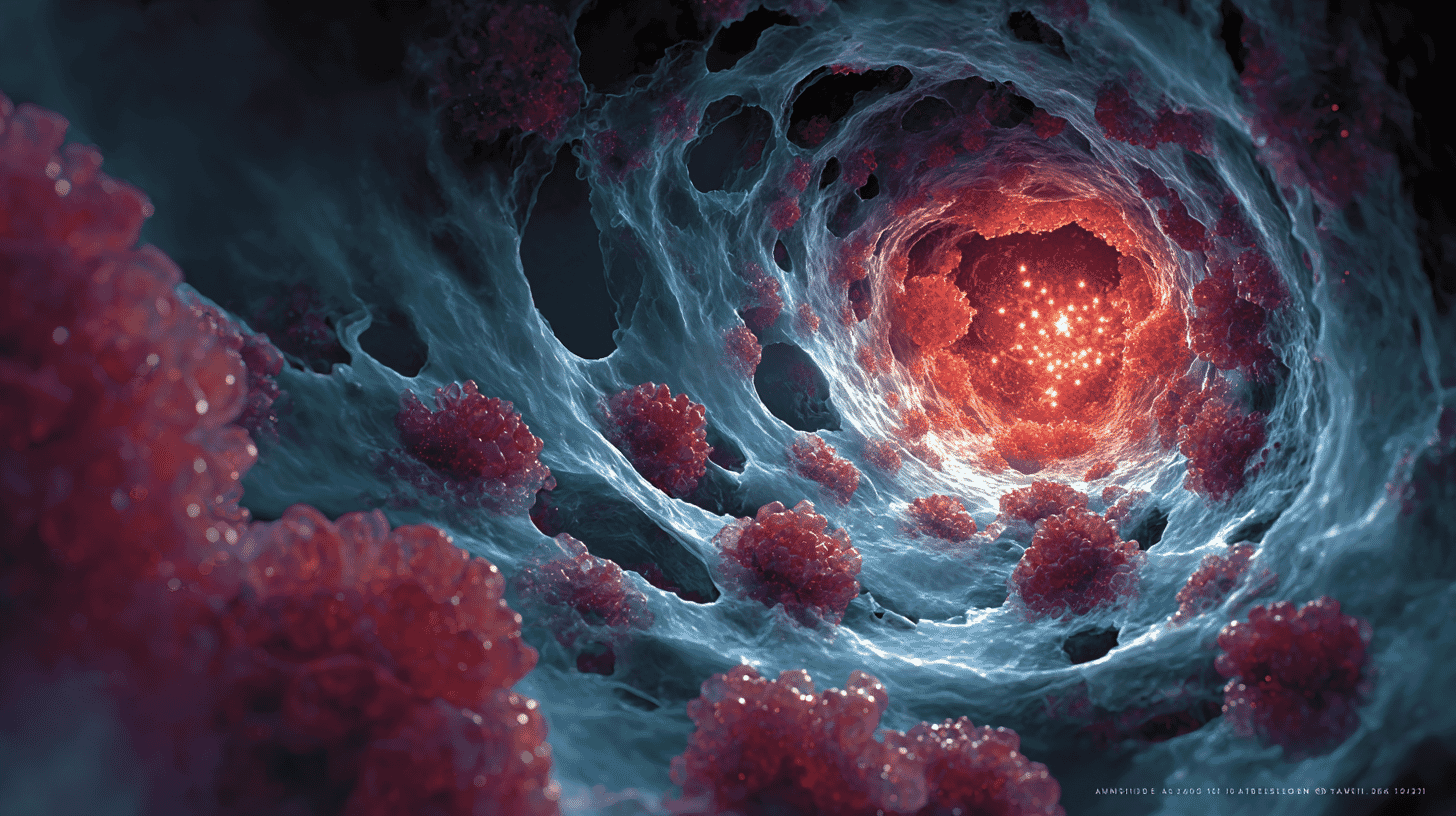
🦟 Malaria still kills more than 600,000 people a year, most of them children in Africa. The drugs that once turned the tide are starting to fail. Now a lab in Nagasaki, working with the drugmaker Shionogi, has found a compound that hits the parasite at a moment no current medicine touches: the split second it breaks out of a red blood cell to spread.
The medicine cabinet is quietly emptying
For a disease that's both preventable and curable, malaria remains stubbornly lethal. The World Health Organization's latest count puts it at an estimated 282 million cases and 610,000 deaths in 2024, spread across 80 countries. Africa carries about 95% of that burden, and children under five account for roughly three out of four deaths there. A child still dies from malaria almost every minute.
For two decades, the thing holding the line has been artemisinin, the drug at the heart of the combination therapies used almost everywhere malaria is common. That line is now cracking. WHO's 2025 report puts partial resistance to artemisinin as confirmed in four African countries (Eritrea, Rwanda, Uganda and Tanzania) and suspected in four more (Ethiopia, Namibia, Sudan and Zambia). It's the same pattern that once played out along the Thailand–Cambodia border, only now it's arrived in the region that can least afford it.
Update (July 2026): an Imperial College London team reported in The Lancet Infectious Diseases on 185,099 samples from 47 African countries, finding partial resistance firmly established across most of Uganda and Rwanda and along the Ethiopia–Eritrea–Sudan border rather than confined to pockets. In Rwanda's Northern Province, estimated prevalence rose from under 1% in 2012 to 62% in 2024.
The head of Medicines for Malaria Venture has framed the fix bluntly: beating resistance will take drugs that work a genuinely different way, not another variation on artemisinin. Something that kills the parasite by a new route, so a strain that shrugs off the old drugs gets no free pass. That is exactly the gap the Nagasaki work is aiming at.
Attacking the parasite as it tries to escape
To see what the compound does, it helps to picture how malaria actually works inside the body. When an infected Anopheles mosquito bites, it injects malaria parasites that first slip into the liver, then break out into the bloodstream. There, each parasite invades a red blood cell, multiplies inside it, and eventually ruptures the cell to release a new wave of parasites that go hunting for fresh cells. That bursting-out step, repeated over and over, is what makes people sick.
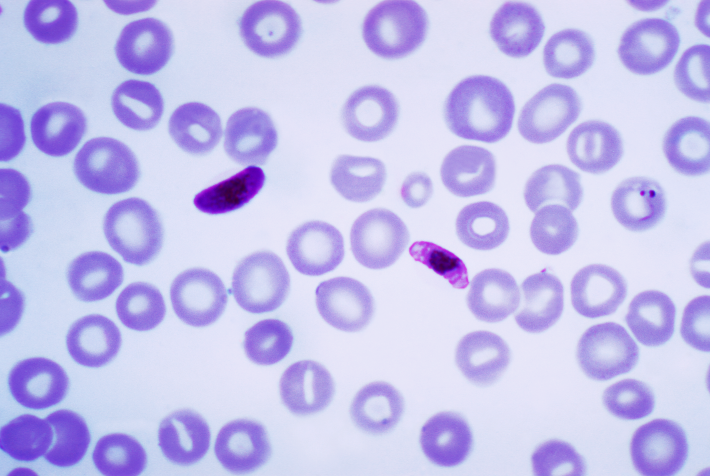
Source: CDC / Dr. Mae Melvin (public domain)
To break out, the parasite relies on a molecular tool called plasmepsin X, or PMX, an enzyme that acts like a pair of scissors, cutting other proteins into the working parts the parasite needs to escape and re-invade. Jam those scissors, and the parasite gets trapped mid-cycle. The compound the Nagasaki team found, nicknamed FPSA, does exactly that: it blocks PMX, and the parasite can't complete its escape.
There's a second reason PMX is an appealing target. "PMX is an enzyme humans don't have, so the safety margin for using it is high," said Daniel Ken Inaoka, the professor at Nagasaki University's Institute of Tropical Medicine who led the study. A drug that attacks something the parasite has and we don't is, in principle, less likely to harm the patient. And because PMX has nothing to do with how artemisinin works, a parasite that has learned to shrug off artemisinin gets no head start against a PMX blocker.
Finding one molecule in a haystack of hundreds of thousands
Pinning down FPSA was less a eureka moment than a grind. The researchers screened hundreds of thousands of chemical compounds to narrow the field to promising candidates. The harder part was proving how the winner worked: that it was really acting on PMX and not on something else by coincidence.
To nail that down, the team did something clever: they deliberately bred parasites resistant to FPSA, then ran whole-genome analysis to read every letter of the resistant parasites' DNA and see what had changed. Using gene-edited parasites, they confirmed the compound suppresses PMX's activity. As a final check, they compared the fingerprint of gene activity in parasites exposed to FPSA against parasites treated with WM382, an already-validated blocker of the closely related plasmepsins IX and X. The patterns matched, strong evidence that FPSA works by shutting down the parasite's escape machinery. The results were published in April 2026 in the International Journal for Parasitology: Drugs and Drug Resistance.
Why a country that doesn't have malaria is chasing it
Japan hasn't had homegrown malaria transmission for decades. So why is one of its universities, alongside a major Japanese drugmaker, spending years on it?
Part of the answer sits in Nagasaki itself. The Institute of Tropical Medicine, known as NEKKEN, dates back to 1942 and is Japan's central hub for tropical disease research, the kind of place built precisely to work on illnesses that mostly strike somewhere else. In 2019, Shionogi signed a broad partnership with Nagasaki University and set up a dedicated infectious-disease division inside the institute, embedding company researchers alongside academics. The collaboration has since drawn in partners like the non-profit Medicines for Malaria Venture and backing from Japan's GHIT Fund, a public-private vehicle created specifically to push Japanese science at global-health problems that the market alone tends to ignore.
There's also a colder logic. Shionogi's chief executive, Isao Teshirogi, has argued that a warming climate could push malaria into parts of the northern hemisphere, Japan and North America included, that have long assumed they were safely out of its reach.
A sober read on where this stands: FPSA is a starting point, not a finished drug. Inaoka himself frames the next task as improving the compound's potency before it can anchor a genuine new antimalarial, a process measured in years, not months. Plenty of promising compounds never reach a pharmacy shelf. What FPSA offers right now is a fresh angle of attack at a moment when the old ones are wearing thin.
Japan is betting that the tools it builds now, for a disease that belongs to someone else, will matter to the world and maybe one day to itself. Does your country put money into problems it doesn't have yet? And when the map of a disease starts to shift, who should be paying to stay ahead of it?









Global Discussion
0 comments