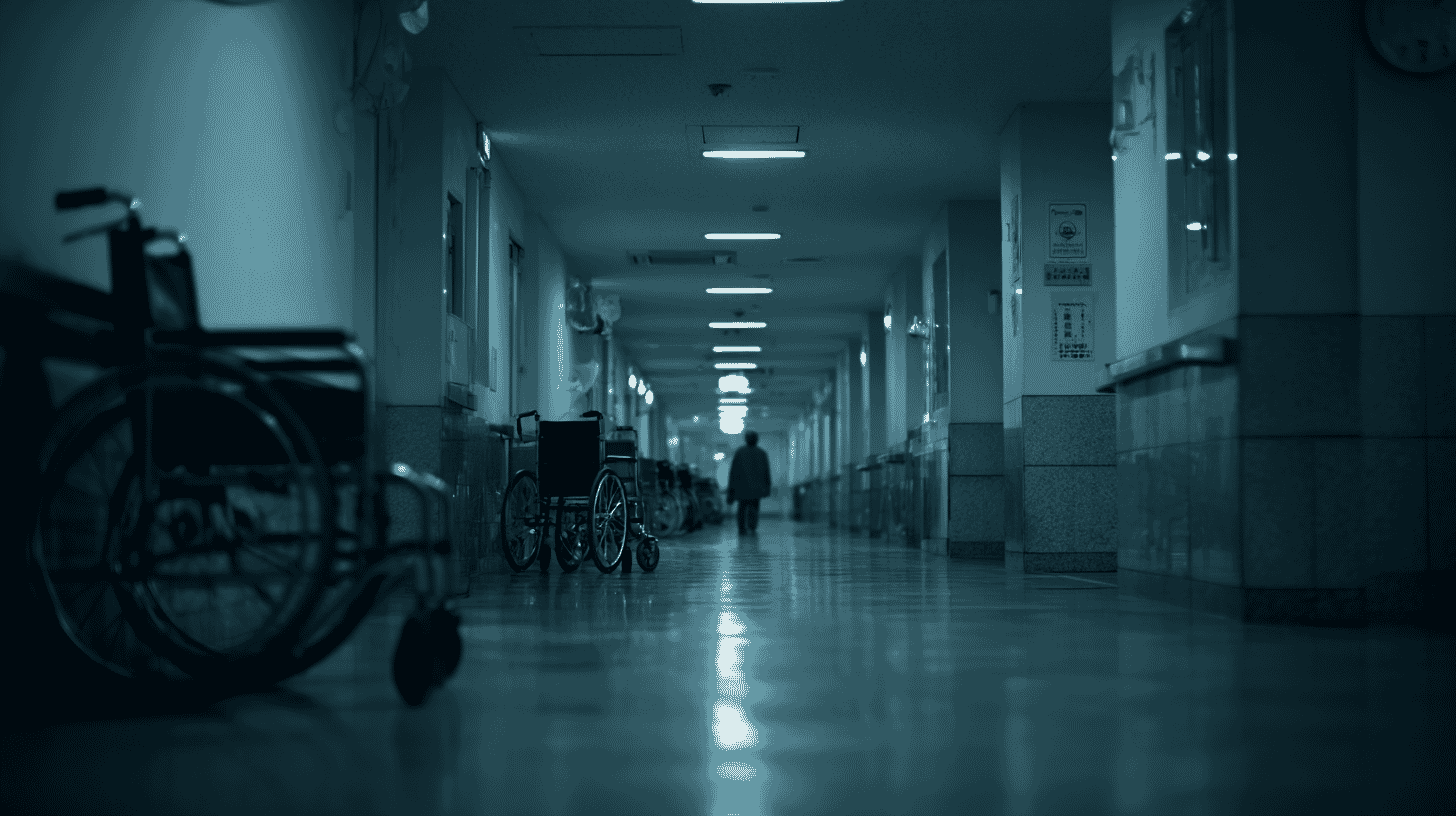
Japan's healthcare institutions are in financial crisis. Hospitals once regarded as financially secure are closing or filing for bankruptcy one after another, and the survival of regional healthcare is now in question across the country. This is not a matter of individual mismanagement; it reflects structural problems running through the entire system.
Bankruptcies and Closures at Record Highs
According to Teikoku Databank, bankruptcies among healthcare institutions (hospitals, clinics, and dental offices) hit a then-record 64 in 2024 and rose to 66 in 2025. Voluntary closures and dissolutions also set a record at 823 in 2025, up from 723 the year before, bringing the combined total to 889. The same firm's fiscal 2024 survey found 61.0 percent of private hospitals running an operating loss on their core medical activities.
Hospitals that have avoided bankruptcy are still shutting wards and cutting departments, which means real capacity is falling regardless of how many institutions remain open.
Rural areas have it worst. Where the population is shrinking, patient numbers fall and revenue with them, while healthcare workers drain toward the cities, squeezing these institutions on both finances and staffing. Urban hospitals are not immune either: sharper competition and rising labor costs have left many of them unstable.
Update: Teikoku Databank counted 39 healthcare bankruptcies in the first half of 2026, a record for a first half, broken down as 4 hospitals, 19 clinics, and 16 dental offices. The firm says the annual total could reach 80 for the first time. The 19 clinics beat the previous first-half record of 16 set in 2009; internal medicine accounted for 9 of them.
The breakdown complicates the picture this article sets out. Total liabilities came to 12.38 billion yen, down 32.6 percent year on year, and cases with liabilities under 300 million yen made up more than 60 percent. What is accumulating is small clinic closures rather than large hospital failures. Teikoku Databank also found that illness or death of the owner was a factor in 40 percent of the healthcare cases, against 3.8 percent across all industries, pointing to ageing operators and a lack of successors as a separate axis from fees and costs.
What Drove the Squeeze
Suppressed Fees, and the 2026 Turning Point
Most of a Japanese healthcare institution's revenue comes from fee schedules set by the national government. The fiscal 2024 revision raised the main component by just 0.88 percent, well short of what was needed to absorb rising prices and wages. Under a long-running cost-containment policy, fee growth had been held down for years, steadily tightening hospital finances.
Update: The fiscal 2026 revision set the main component at plus 3.09 percent, decided at ministerial budget talks in December 2025. A rise above 3 percent is the first since fiscal 1996, roughly three decades. The 3.09 percent figure is a two-year average, however: fiscal 2026 alone comes to plus 2.41 percent, with plus 3.77 percent in fiscal 2027. Drug and material prices were cut by 0.87 percent, putting the net revision at plus 2.22 percent. Drug prices took effect in April 2026 and the main component in June. Wage increases and a heavier allocation toward hospitals are the stated priorities, and how far earnings actually recover is now the open question.
Labor and Operating Costs
Inflation has pushed up the cost of medical equipment, pharmaceuticals, and utilities. Energy prices weigh especially heavily on facilities that run around the clock.
Labor costs are climbing too, as pressure builds to improve pay and conditions. Competition for nurses and doctors is intense enough that institutions cannot hold onto staff without raising salaries.
Staff Shortages and Work-Style Reform
Doctor and nurse shortages were flagged long before the pandemic, but COVID-19 made them worse. Resignations driven by punishing conditions have been compounded by the cap on physician working hours that took effect in April 2024 under work-style reforms.
The shortage is not only a labor problem. It determines whether departments can stay open and how many beds can be used, feeding directly back into declining revenue.
The End of COVID Support, and Demographics
Many hospitals received subsidies and support payments during the pandemic, and those special measures have since been wound down. Returning to ordinary operations without that support, while still depleted from the response effort, has proven difficult for a great many institutions.
An aging population raises demand for care, but the growth is concentrated in lower-margin chronic care. Falling birth rates point to fewer patients in the long run, and a shrinking working-age population means thinner insurance premium revenue.
What It Means for Regional Healthcare
Closures and department cuts are widening "healthcare deserts" where patients cannot get appropriate care. In some regions, maintaining emergency coverage has become difficult, which turns an administrative problem into a life-or-death one.
When hospitals in an area disappear, patients concentrate on whatever remains. The load on surviving institutions rises, finances deteriorate further, and staff burn out. That chain is what thins regional healthcare.
What Is Being Tried
The Ministry of Health, Labour and Welfare is pushing regional healthcare plans and the consolidation of institutions, though the gap between those plans and local conditions has drawn criticism. Debate continues over the structure of the fee schedule and over pay for healthcare workers.
Hospitals themselves are pursuing closer cooperation, mergers, and efficiency gains through digital transformation. Some are looking for new revenue in home care and preventive medicine.
The large fiscal 2026 increase could mark the end of a long period of restraint. But much of it will be consumed by wage increases, and the underlying question of how much a fiscally constrained state can put into healthcare remains unanswered.
Japan is now beginning serious discussions about the future of healthcare. What is the financial situation of hospitals in your country? What challenges exist regarding healthcare costs and access to hospitals? We'd love to hear about the healthcare situation in your country.
References
- https://www.tdb.co.jp/report/industry/20260713-iryoukikan2025/ - Teikoku Databank, healthcare bankruptcy survey (H1 2026)
- https://www.mhlw.go.jp/ - Ministry of Health, Labour and Welfare (Japan)
- https://www.tdb.co.jp/ - Teikoku Databank
- https://www.med.or.jp/ - Japan Medical Association
- https://www.hospital.or.jp/ - Japan Hospital Association









Global Discussion
16 comments