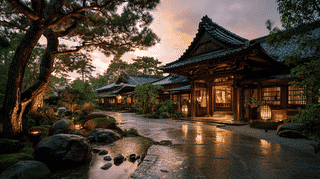
A 25-room luxury accommodation is coming to the former grounds of Todai-ji Temple, a UNESCO World Heritage site in Nara, Japan. Kintetsu Miyako Hotels will build low-rise pavilions across a 12,000 m² site where the ancient Western Gate once stood. Opening fall 2028, the retreat will feature a tea ceremony room, local cuisine restaurant, and immersive cultural experiences. Here's what this historic collaboration means for Nara's tourism future.
Konan Women's University launches a new Faculty of Sociology in April 2026 that takes "oshi-katsu" (supporting your favorite idol/character) seriously as academic research. With Japan's fan economy now worth $23 billion, discover how this university is bridging the gap between pop culture passion and rigorous social science.
Kansai University has launched the "Flagship Research Program," offering over $650,000 in funding over 10 years per project, an unprecedented move for a private Japanese university. Learn how this three-phase support model tackles Japan's chronic research funding gaps and aims to build world-class research hubs.
A research team at Osaka University's QIQB has proposed a scalable photonic routing architecture for ion trap quantum computers. By comparing two multi-wavelength laser delivery methods, they demonstrated a path to controlling hundreds to thousands of qubits on a single chip—potentially reshaping the future of trapped-ion quantum computing.
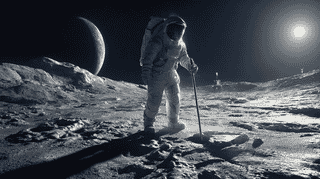
PASS (Portable Active Seismic Source), a compact seismic device developed by the University of Tokyo, has been selected for NASA's Artemis IV mission. Astronauts will use this staff-like tool to generate vibrations and map the Moon's subsurface structure. Learn how this Japanese innovation will support water resource exploration, mineral surveys, and foundation assessments for future lunar bases.
UTokyo Matsuo Lab spinoff Akari raises ¥5 billion ($33M) from Mitsubishi Electric, reaching ¥100 billion+ valuation. Learn how this 5-year-old AI startup achieved profitability from day one, partnered with 1,000+ companies, and is building the "next-generation industrial OS" for Japan's manufacturing sector.
Mitsubishi Electric and Kyoto University have made a world-first discovery: graphite material that heals itself. HOPG's deformation resistance recovered from 41% to 97% within just 7 days. This breakthrough could revolutionize MEMS sensors in smartphones, wearables, and autonomous vehicles. A look at Japan's cutting-edge materials science.
Hiroshima University and Phenitec Semiconductor achieved the world's first SiC integrated circuit prototype production in a commercial fab. This revolutionary semiconductor technology operates at 500°C and under high radiation, enabling applications in extreme environments like Venus surface exploration and Fukushima nuclear decommissioning—expanding humanity's frontier through Japanese innovation.
Yamaguchi University researchers discovered four new rare earth-containing minerals at Gunma Prefecture's Mokurasawa Mine. Amid Japan's push to reduce China dependence, this discovery holds both scientific significance and strategic implications for resource security.
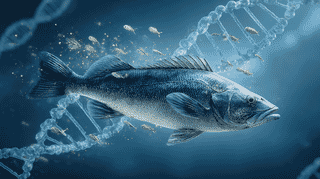
In a taxonomic twist, the Japanese sea bass (Suzuki) has been reclassified out of the Perciformes, the order named after it in Japanese. Thanks to advances in molecular phylogenetics, this massive fish order containing over 10,000 species is being dismantled. Discover how DNA analysis is rewriting what we know about fish evolution.
NIMS and University of Tokyo researchers have developed a revolutionary wafer-scale deposition technology for next-generation semiconductor material MoS2 (molybdenum disulfide). By discovering two key growth mechanisms, self-alignment and self-limiting, they achieved uniform, high-quality monolayer films across entire 2-inch wafers. This breakthrough opens the path to post-silicon semiconductors for sub-1nm node transistors.
Researchers at the University of Tsukuba have developed an AI system that automatically detects whip sounds in horse racing. Using 192kHz high-fidelity audio and deep learning, the technology achieves 70% accuracy with potential for real-time detection, advancing race fairness and animal welfare.
A Juntendo University and Hiroshima University team showed in mice that soluble ST2 (sST2), present at high levels in the body, naturally suppresses food allergy, and that fibroblasts in the skin and small intestine are its main source. Application to humans is still ahead, but the finding offers a lead for new prevention and treatment.
Kyoto University researchers, working with macaque monkeys, identified a "motivation brake" in the brain: the VS-VP pathway linking the ventral striatum and ventral pallidum suppresses starting a task under stress. Human studies are still to come, but the finding may help explain loss of motivation in depression and burnout.
A Shinshu University and Asahimatsu Foods study found that resistant protein in koya-dofu (freeze-dried tofu) raised GLP-1 production via gut bacteria and curbed weight gain and fatty liver in mice. Effects in humans have not yet been tested. Here is the mechanism and what remains to be shown.
ATR, Kyoto University, and AIST have shown a humanoid robot slaloming on a skateboard. How its Cyborg AI works, why the task maps onto disaster response and construction sites, and where the project sits against US and Chinese rivals.
Yamagata University is building Benibana Sat, a 1U CubeSat targeting launch by fiscal 2028. Named for the prefectural flower, the project is aimed less at the satellite than at keeping the firms and people who can build one inside the prefecture.
Nagasaki University researchers solved a 160-year taxonomic mystery dating back to Siebold's era, discovering that Japan's common red stingray actually comprises multiple species. The team formally described the new species Hemitrygon ariakensis, found primarily in the Ariake Sea, resolving confusion that began when specimens were first collected in the Edo period.
The Kakeya Conjecture, proposed by Japanese mathematician Sōichi Kakeya in 1917, has finally been proven in 3D space after 108 years. The proof, by Hong Wang (NYU) and Joshua Zahl (UBC), reshapes harmonic analysis and won Wang a 2026 Fields Medal.
In 2025, French and British mathematicians proved a 40-year-old conjecture about the "spectral gap" of hyperbolic surfaces. Building on the late Maryam Mirzakhani's research, this discovery has potential applications in quantum chaos and efficient communication network design. We explain this complex mathematical world in accessible terms.