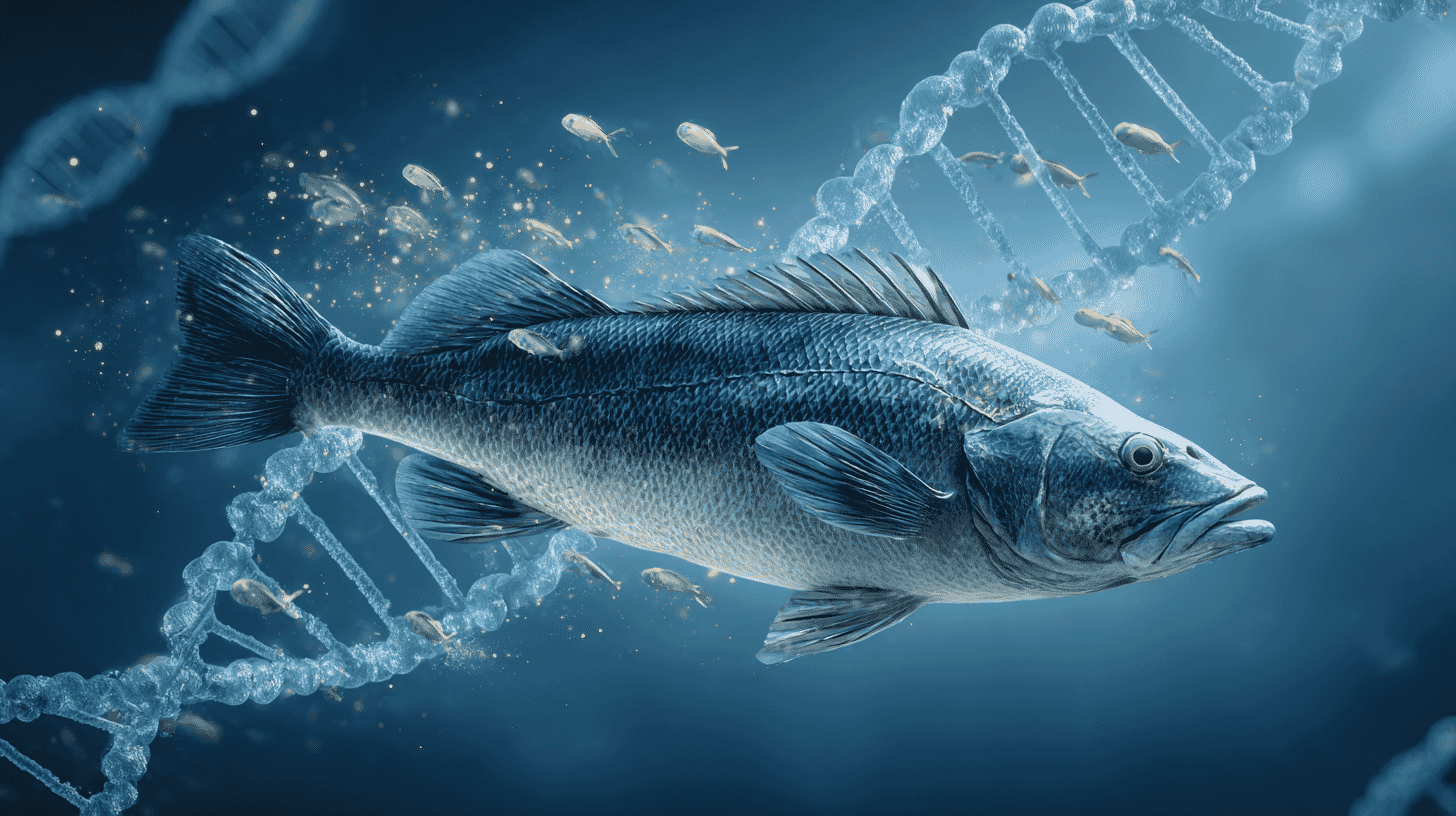
Imagine an order of animals named after a species... that doesn't belong to it. In one of the most ironic developments in fish taxonomy, the Japanese sea bass (Suzuki) has been reclassified out of the Perciformes, an order that was named "Suzuki-moku" (スズキ目, literally "Sea Bass Order") in Japanese specifically because it included this fish. Thanks to major advances in molecular phylogenetics, scientists are now rewriting the entire classification of fish based on DNA evidence rather than appearance.
The Rise and Fall of the World's Largest Fish Order
The Perciformes was once known as the order with the most species of any in the vertebrates. With some 10,000 species across roughly 160 families, it accounted for about 40 percent of all bony fishes.
Most fish with what we think of as a typical fish shape, such as sea bream, horse mackerel, mackerel, tuna and groupers, were placed in it. So were gobies, wrasses, cutlassfish and Japanese whiting, which look quite different at first glance.
So many different fish fitted into one group because the basis for classification was shared physical traits: a laterally flattened body, pelvic fins in a particular position, the structure of the dorsal and tail fins.
The DNA Revolution
Everything changed with the advent of molecular phylogenetics, a technique that compares DNA sequences to determine evolutionary relationships between species.
Traditional taxonomy relied on morphological features, body shape, fin placement, scale patterns, and skeletal structure. But this approach had a fatal flaw: convergent evolution. Unrelated species living in similar environments often evolve similar physical features, making them appear related when they're not.
DNA analysis cuts through this illusion. By comparing genetic sequences, scientists can trace the actual evolutionary history of organisms, revealing which species share common ancestors and which merely look alike due to environmental pressures.
The Great Perciformes Breakup
There was always something suspicious about Perciformes. It was so large and so diverse that taxonomists often called it a taxonomic wastebasket, a catch-all for any perch-like fish that couldn't be placed anywhere else.
When molecular phylogenetic analysis was applied to Perciformes, the results were staggering. The order was revealed to be polyphyletic, meaning its members didn't share a single common ancestor exclusive to the group. In other words, Perciformes was an artificial grouping of unrelated fish that just happened to look similar.
The great dismantling began. Former Perciformes members have been redistributed into numerous new orders:
- Centrarchiformes (sunfishes, including species like the opaleye)
- Perciformes (now much smaller, containing true perches)
- Labriformes (wrasses)
- Gobiiformes (gobies)
- Carangiformes (jacks and mackerels)
- Scombriformes (tunas)
- Acropomatiformes (lanternbellies... and sea bass!)
The Ironic Reclassification of Sea Bass
Perhaps the most surprising finding was that the Japanese sea bass itself doesn't belong to Perciformes.
DNA analysis revealed that Lateolabrax japonicus is more closely related to small, deep-sea fish called lanternbellies (family Acropomatidae) than to the other fish in its former order. Sea bass has been reclassified into Acropomatiformes, an order defined entirely by molecular evidence rather than visible characteristics.
Lanternbellies top out at around 20 centimeters and live at depths of roughly 100 to 500 meters, carrying light organs on their bellies that glow thanks to symbiotic bacteria. They look nothing like a sea bass approaching a meter in length. Yet genetically, they are relatives.
This is the power, and sometimes the counterintuitive nature, of molecular phylogenetics. Evolution doesn't always leave visible traces, and appearances can be deeply deceiving.
The Name Problem
This reclassification has created a problem.
The Japanese name "Suzuki-moku" (スズキ目, "Sea Bass Order") came from the fact that it contained the sea bass family, Lateolabracidae. Now that the family has moved to the Acropomatiformes, is it still right to keep using that name?
The scientific name Perciformes comes from the type genus Perca, the freshwater perches that include the European perch, and means "perch-shaped fishes"; it was never derived from the Japanese sea bass. That has led to calls to rename the Japanese order "Peruka-moku" (ペルカ目) or "Perch Order" (パーチ目), and "Peruka-moku" has indeed been proposed.
Taxonomic renaming is done cautiously, though, so the name "Suzuki-moku" is likely to stay in use for some time.
What This Means for Science
The restructuring of the Perciformes is just one example of what molecular phylogenetics has brought to biology. Estimating when and how species branched apart, and redrawing the tree of life without being misled by appearance, keeps rewriting the tables of contents of textbooks.
One area where uses are spreading is environmental DNA (eDNA) surveys. Scoop up some water, analyse the traces of DNA drifting in it, and you can build a comprehensive picture of the fish species living there. It sometimes turns up species that never showed up in conventional net surveys.
Does your country have a reversal like Japan's sea bass, where the species a group was named after turned out not to belong to it?
References
- https://article.yahoo.co.jp/detail/2866a30ea8af7eaeead81b12a4b596eefa9d8714
- https://en.wikipedia.org/wiki/Perciformes
- https://en.wikipedia.org/wiki/Acropomatiformes
- https://www.scielo.br/j/ni/a/XX3yHdffXcKfpV3bWJD8HMy
- https://link.springer.com/article/10.1007/s11160-025-09935-w
- https://ja.wikipedia.org/wiki/分子系統学








Global Discussion
16 comments