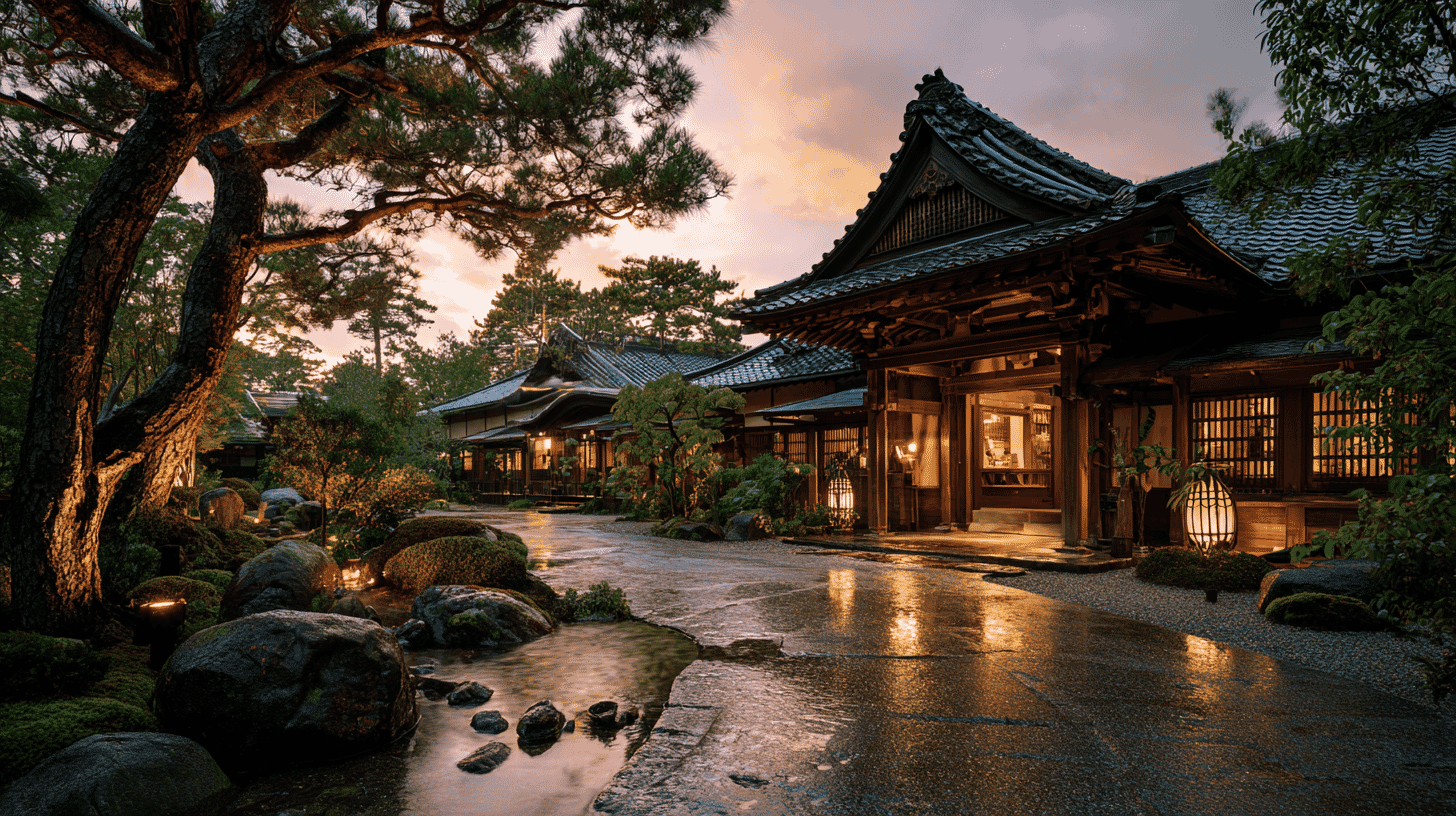
Imagine waking up on the grounds where monks once walked to one of the world's largest wooden buildings, the Great Buddha Hall of Todai-ji Temple. That dream is becoming reality. Nara's 1,300-year-old Todai-ji Temple has partnered with Kintetsu Miyako Hotels to build a roughly 25-room luxury retreat on its former grounds. Opening in fall 2028, it is one of the more ambitious fusions of ancient sacred space and modern hospitality Japan has seen.
A Hotel Where History Lives Beneath Your Feet
On February 4, 2026, Todai-ji Temple and Kintetsu Miyako Hotels jointly announced a plan to construct a new luxury accommodation on a section of the officially designated historic site known as the "Former Todai-ji Grounds" (Todai-ji Kyū Keidai). The site is located at Suimon-chō in Nara City, adjacent to the famous Nara Park where wild deer freely roam.
What makes this project extraordinary is its location. The building site sits where the Saidaimon (Western Great Gate) of Todai-ji once stood, a massive ceremonial gate that formed part of the temple's original 8th-century layout during the Nara Period. While the gate itself was lost to history centuries ago, the land retains its designation as a protected historic site, meaning every aspect of construction must be carefully planned to preserve what lies beneath and around it.
The facility will occupy approximately 12,000 square meters (about 129,000 sq ft) of land owned by Todai-ji. Kintetsu Miyako Hotels will handle both construction and operation. The total floor space will be around 3,500 square meters (roughly 37,700 sq ft), with construction scheduled to begin in January 2027 and the opening targeted for fall 2028.
Design Philosophy: Low, Scattered, and Respectful
Rather than building a single large hotel structure, the architects have chosen to scatter multiple low-rise buildings across the site. This approach, known in Japanese architectural tradition as bunsan haichi (distributed layout), serves multiple purposes.
First, it respects the cultural landscape. Tall buildings would visually clash with the surrounding temple architecture and the natural beauty of Nara Park. By keeping structures low and distributed, the hotel becomes part of the landscape rather than dominating it.
Second, the design takes advantage of the site's natural terrain and elevation changes. A Japanese-style garden will serve as the central feature, with guest buildings arranged around it to frame the views. This creates an experience where guests feel immersed in nature and history simultaneously, a concept the Japanese call shakkei (borrowed scenery), where the surrounding landscape becomes part of the designed space.
The project will include approximately 25 guest rooms, a restaurant featuring local Nara ingredients, and a tea ceremony room (chashitsu). The tea room is particularly significant, the practice of sadō (tea ceremony) has deep roots in Nara's cultural history, and offering this experience within the temple grounds adds an authentic layer that no ordinary hotel can replicate.
Kintetsu Miyako Hotels: 130 Years of Heritage
The hotel operator, Kintetsu Miyako Hotels, is no newcomer to blending history with hospitality. The company traces its roots back to 1890, when it opened a garden resort called Yoshimizu-en, today known as the Westin Miyako Kyoto. With over 130 years of history, the Miyako Hotels & Resorts brand operates 24 properties across Japan and internationally, with a brand philosophy centered on warmth, refined attention to detail, and cultivated elegance.
This Todai-ji property will be the company's third accommodation in Nara City, joining the traditional ryokan-style Nara Manyo Wakakusa no Yado Mikasa on the slopes of Mount Wakakusa, and the exclusive kaiseki dining inn Nara Kasuga Okuyama Tsukihi-tei nestled in the forest behind Kasuga Grand Shrine. Each of these properties offers a distinct experience rooted in Nara's history, and the new Todai-ji retreat will add yet another dimension.
Nara's Luxury Hotel Renaissance
This announcement comes at a pivotal moment for Nara's hospitality landscape. The ancient capital has long been overshadowed by neighboring Kyoto in the luxury accommodation segment, with many tourists visiting Nara as a day trip from Osaka or Kyoto rather than staying overnight.
That narrative is rapidly changing. In June 2026, Hoshino Resorts opened Hoshinoya Nara Prison, a conversion of the Former Nara Prison, a red-brick correctional facility built in 1908 (Meiji 41) and designated an Important Cultural Property. Its bold design combines nine to eleven of the roughly 5 m² solitary cells into each of its 48 guest rooms, with an on-site museum open to day visitors.
Additionally, the historic Nara Hotel, designed by the legendary architect Tatsuno Kingo (who also designed Tokyo Station) and opened in 1909, is undergoing a major renovation of its annex wing, rebranding it as the "West Wing" with enhanced facilities planned for fall 2026.
Value Management Corporation has also entered the Nara scene with NIPPONIA HOTEL Nara Naramachi, converting a former sake brewery in the historic Naramachi district into a boutique accommodation.
The Todai-ji project adds a new category entirely, a purpose-built luxury property on active sacred temple grounds operated in direct partnership with the religious institution itself. This temple-hotel collaboration model is rare even in Japan, where the boundary between secular tourism and religious sites has traditionally been carefully maintained.
What Guests Can Expect
While specific pricing has not been announced, the combination of factors suggests this will be positioned at the ultra-premium end of Nara's accommodation market. Consider the elements:
- Location: Within the UNESCO World Heritage buffer zone, steps from Todai-ji's Great Buddha Hall and surrounded by Nara Park's famous free-roaming deer
- Exclusivity: Only 25 rooms across a sprawling 12,000 m² site, roughly 480 m² of grounds per room
- Cultural access: Tea ceremony rooms, local gastronomy using Nara ingredients, and potential for unique cultural experiences arranged through Kintetsu Group's wider network of facilities in the Kansai region
- Proximity: A 10-minute walk from Kintetsu Nara Station, making it highly accessible despite its secluded atmosphere
The emphasis on local food culture (jimoto shokuzai) is worth noting. Nara Prefecture has a rich but often underappreciated culinary tradition, including kakinoha-zushi (persimmon leaf-wrapped sushi), kuzu (arrowroot) sweets, artisanal sōmen noodles, and craft sake brewed with pure water from the Kasuga primeval forest. A dedicated restaurant on temple grounds could become a destination in its own right.
The Bigger Picture: Sacred Spaces and Tourism
Japan is increasingly finding creative ways to leverage its historic and sacred sites for high-value tourism while maintaining cultural integrity. This trend includes temple stay programs (shukubō), cultural property hotels, and now direct partnerships between religious institutions and professional hotel operators.
The Todai-ji collaboration is notable because it addresses a genuine challenge: how to encourage overnight stays in Nara while respecting the city's irreplaceable cultural assets. By choosing a low-density, low-rise, garden-centered design on land that the temple continues to own, the project creates economic value without transferring cultural control.
As Japan prepares for continued growth in international tourism, the country welcomed over 42 million visitors in 2025, shattering previous records, projects like the Todai-ji retreat represent a shift toward quality over quantity. Rather than simply adding hotel rooms, these developments aim to create irreplaceable experiences that justify longer stays and deeper engagement with local culture.
Nara, once the day-trip afterthought of Kansai tourism, is positioning itself as a luxury cultural destination in its own right. The question now is whether this model, temples partnering with hotel companies, historic buildings becoming accommodations, sacred grounds hosting overnight guests, will become a template for other historic cities across Japan.
What do you think about sleeping on the grounds of a 1,300-year-old temple? Would a project like this work in your country, where historic or sacred sites partner with luxury hotels?









Global Discussion
15 comments