An upside-down jellyfish and a starlet sea anemone, neither with a brain, each sleep about eight hours a day and nap. A January 2026 Nature Communications paper argues that what sleep is doing there is not resting a brain but repairing DNA damage in neurons.
Beef tendon, a common Japanese hot pot ingredient, is being transformed into knee ligament implant material. A Waseda University startup has developed decellularization technology that could eliminate the need to harvest patients' own tissue for ACL reconstruction. Clinical trials are underway with commercialization targeted for 2028.
The world's first wired earphones using "cartilage conduction," a third hearing pathway discovered in Japan, are now on sale. How Sound Ball differs from bone conduction, its adoption by five Osaka Expo pavilions, and what it means for the future of audio.
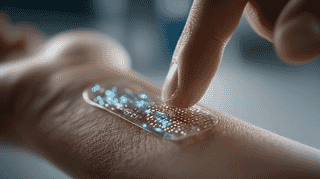
Researchers at the University of Tokyo and the Tokyo Metropolitan Institute of Medical Science have developed a microneedle patch that delivers a COVID-19 vaccine simply by sticking it on the skin. A 3D-printed pillar-guided design lifts tip-loading efficiency to 16.5%, about 8.3 times conventional molding, and mice given the patch showed a 1.2-fold higher antibody response than conventional intradermal injection. How this mouse-stage technology aims at painless, room-temperature, self-applied vaccination.
Tohoku University and the University of Tokyo have developed DIVE, a multi-agent AI workflow that automatically reads and structures experimental data from scientific paper figures. By extracting over 30,000 data points from 4,000+ papers, the system proposed new hydrogen storage materials in just 2 minutes. Here's how this AI reading team is unlocking data trapped inside research charts.
A joint research team from the University of Yamanashi, Waseda University, and Shinshu University has developed a completely fluorine-free electrolyte membrane for polymer electrolyte fuel cells. Achieving over 100,000 durability cycles—1.3 times that of conventional fluorine-based membranes—this PFAS-free breakthrough could accelerate the global hydrogen economy while addressing environmental regulations.
A Japanese-developed measles-vector vaccine against Nipah virus, a disease with up to 75% fatality, began Phase I clinical trials in Belgium in June 2026. Learn about the approach and Japan's role in global pandemic preparedness.
Kyoto University professor Naoko Tosa showcased "disaster-prevention fashion" made from fire-resistant materials at Japan Society during New York Fashion Week. Her fusion of art, technology, and disaster preparedness is capturing global attention as a uniquely Japanese innovation.
A Keio University study reveals CGRP antibody drugs reduced migraine frequency by half in about 50% of patients, with over 90% satisfaction. Explore Japan's latest migraine prevention treatments—from monthly injections to upcoming oral medications and neuromodulation—and how they're transforming life for migraine sufferers.
Vema Hydrogen completes the world's first Engineered Mineral Hydrogen pilot wells in Quebec. With potential costs of $0.50/kg—a 90% reduction—and candidate sites identified in Japan's Tohoku and Kyushu regions, this technology could reshape Japan's hydrogen society vision and energy independence.
A Tokyo University research team scientifically examined "sleep divorce" through mouse experiments. Which leads to better sleep—co-sleeping or sleeping alone? The surprising findings show optimal sleep environments differ based on social status and genetic background.
Mejiro University in Tokyo plans to launch Japan's only dedicated Korean Studies department in April 2027. Built on 20 years of Korean language education, the program features mandatory study abroad and dual-degree options, reflecting the massive K-culture boom transforming Japan's youth.
A research team at Kanazawa University has developed a next-generation X-ray CT scanner with 5x the resolution of conventional devices (0.08–0.1mm). Capturing images in just 6.5 seconds, this compact device can visualize trabecular bone structure, opening doors for early detection of trigger finger and osteoarthritis. We look at how 20 years of clinical experience led to it.
Kindai University has achieved the world's first full-cycle aquaculture of Nodoguro (Blackthroat seaperch), a high-end deep-sea fish known as the "White Toro." Learn about the decade-long journey, the technical challenges overcome, and what Japan's aquaculture leadership means for global food security.
A Japanese research team has discovered Mic-628, an oral compound that advances the circadian clock regardless of dosing time. In mouse studies, it cut jet lag recovery from 7 days to 4. Learn how this breakthrough could transform treatment for jet lag, shift work disorders, and beyond.
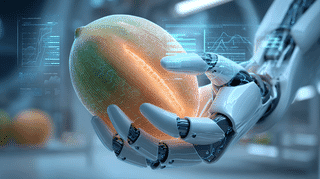
Shibaura Institute of Technology's "InSIGHT Grip" is a non-destructive inspection technology that estimates internal quality simply by gripping objects with a robot hand. With a low-cost, sensor-free design, it promises applications from fruit sorting in agriculture to industrial deterioration detection.
Tufts University researchers have developed a new, lower-cost way to produce tagatose, a rare sugar 92% as sweet as table sugar with 60% fewer calories. It has little effect on blood sugar, holds FDA GRAS status and browns like sugar in baking. Here is what it could mean, and what still stands in the way.
A joint team from Chiba University, NHK Science & Technology Research Labs, and Kyoto University has developed an organic EL device capable of both light emission and solar power generation. Using innovative MR-TADF materials, they overcame the long-standing trade-off between emission and power conversion efficiency, achieving the world's first blue light-emitting power-generating device. Applications include self-powered displays and battery-free sensors.
A Japanese research team has developed a single organic crystal that glows red under UV light and green under near-infrared light. This dual-mode material could transform optical sensing, energy harvesting, and medical imaging. Here's what makes it groundbreaking.
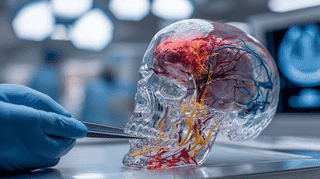
Kyushu University and Japan Medical Company are developing the "Hakata Model," a next-generation 3D surgical training platform that reproduces individual patient tumors with high precision, transforming one-time surgical experiences into repeatable hands-on training for neurosurgeons.