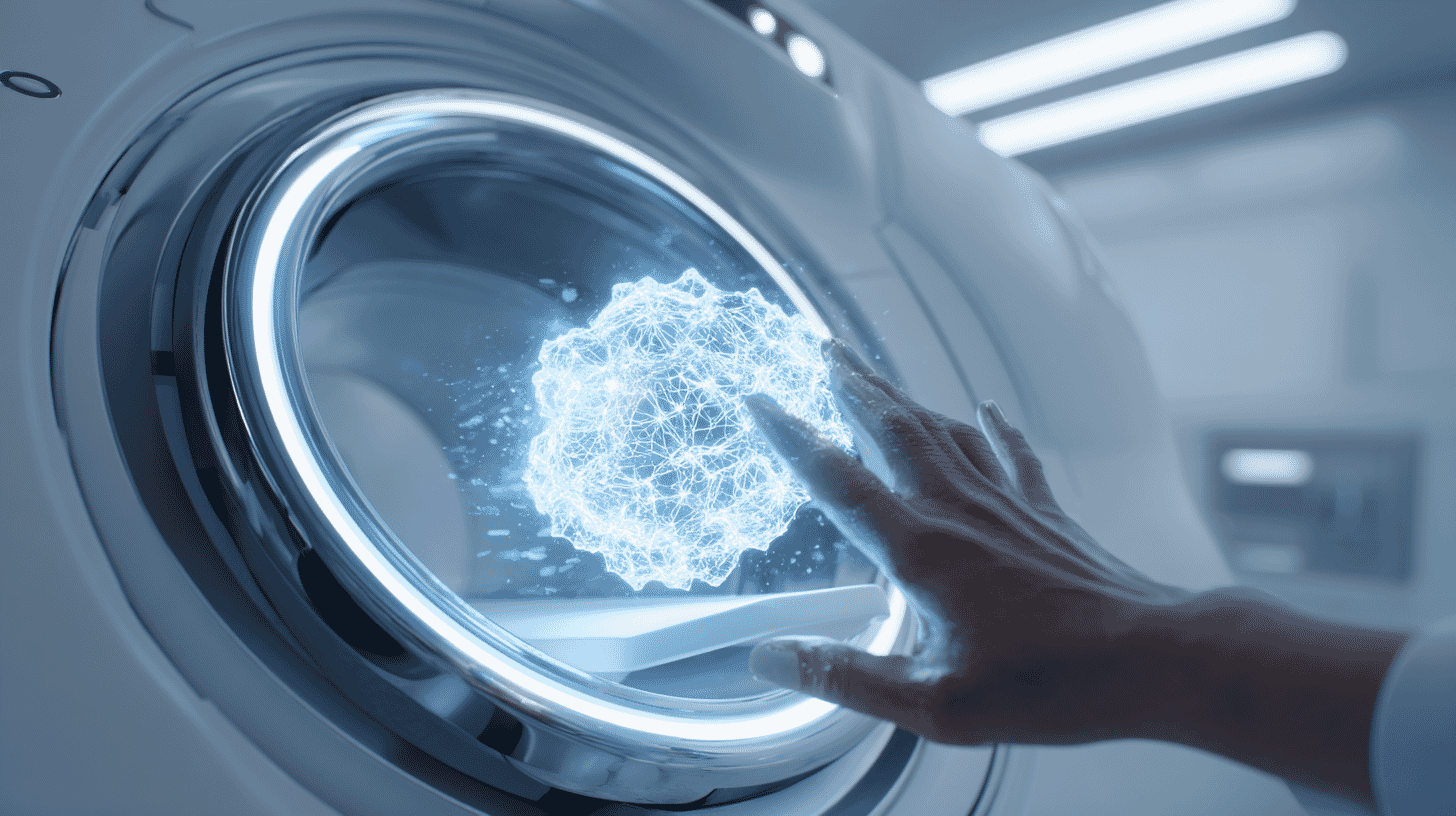
Ever had a CT scan and thought the bone images looked blurry? That's because conventional CT scanners can't capture the fine internal structure of bones. Now a team at Kanazawa University in Japan has built a device that images bones so clearly they look as if they had been physically removed from the body. Resolution: 5 times sharper than standard CT. Scan time: just 6.5 seconds. Two decades of hands-on clinical experience went into it.
The Invisible World Inside Your Bones
X-ray CT (Computed Tomography) is a cornerstone of modern medicine. It produces cross-sectional images of the body and plays a vital role in diagnosing fractures, tumors, and joint conditions. Chances are, if you've ever been to a hospital for a bone injury, you've had a CT scan.
But there's a fundamental limitation with the CT scanners currently used in most hospitals: resolution.
Standard clinical CT devices have a resolution of about 0.5mm. That's fine for seeing the overall shape of a bone, but when you generate 3D images, the bone contours appear fuzzy, and fine details are lost.
The biggest casualty of this limitation is something called trabecular bone (known as "kotsuryō" in Japanese). These are the microscopic mesh-like structures inside bones, each strand just 0.1 to 0.2mm thick. Think of them as the internal scaffolding that keeps bones strong from the inside. With conventional CT, they're completely invisible.
"Like Seeing the Real Thing": A 5x Resolution Leap
Professor Katsuhiro Ichikawa (Quantum Medical Technology) and Professor Kaoru Tada (Occupational Therapy Science and orthopedic surgeon at the university hospital) at Kanazawa University's Institute of Medical, Pharmaceutical and Health Sciences have developed a new X-ray CT device that shatters this resolution barrier.
The new scanner achieves a resolution of 0.08 to 0.1mm, roughly five times sharper than conventional devices.
The design is elegantly simple. It combines a compact X-ray source, a high-resolution X-ray detector, a platform for positioning the limb, and a rotation motor. Patients simply insert their hand, foot, elbow, or knee into the opening. Unlike massive full-body CT machines, this device is specifically engineered for extremity imaging.
A 5cm scan takes just 6.5 seconds. Extending coverage to 9cm only requires about 10 seconds. Patient burden is minimal.
New Possibilities for Medicine
The 3D images produced by the new device are so sharp that the researchers themselves describe them as looking "as if the actual bone had been extracted from the body." In hand scans, tiny holes where blood vessels pass through finger bones are clearly visible.
The clinical implications are significant:
Early detection of trigger finger: "Trigger finger" causes a catching sensation when bending and straightening fingers, interfering with daily life. In one subject, the new scanner revealed a depression in a finger joint bone that appeared to be a precursor to trigger finger, detected before symptoms even appeared.
Visualizing micro-damage from sports: When scanning the elbow of an athlete, the device captured tiny bone fragments chipped from the elbow that were completely invisible on conventional CT. Left undetected, such micro-injuries can lead to serious long-term damage.
Catching osteoarthritis early: Osteoarthritis, where joint cartilage gradually wears down, is increasingly common in aging societies. By detecting changes in trabecular bone structure at an early stage, this technology could help unravel the mechanisms behind the disease and enable preventive treatment.
Born from 20 Years on the Clinical Frontlines
What makes this story compelling is Professor Ichikawa's background. Before becoming an academic, he spent two decades as a diagnostic radiologic technologist, the person who actually operates imaging equipment and works with patients every day, much of that time at Nagoya City University Hospital.
He earned a doctorate in engineering from Gifu University in 2004, moved to Kanazawa University in 2006, and became a full professor in 2009. In 2013 he spent time at the U.S. FDA (Food and Drug Administration) as a Scientific Visitor to deepen his expertise. His government-funded research project is titled "Development of ultra-ultra-high-resolution CT for depicting fine structures of lungs and bones."
"My 20 years of experience as a clinical radiologic technologist came to life in this work," Professor Ichikawa says. "I want to see it put to practical use as quickly as possible to help with diagnosis and treatment." This is the kind of innovation that tends to come from people who know firsthand what clinicians actually need.
The Path to Clinical Use
The new device has already passed Kanazawa University's safety testing and is being used on a trial basis in the orthopedic department of the university hospital. The team is now working on registering it as an official medical device for hospital use.
Professor Ichikawa is also developing a separate CT device designed for oral surgery, capable of imaging skull and facial bones. Applications could include pre-surgical planning for dental implants and diagnosis of temporomandibular joint disorders.
The findings were published online in Skeletal Radiology on November 13, 2025, by Wakiko Tani, Katsuhiro Ichikawa, Hiroki Kawashima and Kaoru Tada. Kanazawa University announced the device on January 20, 2026.
Japan's Approach in a Global Context
Globally, high-resolution CT technology for bone microstructure imaging has been advancing rapidly. At Johns Hopkins University and other institutions in the U.S., researchers are developing extremity cone-beam CT systems using CMOS detectors to image trabecular bone. Canon Medical Systems has also commercialized ultra-high-resolution CT with 0.25mm-width detectors.
What sets the Kanazawa University device apart is achieving 0.08–0.1mm resolution in a compact form factor with a remarkably fast 6.5-second scan time. By specializing in extremity bones rather than relying on large full-body scanners, the team balanced high performance with simplicity, an approach that echoes Japan's tradition of precision engineering and "monozukuri" (the art of making things, a concept deeply embedded in Japanese manufacturing culture).
A Technology for Aging Societies
Japan is among the world's most aged societies, with roughly 29% of its population aged 65 and above. The number of patients with osteoporosis and other bone and joint conditions keeps climbing. Osteoporosis alone is estimated to affect more than 10 million people in Japan (per estimates from the long-running ROAD cohort study), and fractures in the elderly are a leading cause of becoming bedridden or needing long-term care.
Against this backdrop, non-invasive technology that can evaluate bone microstructure, not just bone density, is becoming increasingly important. The Kanazawa University CT scanner holds real promise as a tool for preventive medicine, offering insight into bone "quality" that density measurements alone cannot provide.
In Japan, reactions to this university-developed medical technology range from excitement ("We need this for our aging society!" and "Bring it to hospitals as soon as possible!") to pragmatic concerns ("University research takes forever to become practical" and "If it's not covered by national insurance, it won't spread").
In your country, what does it take for a university-developed medical technology to reach actual hospitals?
References
- https://ichiken.w3.kanazawa-u.ac.jp/ (Kanazawa University, Ichikawa Laboratory)
- https://researchmap.jp/read0194414 (Katsuhiro Ichikawa, researchmap)
- https://kaken.nii.ac.jp/ja/grant/KAKENHI-PROJECT-21K07698/ (KAKENHI Research Project: Development of ultra-ultra-high-resolution CT)
- https://ridb.kanazawa-u.ac.jp/public/detail.php?id=2256 (Kanazawa University Researcher Info: Katsuhiro Ichikawa)
- https://link.springer.com/article/10.1007/s00256-025-05077-z (Skeletal Radiology paper)







Global Discussion
15 comments