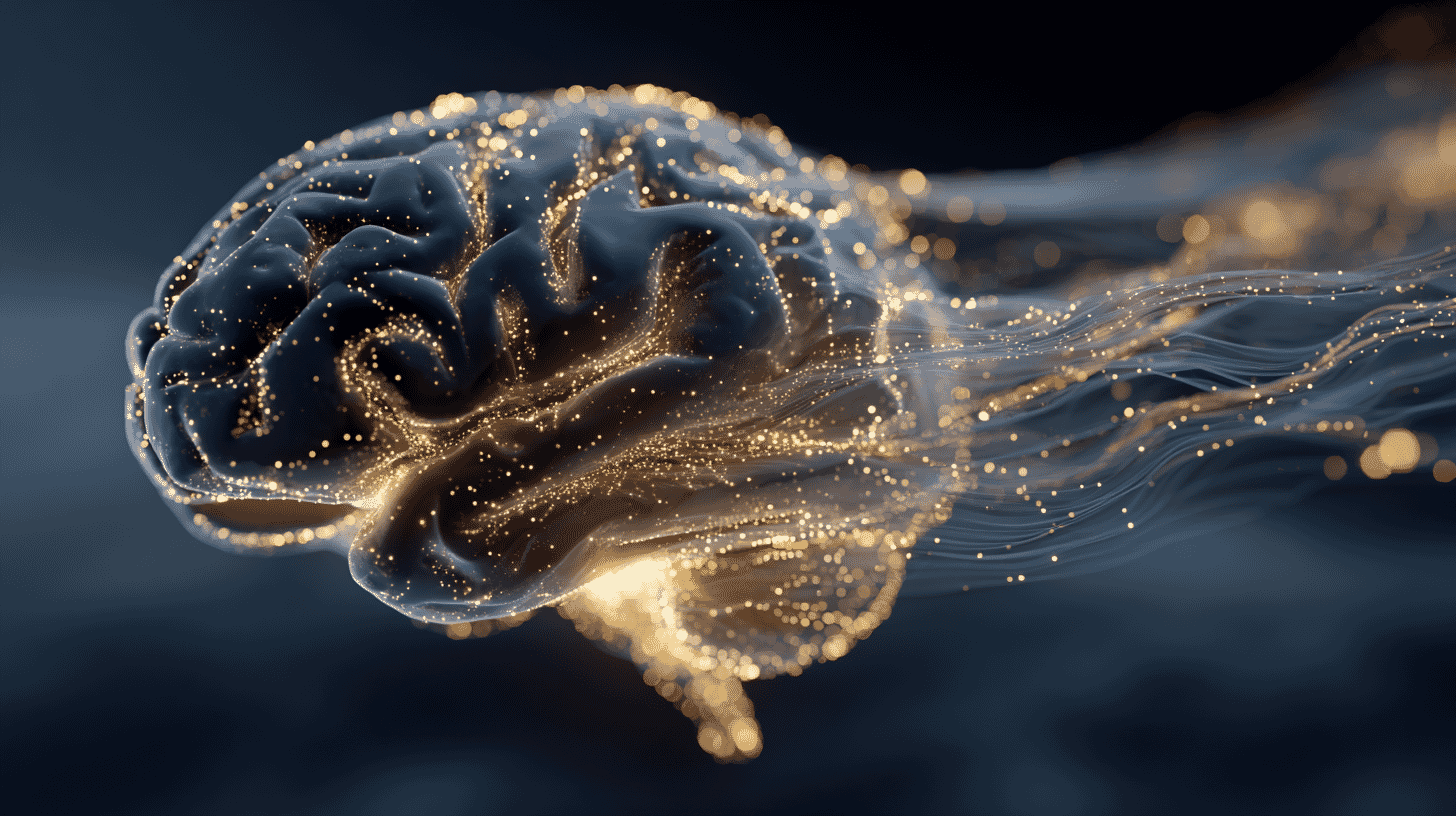
🧠 For decades, "a broken brain doesn't heal" was treated as fact. Stroke survivors got back what they could in the first two months, and then hit a wall. What stayed lost was for life.
A team in Tokyo has just shown that wall isn't a hard limit. It's a switch. And they've found what flips it.
The two-month wall every stroke survivor hits
About 11.9 million people had a stroke in 2021, according to the WHO, and one in four adults over 25 will have one in their lifetime. Stroke is the second leading cause of death worldwide and the third leading cause of death and disability combined, measured in DALYs. In Japan, 1.884 million people were receiving treatment for cerebrovascular disease as of the 2023 national patient survey; among people aged 40 to 64 who came to need long-term care, roughly 51 percent got there through a stroke.
The pattern of recovery is something anyone who has worked with a stroke patient knows. After the initial damage, a survivor goes into intensive rehab, relearning to walk, to speak, to grip a fork. There is real progress. Then, somewhere around the two-month mark, that progress flatlines. Whatever neurological deficit is still there at that point tends to stay. Permanent.
Doctors and patients have known this for generations. What no one understood was why. Why does the brain start to heal, then stop? If the machinery is there for two months, why does it switch off before the job is done?
Answering that turns out to matter enormously. If the shut-off is a passive thing (cells dying, resources gone) there is not much to do. But if it's an active process, something inside the brain actively pulling the plug, then in principle you can interrupt it.
The team led by Professor Takashi Shichita and Assistant Professor Jun Tsuyama at the Institute of Science Tokyo, together with the Tokyo Metropolitan Institute of Medical Science (TMIMS), Kyushu University, and Germany's University of Freiburg, has now shown it's the second one. The work was published in Nature on May 13, 2026. The animal experiments used a mouse model of ischemic stroke, the type that accounts for about 80 percent of all strokes.
The brain's hidden repair crew
To understand what they found, it helps to know who does the repairing in the first place.
Inside the brain, alongside neurons, sit small immune cells called microglia. They are the brain's local doctors. In a healthy brain they patrol quietly, watching for trouble. When something goes wrong, whether an infection, an injury, or a stroke, they activate. For the first week or so they cause inflammation, clearing out dead cells. Then they switch character.
They become repair cells. They start secreting neurotrophic factors, molecules with names like IGF1 (insulin-like growth factor 1) and SPP1. These factors do the actual healing work. They help surviving neurons rebuild the connections (synapses) that the stroke destroyed. They help regenerate myelin, the insulating sheath around nerve fibers that lets signals travel cleanly. In other words, microglia don't just clean up after a stroke, they actively rewire what's left.
The Shichita team mapped this in detail. Using genetically modified mice in which IGF1-producing microglia glow fluorescent green, they tracked which microglia were doing the repair work and what was switching them on. They identified the master switch: a protein called YY1, a transcription factor that turns on the entire suite of repair genes. Knock out YY1 in microglia, and the repair stops. Remove the IGF1-producing microglia from the brain entirely, and the natural post-stroke recovery never happens.
So the brain is not passive after a stroke. It has a built-in repair crew that gets to work within days.
The question is what makes that crew quit.
The protein that pulls the plug
This was where the team's most useful trick came in. They built a second mouse model that tagged the repair-active microglia with one color, green and red glowing together, and then, if those microglia later stopped producing IGF1, the green color would fade while the red stayed on.
A month after a stroke, the team looked at the brains of these mice and saw something that overturned the standard assumption. The "ex-repair" microglia, the red-only cells, were still there. They hadn't died. They hadn't left. They had just stopped working.
That is a very different problem from "the repair cells are gone." It means the cells are sitting right there next to the damage, fully present, and something inside them has been told to shut down.
The team went looking for what was telling them. They screened transcription factors active in microglia at the one-month post-stroke mark, looking for one that would block IGF1 production. They found it: a protein called ZFP384 (in humans, ZNF384).
ZFP384 turns out to be the closing door. It binds DNA and prevents YY1 from doing its job, which means the repair genes, IGF1 and SPP1 among them, go silent. The microglia look outwardly the same, but the repair program is locked.
What triggers ZFP384 to ramp up? A protein called TGFβ, which rises inside the brain about a month after a stroke as part of a broader "return to normal" program. TGFβ has useful jobs: it helps scar over damaged tissue, normalizes blood vessels, restores baseline homeostasis. But one of its side effects is to tell microglia, via ZFP384, that the emergency is over and to stand down, even when the actual repair work is still incomplete.
In other words: the brain mistakes "two months have passed" for "the job is done."
An off-switch for the off-switch
If ZFP384 is the wrong signal, blocking it should restart the repair work. The team built a drug to do exactly that.
They used antisense oligonucleotide (ASO) technology, short pieces of synthetic genetic material designed to bind a specific RNA inside cells and prevent it from being translated into protein. ASOs are not new in neurology. Two are already in clinical use for rare neurological diseases: nusinersen (Spinraza) for spinal muscular atrophy, approved in 2016, and tofersen for a form of ALS, approved in 2023. Both are delivered into the cerebrospinal fluid through a spinal injection, a technique already routine in hospitals. In the mouse experiments the drug went in through the cerebral ventricles.
The team's drug, ASO-Zfp384, is designed to shut down production of the ZFP384 protein specifically. They tested it in stroke-model mice in two scenarios: one group received it one week after the stroke, another group one month after, both timing windows that map roughly to when human stroke patients are transitioning from acute hospital care to rehabilitation.
In both groups, the microglia kept producing IGF1 and other repair factors past the usual two-month wall. Synapses regenerated more completely. Myelin sheaths recovered better. And the neurological symptoms, the motor deficits that map onto the limb weakness and speech difficulty humans live with, improved measurably.
Tested in human brains, too
The team didn't stop at the mouse work, which is a frequent failure point for translational neuroscience. They obtained autopsy brain tissue from people who had died after a stroke, and looked at what the microglia were doing across time.
One week after the stroke, the patients' brains were full of IGF1-producing microglia, working hard. By one to two months, those cells had largely disappeared from view. In their place: microglia expressing ZNF384, the human form of the protein. The pattern matched the mouse data: IGF1 and ZNF384 traded places over time, in an inverse curve.
That doesn't prove the drug will work in humans, it never does. But it does mean the underlying mechanism the team found in mice is not a quirk of mouse biology. It happens in human stroke brains the same way.
What changes if this works in humans
If ASO-Zfp384, or some refined successor, eventually reaches stroke patients, the practical impact would be substantial.
The window of opportunity is the part to keep in mind. The drug worked in mice when given one week to one month after the stroke. That maps to the moment, in real-world Japanese stroke care, when a patient is being discharged from acute hospital and transferring to a rehabilitation facility. It is exactly the moment when the question "how much function will they get back?" is most uncertain, and most determinative of the rest of their life.
Today, the answer to that question is largely a matter of how aggressive the rehab is, how young and healthy the patient was, and luck. A drug that holds the repair window open could shift the ceiling. It would not undo damage that has already happened, but it could mean that the eight weeks of intense rehab work plus another six months of held-open recovery time produce a substantially better outcome than the eight weeks alone.
The economic and human stakes are enormous. In Japan, stroke aftercare is one of the largest single drivers of long-term care needs and household care burden. In the 2022 national living conditions survey, cerebrovascular disease accounted for 19.0 percent of cases in which someone came to need nursing care, second only to dementia. Globally, the direct and indirect costs of stroke were estimated at about 891 billion US dollars in 2017, roughly 1.1 percent of world GDP. Any therapy that meaningfully reduces post-stroke disability is not just medical news; it shifts entire care systems.
Beyond stroke: a wider question
There is something quietly important about what this research argues, beyond the specific drug. The team frames its discovery as a new general concept: "preventing the loss of natural reparative function." Not adding healing from outside (the way stem cell therapies try to). Not blocking disease (the way most drugs do). Just keeping the body's own repair crew at work longer than they would otherwise stay.
If that concept holds, it could extend to other brain conditions. The team has flagged interest in seeing whether the same approach helps with traumatic brain injury and other neurodegenerative diseases. It could potentially apply to organs beyond the brain, wherever a tissue's natural repair response runs out before the work is finished.
The team is careful not to oversell. Professor Shichita, in comments to Nikkei, put it plainly: the actual development of the drug is just beginning now. ASO-Zfp384 is a proof of concept in mice and a mechanism confirmed in human autopsy tissue. The road from there to a drug doctors can prescribe runs through years of toxicity testing, efficacy refinement, and clinical trials in living patients. Many discoveries that look this promising never make that journey.
But the question the work answers is the one that mattered. Stroke recovery doesn't stop because the brain has nothing left to give. It stops because something inside the brain tells it to stop. And now that we know what that something is, the conversation about post-stroke disability is fundamentally different from where it was a week ago.
For anyone with a family member who has been carrying the after-effects of a stroke for years, what their life would look like with even a partial extension of that early recovery window is hard to overstate. We'd be curious to hear how stroke recovery and rehabilitation are handled where you live. What does post-stroke care typically look like in your country, and how does it weigh on families?
References
- TMIMS: overturning "a damaged brain cannot heal" (Japanese)
- Nature: the original paper
- Institute of Science Tokyo: press release (Japanese)
- Nikkei: Science Tokyo identifies the brain's recovery mechanism (Japanese)
- nippon.com: English report
- WHO: Stroke fact sheet
- World Stroke Organization: Impact of Stroke
- Japanese Association of Rehabilitation Medicine: what rehabilitation medicine is (Japanese)







Global Discussion
0 comments