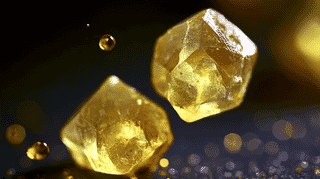
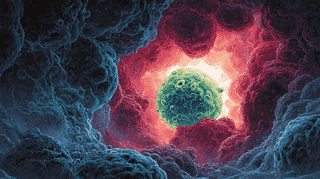
Cyclo-octasulfur, the yellow sulfur of volcanoes, is made and stored in fat droplets in mouse and human cells. It won't dissolve in water and breaks apart when measured; a chemistry capsule caught it.
Fossils said the Late Cretaceous Arctic was warm enough for dinosaurs, but climate models could not reproduce it. A Japanese team let Earth's axial tilt roam its full range and points to geography as the amplifier.
A Japanese team found ammonium, nitriles and sodium nitrate clustered around the salt veins in Hayabusa2's Ryugu grains, which reframes the 75-fold gap between Bennu's water-extractable ammonia and Ryugu's.
Desalination makes about 35 trillion liters of fresh water a year and discards roughly 50 trillion liters of brine. A Tokyo lab drips it onto molten tin and recovers magnesium oxide, 280 times concentrated.
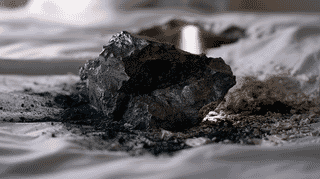
A rock punched through a New Jersey ceiling on July 16, 2024. The homeowner sealed the pieces in jars within minutes, letting a team with the Institute of Science Tokyo and JAMSTEC read traces of ancient asteroid brine.
The hat, found in 2023, tiles the plane forever without repeating. A Japanese team etched 372,100 of its points into a silicon nitride film, fired a laser, and got back a pinwheel of light with no mirror image.
A team at the Institute of Science Tokyo found resistance genes running harder inside hospital drain biofilm than in the wastewater itself. Why new pipes can backfire.
Researchers at the Institute of Science Tokyo have created a surface electrene: a crystal whose outermost layer is a sheet of loose electrons, with a work function lower than cesium. It survives open air because nitrogen caps it, then leaves as ammonia. Here is what it means for green fertilizer, and how it compares with the electrochemical routes pursued in China, Europe and the US.
Researchers at Science Tokyo built a cheap biosensor that uses a plastic-binding peptide and surface plasmon resonance to detect nanoplastics in water, catching 50-nanometer polystyrene particles in 20 minutes, label-free. Here is why measurement, not the plastic itself, is the bottleneck regulators keep hitting.
Say you can hear plants and people back away slowly. Turns out it's real: researchers at Japan's Institute of Science Tokyo built a transparent 70-nanometer carbon-nanotube electrode that reads a crop's bioelectric stress signals for up to 10 months, even in the rain.
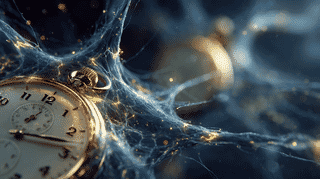
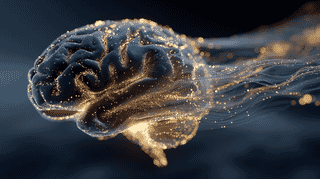
A Science Tokyo team finds that the brain runs multiple clocks for elapsed time, shifting between coherence and independence. From M2 and PPC recordings to the Twin-RNN model and a clue for brain-inspired AI, here's what they saw in a mouse.
Researchers in Japan made a four-micrometer sphere of chiral polymer that lases in a flat ring, like Saturn. The molecules self-assembled into a surface swirl that gives the light a direction. A clear look at the first angle-selective lasing from a sphere, driven by its own surface chemistry.
Japan's Koroyawa floor stays hard when you walk and softens only when you fall. Science Tokyo proved it prevents elderly hip fractures using a world-first simulation built from a real patient's CT data.
A team led by Japan's QST has shown, for the first time, a magnetic memory that writes with a laser pulse instead of current, and made it work on CoFeB, the alloy already inside commercial chips. Here's how, and why it matters for data-center power.
JAXA's H3 rocket No. 6 reached orbit on June 12, 2026, debuting the booster-less, lowest-cost Type 30 and resuming flights after a six-month grounding. But an object seen falling near the engines is now under investigation.
For 15 years, donor cells vanished when grown across species. A Tokyo-Stanford team found why: the host embryo's first immune cells were eating them alive. The path to lab-grown organs, explained.
A meniscus regeneration technology developed at Japan's Institute of Science Tokyo has been approved as Seibiscus, the country's first regenerative medicine product for meniscus injury. We explain how it uses a patient's own stem cells to repair the knee, what the Phase III trial showed, and how it compares with regenerative medicine ventures in South Korea and the US.
NHK STRL and Institute of Science Tokyo have built the world's first transparent hologram that floats full-color 3D images in front of clear glass. A new amplitude-aware design cracks the two old walls of surface-relief holography in one move.
After a stroke, the brain repairs itself for about two months, then stops. A team from Science Tokyo, TMIMS, Kyushu University and Freiburg University has identified the protein responsible, ZFP384, and developed an antisense drug that keeps the repair window open in mice. Published in Nature, the discovery could redraw what is possible for stroke survivors and other brain injuries.