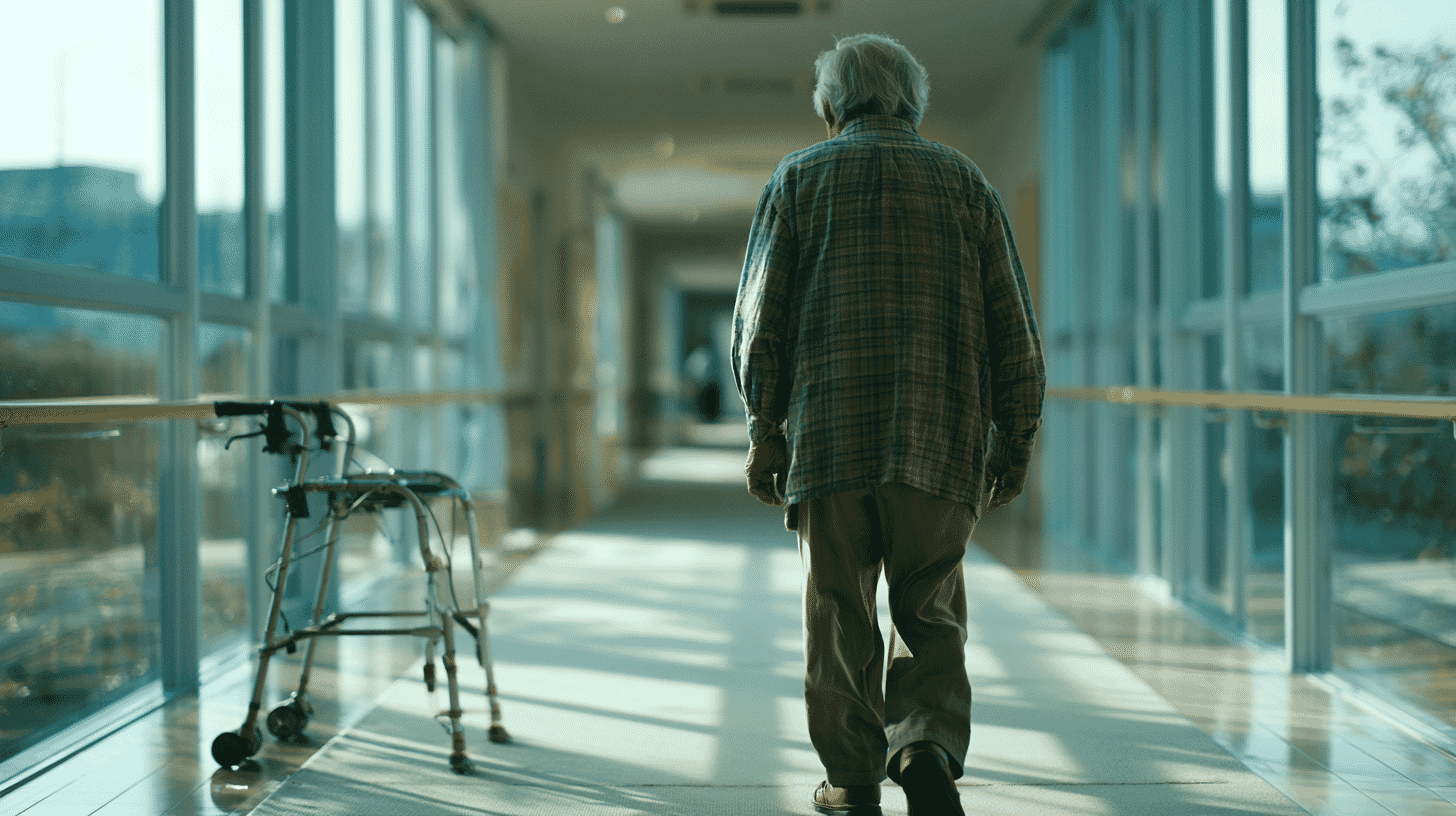
🦴 For an older adult, a single fall can change everything. A broken hip, the kind that follows a stumble at home or in a care facility, usually means surgery, months of recovery, and for many, never walking unassisted again. Japan's answer to this problem isn't a new drug or a better operation. It's the floor.
A team at the Institute of Science Tokyo has just published evidence that a Japanese-made "shock-absorbing floor" can keep a fall from breaking a hip. They proved it with a world-first simulation, and without putting a single person at risk.
A floor that stays hard until the moment you fall
Most cushioning works by being soft all the time. That's the catch. A 40mm sponge mat absorbs a fall nicely, but it also makes walking wobbly and turns a wheelchair into hard work, the exact instability you don't want around frail people.
The floor at the center of this study, called Koroyawa (ころやわ), takes a different route. It's built from a "mechanical metamaterial": a structure whose behavior comes from its internal geometry rather than the raw material it's made of. In plain terms: it stays firm and stable under the everyday weight of footsteps, beds, and wheelchairs, then gives way only when a sudden, heavy impact hits it. Hard when you walk, soft the instant you fall.
That variable stiffness is the trick older cushioning never managed.
The company behind it, Magic Shields, is a startup founded in Hamamatsu in 2019. Its founder came from Yamaha Motor and adapted know-how from motorcycle impact protection to the floor. The product is already in more than 600 hospitals and care homes across Japan.
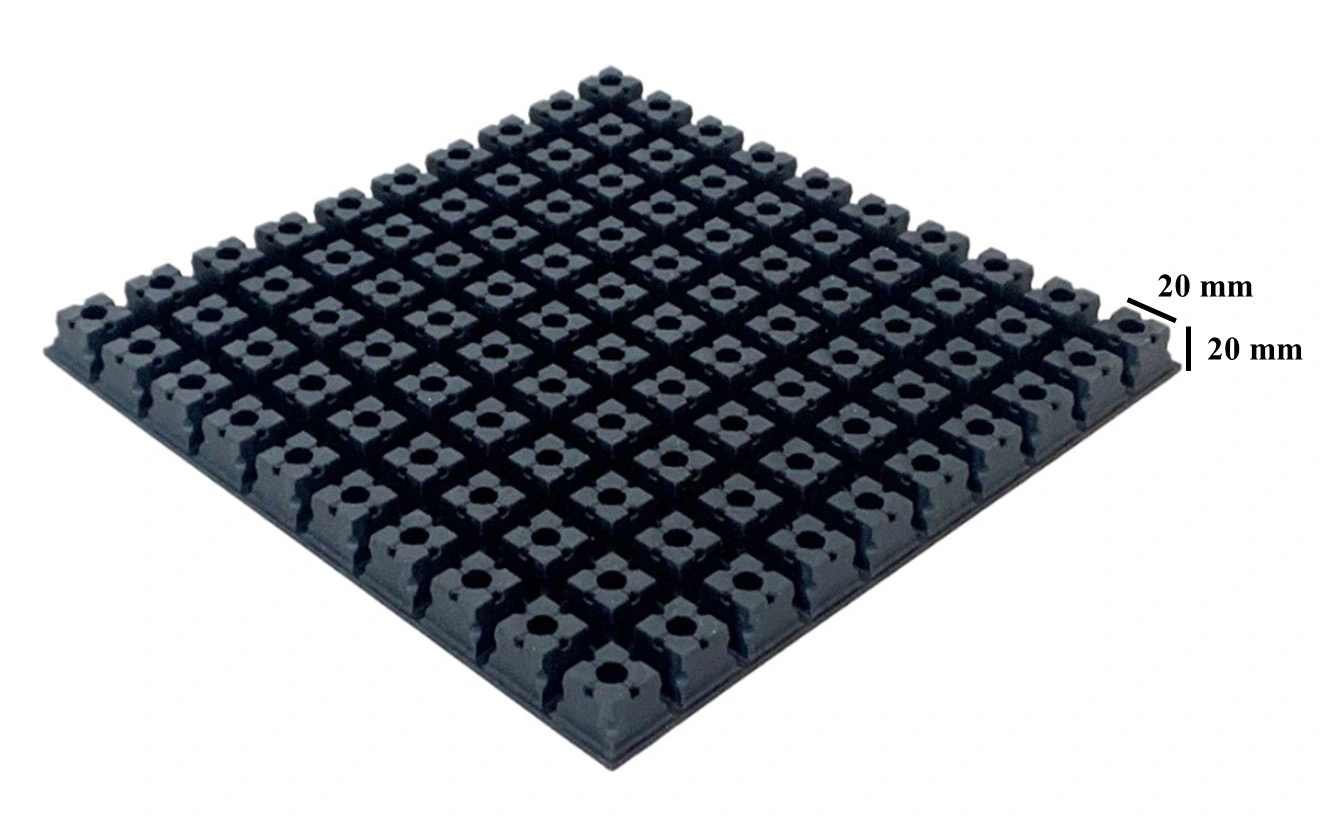
Source: Oh Y, et al., Biocybernetics and Biomedical Engineering, 2026 (CC BY 4.0)
You can't drop a grandmother on a hard floor to test this
Here's the obstacle that held the field back: you cannot ethically test fall protection by actually making elderly people fall. So how do you prove a floor works?
The Science Tokyo team, led by associate professor Yoto Oh, built a workaround. They took CT scan data from a real elderly Japanese woman who had actually suffered a hip fracture, combined it with the physical properties of different floors, and built a dynamic computer simulation that reproduces the forces of a real fall. The method is finite element analysis, which splits a complex object into thousands of tiny pieces to calculate how each one bends and where it breaks. On top of that model they recreated a drop-weight impact test (an 11 kg mass falling 23 cm) equivalent to the energy of a backward fall.
It's the first model of its kind to pair an actual fracture patient's bone data with floor materials to recreate the moment of impact digitally. No one gets hurt, and you can test as many flooring designs as you like on a screen.
What the simulation showed
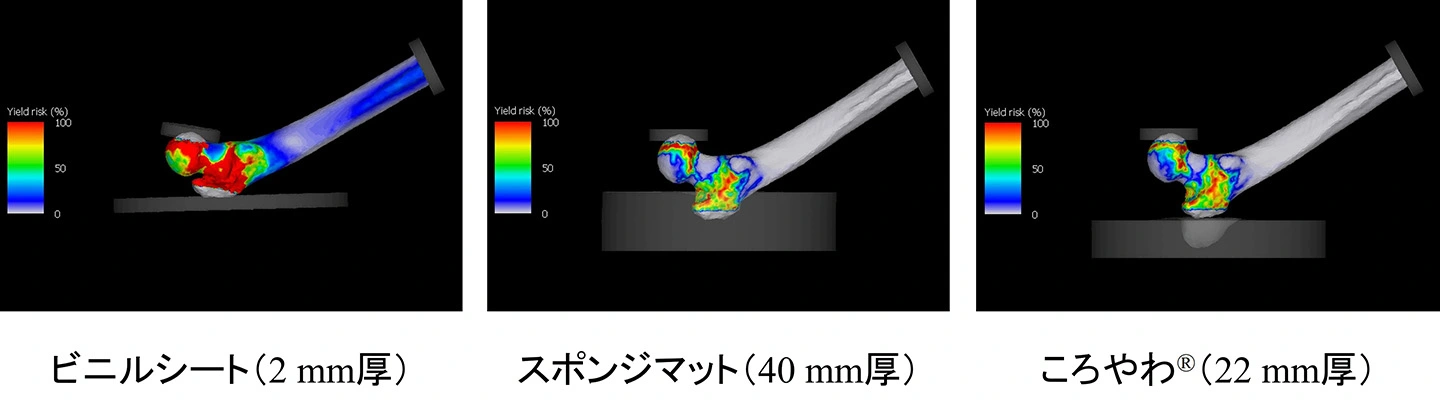
The team ran virtual falls onto a concrete floor topped with different surfaces. The results are blunt.
On the 2mm vinyl sheet flooring common in hospitals and care facilities, the hip bone was completely destroyed.
On both the 40mm sponge mat and the 22mm Koroyawa floor, the peak force hitting the bone dropped to 1,200 newtons, under the 1,400-newton threshold at which the bone fractures in this model. The bone sprang back instead of breaking.
Source: Oh Y, et al., Biocybernetics and Biomedical Engineering, 2026 (CC BY 4.0)
The headline isn't that a soft mat protects a bone, which was already plausible. It's that a floor hard and stable enough to walk and wheel a chair across did the same job as a thick sponge mat. You get the protection without the wobble.
It's worth being precise about the "world first" here. Cushioned floors aren't new, and they've been studied abroad. A Canadian randomized trial tested compliant flooring in long-term care, and hip protectors have been around for years (though people often don't wear them, which blunts their effect). What's new is the validation method: proving a specific floor's effect using a real fracture patient's CT data in a dynamic fall simulation.
Why a floor is becoming an export
The reason Japan is the one doing this work is demographic. It became the world's first "super-aged society" (more than 21% of the population aged 65 or older) back in 2007. The numbers that follow are sobering: roughly 200,000 hip fractures a year, and an estimated 2 trillion yen (about $13.3 billion) in annual medical and care costs tied to them.
A hip fracture isn't just a bone. It's often the start of being bedridden, of losing independence, of a sharp decline. Prevent the break and you protect a person's quality of life while easing a national bill at the same time.
The project also came out of a deliberate push to connect industry, government, and academia, funneled through InnoHub, a healthcare innovation program run by Japan's Ministry of Economy, Trade and Industry. The earlier work won a Japanese Fracture Treatment Society award in 2023. Now Japan is positioning this kind of prevention as something it can offer the rest of an aging world.
A bet you walk on every day
Every country with a graying population is heading toward the same wall: more falls, more fractures, more cost. Japan's bet is that part of the answer is literally underfoot: that you can build prevention into the floor of a hospital room or a family home, before anyone falls.
Would you want a floor like this in your parents' home, or your own someday? And how does your country try to keep a stumble from becoming a life-changing break?








Global Discussion
3 comments