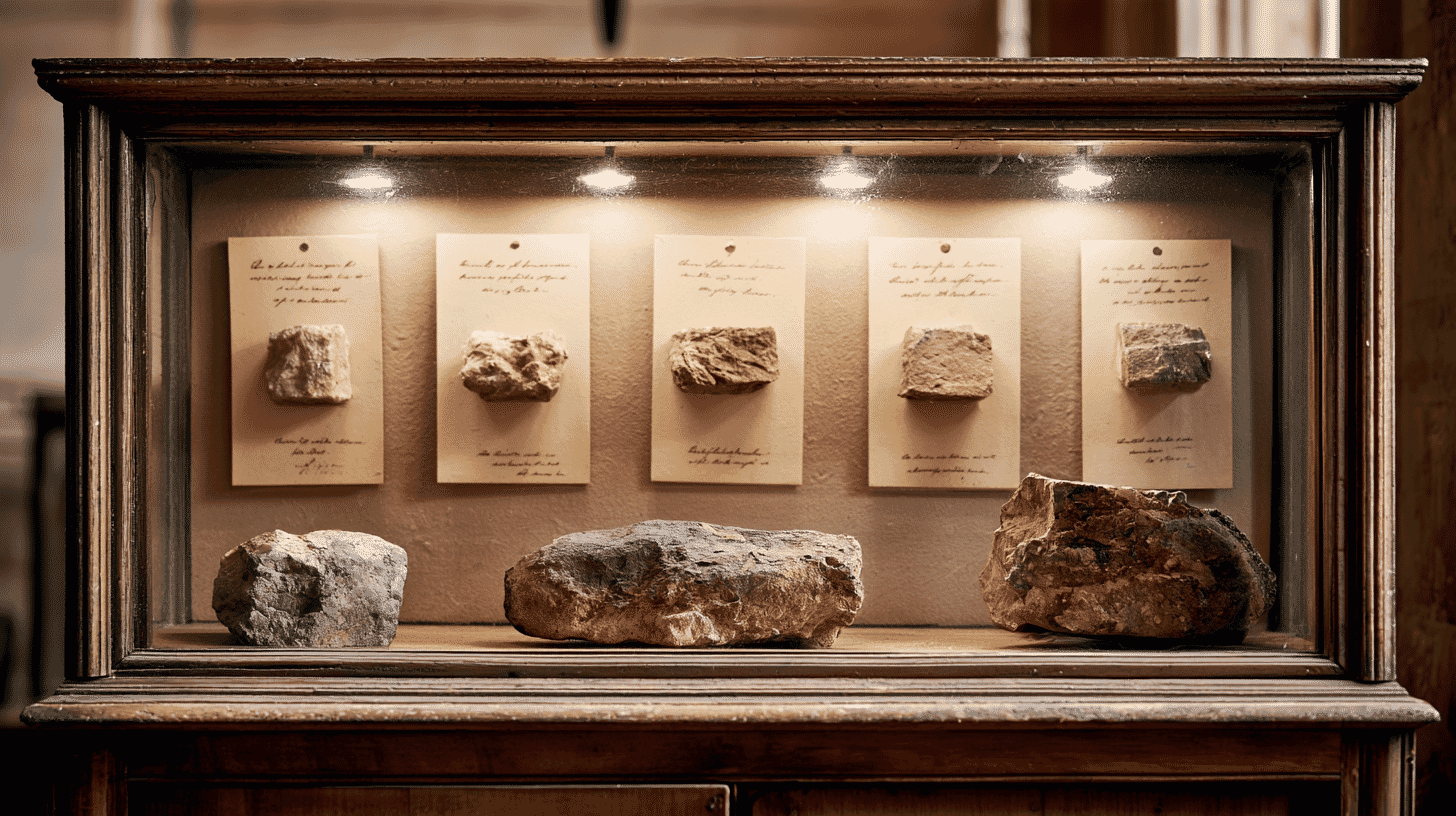
🦋 In Shin'onsen, a small town on the Sea of Japan coast of Hyogo Prefecture, near the border with Tottori, there is a museum devoted to fossil insects. Admission is 100 yen. A butterfly wing found by a town employee around 1990, and later put on display there, has been reported as the oldest known fossil of a butterfly species that is still alive today.
First, oldest what?
The announcement and the news coverage both said "world's oldest." That does not make it the oldest butterfly fossil on Earth.
According to a 2016 paper, the oldest known butterfly fossil is a skipper (Hesperiidae) that formed about 55 million years ago in what is now Denmark. Genetic analyses put the origin of butterflies at about 100 million years ago.
According to Keio University's announcement on October 13, 2026, the new fossil is the oldest that can be identified as an extant species, one that still lives today. The previous holder was a fossil of Hestina persimilis, a brush-footed butterfly, from rock about 300,000 years old in Nasushiobara, Tochigi Prefecture.
Subtract 300,000 years from the "about 2.5 million years ago" in Keio's release and the record moves back by about 2.2 million years. The paper, though, dates the rock to a range of roughly 2.8 to 2.2 million years ago (Late Pliocene to Early Pleistocene), which puts the jump at roughly 1.9 to 2.5 million years. The 2.2 million is a rounded figure.
A butterfly that no longer lives in Japan
Butterfly fossils are rare. A 2025 announcement by the same researchers said only about 60 adult butterfly fossils have been found worldwide, about 40 of them named as species, and more than half of those were described in the 19th century.
This one is a single forewing about 42 millimeters long. Using the shape of the outer edge, the discal cell (the large compartment near the wing base) and the vein pattern, the team placed it in the genus Aporia, in the whites-and-sulphurs family Pieridae, then compared fine wing details against all of the roughly 40 living Aporia species. The match was Aporia potanini Alphéraky, named after the Russian explorer Potanin. It is not a new species but a known living one.
Aporia potanini does not live in Japan today. Its range is limited to the Beijing area, western Shaanxi, south-central Gansu and northern Sichuan in China, and little is known about its ecology. Japan has two Aporia species: Aporia crataegi in Hokkaido and Aporia hippia in the mountains of Nagano, Gunma and Yamanashi. The paper calls the fossil direct evidence that the species once lived in Japan.
Found 35 years ago, then put on display in town
It was found by an employee of the Shin'onsen town office at the time. Keio says the find came during fieldwork about 35 years ago; the town puts it at around 1990. The rock belongs to the Teragi Group, lake deposits laid down in a volcanic caldera, a basin left when the ground collapsed after an eruption.
The specimen was donated to the town and went on display at the Omoshiro Konchu Kaseki-kan (Fun Insect Fossil Museum), run by the board of education. It opened in 1996, and the town describes it as Japan's first museum devoted to insect fossils. It displays about 250 items, most from local rock. Admission is 100 yen for adults (about 63 US cents at roughly 158 yen to the dollar on October 14, 2026) and 50 yen for children.
Yui Takahashi, a teacher at Keio Yochisha Elementary School, visited the museum, borrowed the specimen from the board of education and began studying it with Hiroaki Aiba, an emeritus teacher at Keio and a specialist in fossil insects, and Kotaro Saito of the Research Institute of Evolutionary Biology, a butterfly taxonomist. According to the town, the research began in 2025. The paper appeared online in the Journal of Paleontology, published by the Paleontological Society, on July 29, 2026.
Three finds from one room in about 18 months
In May 2025, the same researchers described another specimen, on display since the museum opened as a "brush-footed butterfly" fossil, as a new species. It was found in 1988 by the late Kiyoshi Kamitani, a local high school teacher, and has an estimated wingspan of 84 millimeters. Keio said it is the largest butterfly fossil known. The species is named after him.
In October 2025, a bee fossil that had been displayed as a "bumblebee" was described as a new honeybee species, the Tajima honeybee. The study was by Yui Takahashi and a researcher at Kyoto Sangyo University, and according to the two universities it is the oldest fossil of the honeybee subgenus Apis.
All three were found locally and kept by a town facility for decades. None was freshly dug up; someone looked again at what was already in the display case. Does a small museum near you hold specimens nobody has re-examined in decades?
References
- https://www.keio.ac.jp/ja/press-release/20261013-press-02/
- https://www.keio.ac.jp/fixed-files/20261013-press-02-y0bjf5c0.pdf
- https://doi.org/10.1017/jpa.2026.10245
- https://www.town.shinonsen.hyogo.jp/page/index.php?mode=detail&detail_mode=guide&page_id=d18c448c446b48022bb5605b6a6d23ca
- https://www.museum.or.jp/museum/5512
- https://doi.org/10.14411/eje.2016.055
- https://doi.org/10.1038/s41559-023-02041-9
- https://www.keio.ac.jp/ja/press-release/20250522-1/
- https://doi.org/10.2517/prpsj.240023
- https://www.kyoto-su.ac.jp/news/news-001874.html
- https://doi.org/10.3897/zookeys.1255.162389
- https://www.ktv.jp/news/articles/?id=30259





Global Discussion
4 comments