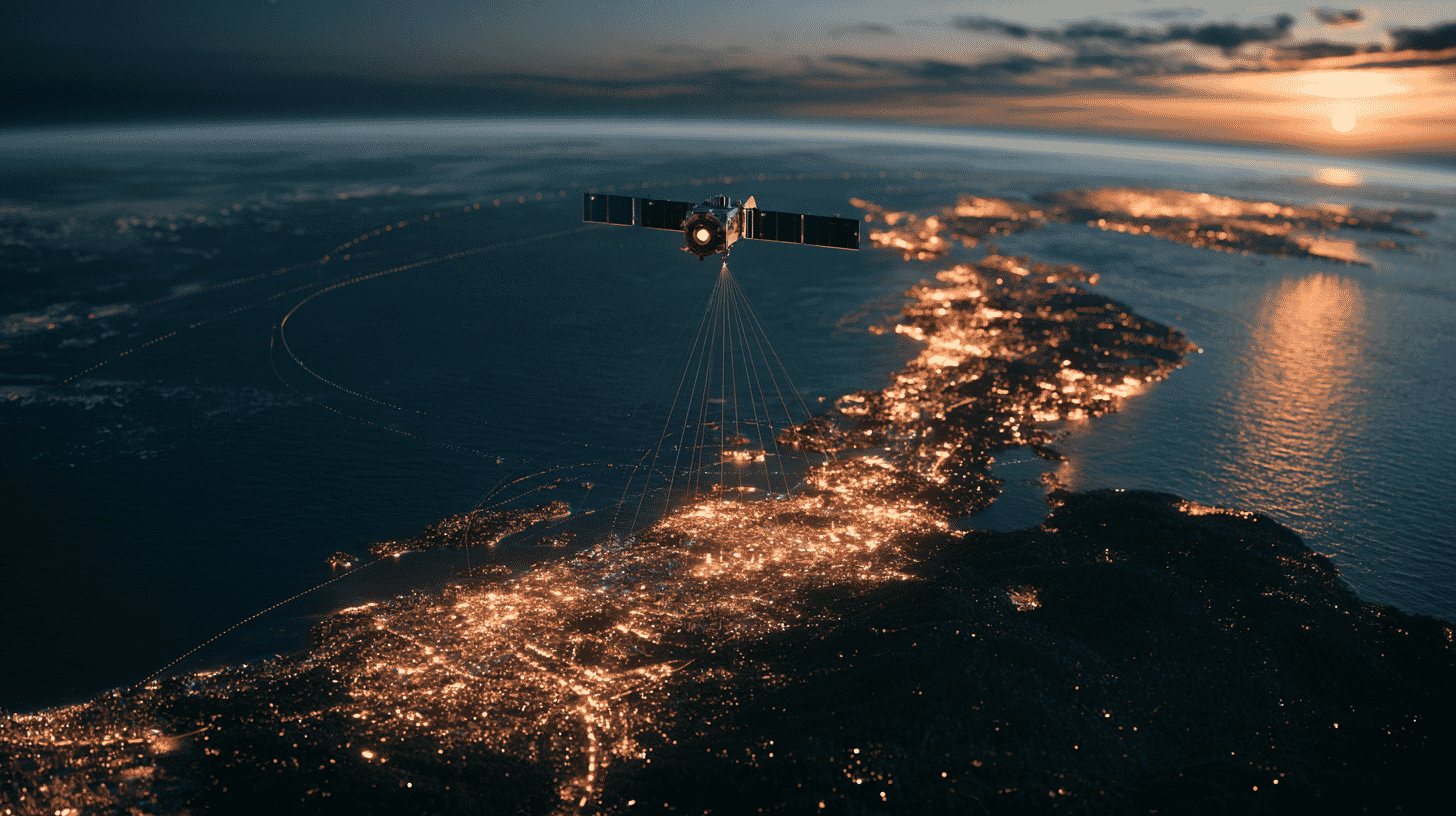
🚀 At 4:23 in the morning, a rocket left a small island in southern Japan carrying a satellite that was supposed to finish a project the country started in 2010. The launch worked. The project still isn't finished. And roughly twenty hours earlier, on the far side of the East China Sea, a Chinese rocket carrying its own satellite had come apart in the sky.
A launch with something to prove
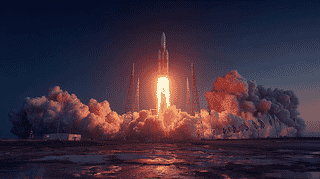
H3 Rocket No. 9 lifted off from the Tanegashima Space Center at 4:23:31 a.m. Japan time on August 11, 2026. The two solid boosters dropped away at one minute 56 seconds. The first stage shut down at five minutes. After two burns of the second stage, the payload separated 29 minutes and four seconds into the flight, on the trajectory it was aiming for. JAXA confirmed the mission a success.
Some eight months earlier, on December 22, 2025, an H3 had failed and taken a satellite with it. The culprit turned out to be a cone-shaped structure that sits on top of the second stage and holds the satellite in place, called the payload support structure, or PSS. Its panels were bonded together with adhesive. Somewhere in manufacturing, a layer inside came unstuck, and the shock of the fairing separating in flight spread that damage until the structure broke apart.
On No. 9, engineers stopped bonding the panels and bolted them instead, a technique carried over from the older H-IIA rocket. That means more drilling, more hardware and more labour hours, but it removes the high-temperature bonding step that went wrong. Strain gauges were added to record how the new structure behaved on the way up. Reports of the post-launch news conference say JAXA H3 project manager Makoto Arita judged the approach good enough for operational use for the time being, with the flight data still to be analysed.
Japan had already flown once since the failure. H3 No. 6 went up in June, but it was a test of a new booster-free configuration carrying a dummy payload, partly to confirm the diagnosis. No. 9 was the first flight since the accident to carry a real, working satellite, and the first return of the workhorse configuration, two main engines and two boosters, that had been grounded for roughly eight months.
What actually reached orbit
The passenger was Michibiki No. 7, part of Japan's own positioning network, formally the Quasi-Zenith Satellite System.
Michibiki broadcasts signals compatible with GPS, so most phones sold in recent years already use it without telling you. What makes it unusual is the geometry. Several of its satellites fly figure-eight paths that park them almost directly above Japan for hours at a time, which is where the name comes from. In a city like Osaka, signals from satellites low on the horizon get swallowed by tall buildings, and in mountain country ridgelines do the same job. A satellite nearly overhead reaches down into those gaps. On top of the basic signal, Michibiki broadcasts correction data that pulls positioning error down to around six centimetres for receivers equipped to use it, which is how Japanese farm tractors steer themselves.
No. 7 goes into a quasi-geostationary orbit, roughly as high as a stationary satellite but tilted just enough that it appears to drift slightly. It will take about two weeks to reach its slot. Equipment checks and positioning tuning follow, and the Cabinet Office schedule puts the start of service about seven months out.
Japan had five Michibiki satellites working before this launch. When No. 7 comes online, that becomes six.
The seventh satellite is now a 2030s problem
Six is not the number that matters. Seven is.
Any positioning fix needs signals from at least four satellites. With seven Michibiki in the right orbits, at least four are above Japan at all times, and the country can locate itself without leaning on anyone else's constellation. Below that, phones and tractors still need GPS in the mix.
The satellite lost in December was No. 5, one of the last three needed to reach seven. Replacing it is not a matter of building another one quickly: the Cabinet Office puts typical satellite manufacturing at six to seven years. The nearest candidate is Michibiki No. 8, already in production for a future 11-satellite expansion and currently penciled in for around fiscal 2031. Asked in December whether No. 8 could stand in for No. 5, officials declined to rule it in or out.
So the milestone everyone has been counting toward has effectively slid to the 2030s. In the meantime, losing No. 5 shrinks coverage at the outer edges of Michibiki's service area and costs accuracy over northern Japan, and engineers are studying whether shuffling the remaining satellites into new positions can claw some of that back.
Kimi Onoda, the minister in charge of space policy, said the government would work to build the seven-satellite constellation early and accelerate development toward eleven. The statement gave no date. Prime Minister Sanae Takaichi issued a congratulatory note the same morning.
Why a country builds its own GPS
Japan's system is the small one. A Cabinet Office briefing published this month lays out the field as of March 2026: GPS with 31 satellites and typical error of five to ten metres; China's BeiDou with 45; Russia's GLONASS with 24; Europe's Galileo with 27; India's NavIC with four and a plan to get back to seven this year. Michibiki, with five, is not competing with any of them globally, and was never meant to.
Michibiki puts a signal nearly overhead where terrain and architecture block everything else. It broadcasts centimetre-grade corrections at home and decimetre-grade corrections across Asia and Oceania. Its disaster-warning channel pushes earthquake and tsunami alerts down from orbit when the ground network is broken, and is being trialled with Fiji. An authentication service running since 2024 lets a receiver check whether a positioning signal is genuine, and it vets GPS and Galileo signals alongside Michibiki's own. The encrypted signal is restricted to government-approved security agencies; the Cabinet Office names the defence ministry, the Self-Defense Forces and the coast guard as its users.
Jamming and spoofing of positioning signals have become routine near conflict zones, and every major system now carries some hardened or encrypted layer. Redundancy also protects against ordinary bad luck: Galileo went dark across its whole constellation for about a week in July 2019 after a ground-segment fault. South Korea is building its own regional system, and Britain, Turkey and New Zealand have all studied alternatives.
Independence rests on the rocket underneath
A constellation is only as independent as your ability to replace a satellite in it.
Europe learned this the hard way. When Ariane 5 retired, Ariane 6 ran years late and Russian Soyuz launches ended after the invasion of Ukraine, Europe found itself with satellites and no ride. In 2024 it put Galileo spacecraft, the flagship of European navigation autonomy, on SpaceX Falcon 9 rockets. Ariane 6 finally flew a Galileo pair itself in December 2025.
Japan has already lived that lesson. One rocket failure destroyed one satellite and pushed a national programme more than fifteen years in the making about five years to the right. Michibiki No. 7 will not change daily life next week. What this launch bought is proof that the vehicle which will eventually carry No. 8 can fly with the fix in place. Nikkei reports that H3 is now expected to settle into a cadence of six to eight launches a year.
The day before, a Chinese Long March 7A carrying the ChinaSat-4B communications satellite broke apart about 85 seconds after leaving Wenchang. State media said the rocket suffered an in-flight anomaly and the mission failed, the first loss of that variant since its 2020 debut. A country that launches far more often than Japan does still lost one.
Most of us never think about where our location comes from until the blue dot on the map starts lying. Japan decided that was a bad thing to leave to chance, and is paying for a small constellation over one archipelago to fix it, slowly and expensively. Does your country run any of its own positioning infrastructure, or does it simply trust whatever is passing overhead?
References
- https://www.jaxa.jp/press/2026/08/20260811-1_j.html
- https://sorae.info/ssn/20260811-h3f9.html
- https://note.com/celestial_worlds/n/n3e6921eeaf3b
- https://www.jaxa.jp/projects/files/youtube/h3f9/jaxa_doc02_20260805.pdf
- https://www8.cao.go.jp/space/pdf/danwa/260811danwa.pdf
- https://www.kantei.go.jp/jp/105/discourse/20260811message.html
- https://sacj.org/news/archives/1344
- https://www.nikkei.com/article/DGXZQOSG046XI0U6A800C2000000/
- https://spacenews.com/falcon-9-launches-galileo-navigation-satellites/
- https://www.ariane.group/en/news/with-ariane-6-arianespace-successfully-launches-eus-galileo-l14/
- https://insidegnss.com/lessons-to-be-learned-from-galileo-signal-outage/
- https://www.nbcnews.com/world/asia/china-says-long-march-7a-rocket-launch-failed-flight-anomaly-rcna591871








Global Discussion
4 comments