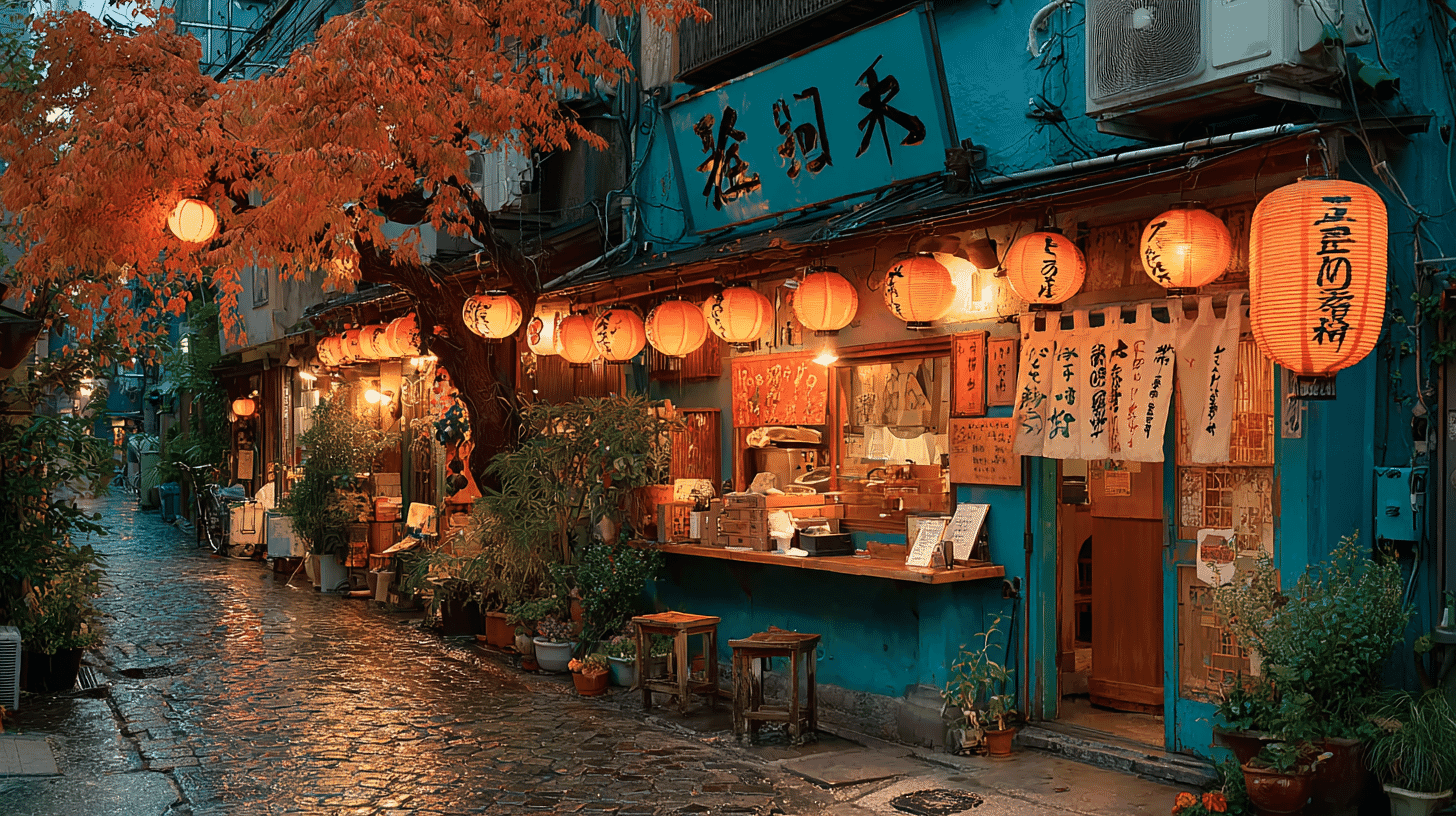
Across Tokyo, beloved mom-and-pop Chinese restaurants are quietly disappearing. A Henan-style curry beef noodle shop in Itabashi. A Guizhou rice noodle spot in Otsuka. These weren't chains but one-of-a-kind places serving regional Chinese dishes you couldn't find anywhere else in Japan. A sweeping visa change is now pushing their owners to shut down and, in some cases, leave the country.
What Is "Gachi-Chūka"? Japan's Authentic Chinese Food Movement
"Gachi-Chūka" (literally "serious Chinese food") is a Japanese term for restaurants that serve unadapted, regionally authentic Chinese cuisine, as opposed to the "Japanized" Chinese food most people in Japan grew up eating. Starting around 2017, hundreds of these restaurants opened across Tokyo, concentrated in neighborhoods like Ikebukuro, Okubo, Kamata, and Nishikawaguchi.
The menu at a Gachi-Chūka restaurant might feature dishes most Japanese diners have never encountered: Sichuan mala tang (numbing spicy hot pot), Guizhou sour fish soup, Xinjiang lamb skewers, or Lanzhou hand-pulled beef noodles. Most of these restaurants are small, owner-operated establishments where the chef is also the business owner, a single person pouring their heart into recreating the flavors of their hometown. Through social media, these hidden gems attracted not only Chinese residents in Japan but also adventurous Japanese foodies, creating a genuine culinary movement.
Sudden Closures: The Visa Renewal Shock
In early 2026, this thriving food scene has been thrown into turmoil.
A shop called "Henan Beef Noodle" in Itabashi Ward's Hasune neighborhood had been serving rare Henan Province-style curry-flavored beef noodles since May 2025. It developed a devoted niche following. Then, in February 2026, it abruptly closed. The restaurant's account on Xiaohongshu (RED, China's equivalent of Instagram) suggested that the closure was linked to the owner's business management visa renewal being denied.
In Otsuka, a popular Guizhou rice noodle restaurant also changed hands at the end of 2025 after the owner posted on social media seeking someone to take over the business. It has since been converted into a Uyghur restaurant. While the exact reasons were not disclosed, visa issues are widely believed to have been a factor.
Both restaurants shared a common profile: small, individually operated establishments bringing rare Chinese regional cuisines to Japan.
What Changed in Japan's Business Manager Visa
The root cause is a sweeping revision to Japan's "Business Manager" visa (経営・管理 / Keiei-Kanri), which took effect on October 16, 2025.
Previously, this visa was relatively accessible. A foreign national could obtain it by either putting up approximately $33,000 (5 million yen) in capital or employing two or more full-time staff, then setting up an office and registering a company, with no requirements for Japanese language ability, academic credentials, or hiring Japanese staff. However, this low bar led to widespread abuse. Thousands of applicants created shell companies solely to obtain residency status, with no real business activity. Some were linked to unlicensed short-term rental operations and fraudulent claims on public welfare.
In response, the Japanese government enacted dramatic reforms:
- Capital requirement: Raised from 5 million yen (~$33,000) to 30 million yen (~$200,000), a six-fold increase. The old option of substituting two full-time employees for the capital threshold has been abolished, making the capital requirement mandatory
- Employment mandate: Must hire at least one full-time Japanese or permanent resident employee
- Experience/Education: Requires either 3+ years of management experience or a master's degree
- Japanese language: Applicant or a full-time employee must demonstrate JLPT N2-level proficiency
- Business plan review: Must be verified by a certified public accountant, tax accountant, or SME management consultant
- Office space: Home offices are essentially disqualified; a dedicated commercial space is required
A three-year transition period, running to October 16, 2028, was established for existing visa holders. Renewal reviews, however, had already been tightened from July 10, 2025, with applicants now required to file a statement documenting actual business activity. An immigration specialist in Ikebukuro reported that over 10 Chinese business owners had their visa renewals denied in just the October–December 2025 period. On Xiaohongshu, posts about failed renewals and forced departures have drawn hundreds of comments, reflecting deep anxiety within Japan's Chinese community.
The "Owner-Chef" Paradox
For small restaurant owners, perhaps the most devastating aspect of the new rules is the fundamental assumption that a "business manager" should be managing, not cooking.
The Business Manager visa is designed for people engaged in management activities. If an owner is found to be working in the kitchen, essentially performing labor rather than management, their visa renewal can be denied on the grounds that their activities don't match their visa category.
For a restaurant chain with multiple locations and corporate staff, this distinction is manageable. But for a solo owner-chef running a tiny shop that serves Henan noodles or Guizhou rice dishes, the idea of "managing" without cooking is absurd. These are restaurants where the chef is the business, and the rule cuts hardest against exactly the places whose value rests on one person's skill.
How Other Countries Handle Foreign Restaurant Owners
Japan's new requirements look remarkably strict in international comparison.
United States: The E-2 Treaty Investor Visa sets no statutory minimum, though roughly $100,000 is a common practical benchmark for a restaurant, and the investor can actively manage and cook in their own establishment. Chinese nationals are excluded because China is not a treaty country, leaving the far steeper EB-5 route: $800,000 in a targeted employment area, $1.05 million elsewhere, plus job creation requirements.
Germany: A "Specialty Chef" track (Spezialitätenkoch) lets foreign chefs work in ethnic specialty restaurants for up to four years. It asks for at least two years of vocational culinary training plus two years of practical experience, not massive capital. The trade-off is that the four years cannot be extended, and a chef must spend three years outside Germany before reapplying.
United Kingdom: The Innovator Founder Visa and Skilled Worker Visa (with a chef subcategory) provide pathways for restaurant entrepreneurs. Innovative business concepts can qualify with modest capital if endorsed by an approved body.
Taiwan: Foreign entrepreneurs can start businesses with capital benchmarks of approximately 500,000 TWD (~$16,000), well below even Japan's old standard.
Australia: The Business Innovation Visa (subclass 188) requires around AUD 200,000 (~$130,000) in business or personal assets, with flexibility for smaller food businesses.
Japan's new 30 million yen ($200,000) capital floor, combined with mandatory hiring, language, and education requirements, places it among the most restrictive regimes in the developed world for small-scale food entrepreneurs.
A Question of Cultural Diversity
The Gachi-Chūka movement has enriched Japan's food landscape immeasurably. Before these restaurants appeared, most Japanese people had never tasted biang biang noodles, luosifen (snail rice noodles), or authentic Lanzhou beef noodles. These flavors arrived not through corporate expansion but through the passion of individual immigrants.
The crackdown on visa fraud is understandable and necessary. But screening on capital alone knocks out the smallest real businesses first. Actual revenue, customer following, tax compliance, community contribution: the new standard leaves little room to weigh any of it.
How difficult is it for foreigners to open a restaurant in your country? What kind of visa or permit do you need? Does your government do anything special to protect food diversity? We'd love to hear your perspective.








Global Discussion
14 comments