On July 24, 2026, Japan's chief cabinet secretary told ministers to speed up work on rules for foreign land purchases. Summer was already three-quarters gone. Meanwhile 20 to 40 percent of new apartments in three central Tokyo wards go to foreign buyers, the developers' association gave 40 million yen to the ruling party's funding body, and Japan holds no WTO reservation on land.
A nine-story mosque near Tokyo's Okachimachi Station became a national flashpoint after one post on X. But it's a rebuild of a facility that has served the area since 2008. A calm look at the jewelry district's history of coexistence and Japan's distance from Islam.
Japan's 2026 population estimate shows foreign residents up 9.64% to 3.73 million while the total falls. How Japan is quietly becoming an immigration society, compared with Germany and Canada.
Ibaraki has become the first prefecture in Japan to pay residents a cash reward for reporting illegal foreign employment. Inside the design, the governor's defense, the backlash from lawyers, and the farming-economy contradiction underneath it all.
An unpermitted mosque facing removal in Japan exposes the real problem: the issue isn't faith, it's the permit, and the lawful route to building one is often blocked. A look at Japan's rising Muslim population, its population decline, and the legal path that was never built.
In the afterword of Jujutsu Kaisen Modulo Volume 3, Gege Akutami revealed that the story of the Simurians' canal was deeply inspired by Tetsu Nakamura, a Japanese doctor who built a 25.5km irrigation canal in Afghanistan. Known in Afghanistan as 'Kaka Murad' (Uncle Murad), here is who he was, both from Japan's perspective and from how Afghans remember him.
Japan's 2025 Business Manager Visa reform — raising capital requirements from $33,000 to $200,000 — is forcing authentic Chinese restaurants to close across Tokyo. Owner-chefs who serve rare regional cuisines face impossible new hurdles. A look at how immigration policy is reshaping Japan's food diversity.
Japan's Justice Ministry doubles the residency requirement for naturalization from 5 to 10 years starting April 1, 2026. Tax verification expands from 1 to 5 years. We explain the operational change, legal debates, and how Japan compares to the US, Germany, Canada, and other countries.
Street Fighter 6's Alex DLC revealed his marriage to Patricia, sparking massive backlash from Western fans who see it as an incestuous relationship. The controversy stems largely from translating Japanese 'sodate no oya' (a person who raised you) as 'adoptive father,' making Patricia his legal sister in English. Meanwhile, Japanese fans largely celebrate the union. We break down the cultural gap behind the divide.
Starting April 2026, JNTO launches the TIC Call Center offering tourist information in English, Chinese, Korean, and Japanese at 050-3416-0010, open daily 9 AM–5 PM. Learn how Japan is upgrading its support system for over 42 million annual foreign visitors.
Mongolian-born Tamawashi tied the all-time makuuchi appearance record at 1,470 on March 10, 2026, took it outright the next day, and pushed it to 1,497. Then a 2-13 in May dropped him to juryo for the first time in 13 years, ending his 1,152 consecutive top-division streak. His 1,793 streak from debut is still alive.
Japan's permanent residency fee goes from 10,000 yen to 200,000 under the draft ordinance published July 3, 2026, applying to applications from October 1. From April 2027, permanent residency can be revoked for deliberate non-payment of taxes or social insurance. Foreign workers hit a record 2,571,037 in October 2025, but growth slowed to 11.7%.
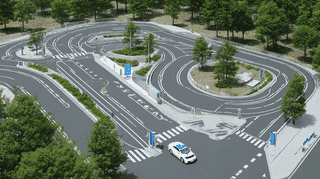
Japan tightened its foreign driver's license conversion test in October 2025: the written exam went from 10 to 50 questions and the pass mark from 70% to 90%, a certificate of residence became mandatory, and tourists can no longer apply. National figures the police released in March 2026 show the knowledge test pass rate falling from 90% to 40% and the practical test from 30% to 10%. A look at the accidents behind the reform and how other countries handle conversion.
Around 420,000 Muslims in Japan face a growing burial crisis. Islamic faith requires burial rather than cremation, but in a country where 99.97% of the deceased are cremated, only about 10 burial-capable cemeteries exist. Plans to build new Muslim cemeteries in Oita and Miyagi prefectures have been blocked by resident opposition, exposing the gap between Japan's push for foreign workers and its readiness for multicultural coexistence.