Spoiler warning: This article touches on the world and themes of Jujutsu Kaisen Modulo, including content from the afterword of the final Volume 3.
The creator of one of the most popular shōnen manga of the 2020s named a single Japanese doctor as the inspiration behind a major story arc in his work. The doctor built a 25.5-kilometer irrigation canal in the Afghan desert. Afghans called him "Kaka Murad", Uncle Murad. When he was killed in 2019, the President of Afghanistan personally helped carry his coffin onto the plane home. On May 1, 2026, the final volume of Jujutsu Kaisen Modulo hit Japanese bookstores, and Gege Akutami's afterword sent a name most international JJK fans had never heard ricocheting across Japanese social media: Tetsu Nakamura.
Jujutsu Kaisen Modulo (呪術廻戦≡), the spin-off sequel to Jujutsu Kaisen, ran in Weekly Shōnen Jump for roughly six months from September 2025 to March 2026, written by Gege Akutami and drawn by Yuji Iwasaki. Set in Tokyo in 2086, the story follows the arrival on Earth of an alien race called the Simurians, who seek a place to settle. Migration, refugees, discrimination, violence, these were the themes. And at the center of the Simurian arc was a canal.
When Volume 3 was released in Japan on May 1, 2026, Japanese fans started sharing posts saying things like "I never expected to read Tetsu Nakamura's name in Jujutsu Kaisen." Akutami's afterword had explicitly stated that the canal storyline was deeply influenced by Nakamura, a Japanese physician who built irrigation infrastructure in Afghanistan and Pakistan over more than three decades.
For most readers outside Japan, this name probably means nothing. That is exactly why it is worth telling.
What Gege Akutami's Volume 3 Afterword Revealed
The serialization of Modulo concluded on March 9, 2026, and the third and final volume came out on May 1. Akutami had hinted at the inspiration in earlier Jump issue comments, but the Volume 3 afterword stated it directly: the canal in the Simurian story arc was modeled on the real irrigation canal that Tetsu Nakamura (1946-2019) built with local residents in eastern Afghanistan.
The X (Twitter) user "Onsen Penguin" posted side-by-side images of the canal in Modulo and Nakamura's actual Marwarid Canal in Nangarhar Province. The post went viral late on May 1 and was compiled into a Togetter thread that became a major talking point.
Akutami went further. In the afterword, he wrote, paraphrasing, that anyone, including himself, can be overtaken by feelings of discrimination or cruelty, and that he was proud to have made Modulo as a final guidepost for himself before he might lose his own way.
The original Jujutsu Kaisen was a story about humans confronting "curses." Its sequel, Modulo, became a story about humans confronting other humans, fear of the outsider, the desire to exclude. And the spine of that story, Akutami now revealed, was the life of a doctor who, instead of carrying a weapon, drove an excavator into the desert to bring water.
Who Was Tetsu Nakamura? From Fukuoka to Peshawar
Tetsu Nakamura was born in Fukuoka City, Japan, on September 15, 1946. He graduated from Kyushu University Medical School in 1973 and trained as a neurologist. In 1984, he took a posting at the leprosy ward of a mission hospital in Peshawar, in what is now Khyber Pakhtunkhwa Province in northwestern Pakistan. This was the start of more than thirty years of medical and humanitarian work along the Afghan-Pakistani border region.
From 1989, he expanded his activities into Afghanistan itself, working in mountainous, medically underserved villages and treating diseases that disproportionately struck the poor, leprosy, tuberculosis, intestinal infections.
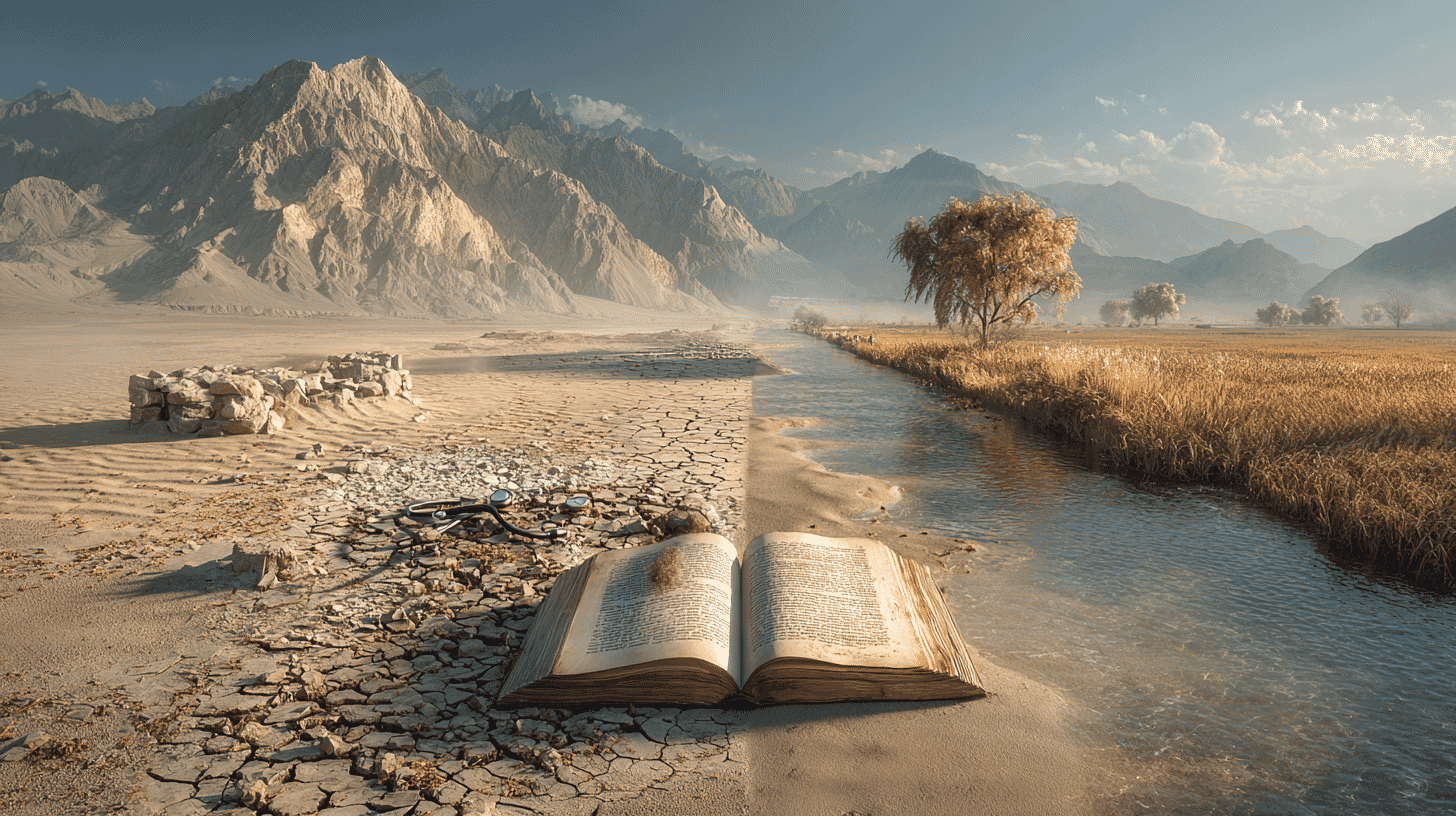
The turning point came in 2000. A massive drought struck Afghanistan, displacing 12 million people. The World Health Organization warned that one million were on the verge of starvation. Nakamura made a decision that, in retrospect, defined his legacy: he set down the stethoscope and picked up the levers of a backhoe.
A hundred clinics matter less than one canal that brings water.
Working under that conviction, in 2003 Nakamura began construction on the Marwarid Canal, 25.5 kilometers long, drawing water from the Kunar River in Nangarhar Province. The technical core of the design was a traditional Edo-period weir technique called Yamada Zeki, originally built in Asakura, Fukuoka, on the Chikugo River in 18th-century Japan. The advantage: no industrial concrete required, structurally robust against floods and earthquakes, and repairable by local residents using stone-filled gabions and willow root systems.
Seven years of construction transformed approximately 16,500 hectares of desert, including the Gamberi Desert, where nothing had grown, into farmland. The water now sustains roughly 650,000 people. He also dug some 1,600 wells and built two hospitals and two mosques along the way.
Nakamura wrote about seeing rice planted in the middle of what had been the Gamberi Desert: was this a dream, or an illusion? It was real.
Throughout his life, in lectures and writings, Nakamura argued that the deepest security came not from weapons but from relationships of trust. He often spoke of how Article 9 of Japan's Constitution, its renunciation of war, had, in his view, protected him in the field. His books include Providence Was With Us: How a Japanese Doctor Turned the Afghan Desert Green (2020 English edition; Japanese original Ten, Tomo ni Ari, 2013) and many others. He received the Ramon Magsaysay Award for Peace and International Understanding in 2003 (often called Asia's Nobel Prize), the Fukuoka Prize Grand Prize and the 61st Kikuchi Kan Prize in 2013, the Order of the Rising Sun in 2016, and a technology award from the Japan Society of Civil Engineers in 2018.
On December 4, 2019, while traveling to an irrigation project site in Jalalabad, Nakamura's vehicle came under attack and he was killed, along with five Afghan staff members traveling with him. The full circumstances of the attack remain unresolved.
Afghanistan's Tetsu Nakamura, The Man They Called "Kaka Murad"
Here is where it gets important for international readers. In Japan, Nakamura's work is well documented. But how Afghans saw him is something even many Japanese people don't fully appreciate.
Across eastern Afghanistan, especially in Nangarhar and Kunar provinces, people called him Kaka Murad (کاکا مراد), "Uncle Murad" in Pashto. The name is a Pashto-styling of "Naka-MURA," with "Murad" being a common Pashto name. Before his death, residents of Nangarhar had even campaigned on social media for him to be made mayor of Jalalabad.
A nation's respect
About two months before his death, on October 7, 2019, then-President Ashraf Ghani granted Nakamura honorary Afghan citizenship. The previous year, in 2018, Ghani had awarded him the Ghazi Mir Masjidi Khan Medal, a national honour. Afghanistan's lower house of parliament had commended him back in 2010.
After his death, on December 7, 2019, a state funeral was held at Hamid Karzai International Airport in Kabul. President Ghani himself joined Afghan soldiers in personally carrying the coffin, draped in the Afghan flag, to the aircraft. For an Afghan government to grant this level of honor to a foreign national was extraordinary.
On January 14, 2021, the Afghan government announced a commemorative postage stamp bearing Nakamura's portrait, with his achievements printed in both the local language and English.
The grief of ordinary Afghans
In the days after the killing, the hashtag #SorryJapan began trending across Afghan social media, Afghan citizens apologizing to Japan for failing to keep Nakamura safe. The man they were supposed to be protecting had instead been protecting them, the sentiment ran.
Candlelight vigils were held in Kabul, Nangarhar, Khost, and Parwan. In Khost Province, a roundabout was named after Nakamura. The Afghan airline Kam Air painted his portrait on an Airbus A340, flying his image across the country in tribute.
In Kabul and Jalalabad, the Afghan "artivist" collective ArtLords painted murals of Nakamura. Speaking to Al Jazeera, ArtLords co-founder Omaid Sharifi said Nakamura had been killed precisely because he was trying to serve the most vulnerable people in Afghan society. A schoolteacher in Kama district, Nangarhar, told Al Jazeera that Nakamura would be remembered as a true and loyal son of Afghanistan.
The Taliban era, a paradox
In August 2021, the Taliban retook Kabul. The relationship to Nakamura's legacy became complicated.
In September 2021, the ArtLords mural of Nakamura in central Kabul was painted over white by Taliban order. The mural had shown Nakamura looking at flowering trees against the backdrop of the Japanese flag. Over it, in Pashto, was written "Congratulations on Independence", a message celebrating the completion of the U.S. military withdrawal.
Importantly, this was not a rejection of Nakamura himself. Taliban spokespersons had stated they would re-investigate his 2019 killing. The whitewashing is generally understood to reflect the Taliban's strict interpretation of Islamic prohibitions on figural imagery, not hostility toward the man. The Taliban had also issued a statement immediately after the 2019 attack denying any involvement.
Under Taliban rule, meanwhile, a memorial plaza bearing Nakamura's name was reportedly opened in Jalalabad, Nangarhar Province. The mural was erased, but the canal still flows, and a public space now carries his name. Nakamura's standing in Afghanistan survived the change of government.
Five names that should not be forgotten
There is one more thing that must be said. On December 4, 2019, Nakamura was not the only person killed. Five Afghan staff members, drivers and security guards, men in their twenties and thirties, all of them fathers, died with him. They left behind a combined 25 wives and children.
Under the current Taliban interim government's restrictions on women's employment and girls' education, the widows cannot work, and children who once dreamed of becoming doctors like the man their fathers had protected can no longer pursue medical training. Nakamura's story tends to center on him alone, but the people who risked and lost their lives alongside him, and the families they left behind, are part of this story too.
Why a Canal? Where Modulo and Reality Overlap
This is where we return to the canal in Modulo.
Among Japanese fans, there is broad agreement that the canal in Modulo shares structural and thematic DNA with the actual Marwarid Canal. The X user Onsen Penguin pointed out a specific parallel: the scene where the character Dura addresses a crowd before her duel with Dabra echoes the real Tetsu Nakamura's appearance before the Japanese Diet in late 2001, immediately after 9/11, when he opposed U.S. and U.K. airstrikes on Afghanistan and the dispatch of Japanese Self-Defense Forces, urging instead a focus on famine relief.
In a 2014 interview with The Japan Times, Nakamura said he tried not to make enemies, that making everyone a friend, even at the cost of seeming unprincipled, was vastly more effective than carrying a weapon, because people themselves were his only support.
Modulo's theme, coexistence between newcomers and established communities, the awareness that anyone can be overtaken by prejudice, resonates deeply with Nakamura's stance. Akutami is widely believed to have read Nakamura's autobiography Providence Was With Us, the 2020 English-language edition of Ten, Tomo ni Ari. The English title's "Providence" reflects the Japanese word ten (天), meaning heaven or destiny.
What It Means When Manga Talks About Real Problems
The original Jujutsu Kaisen has sold over 100 million copies worldwide. Modulo's English edition, licensed by VIZ Media, will reach international readers in the near future.
When the creator of a manga at this scale writes that even he might be overtaken by feelings of discrimination, and that creating Modulo served as a guidepost for his own future self, that carries weight. Akutami stated, very plainly, whose story he had been telling and for whom.
Shōnen manga can be a device that opens up children's worldviews. Just as a young reader of Akane-banashi might find themselves walking into a rakugo theater, a young reader of Modulo might end up looking up the Peshawar-kai, or the engineering of irrigation canals, or the geography of Afghanistan. Japanese copywriter Yukio Hashiguchi made exactly this point on X.
Nakamura himself disliked being called a "hero." Between expeditions to the field, he listened to Mozart on his earphones, was a fan of the Crayon Shin-chan anime, and reportedly told corny jokes at every opportunity. Once, asked by a starstruck student for a few inspiring words, he reportedly replied with the Japanese proverb "Even a dog that walks around will bump into a stick", meaning, just go out and try things.
That doctor's life, in 2026, sat on the desk of a globally bestselling manga creator. From the modest space of a final-volume afterword, it is quietly setting out into the world all over again.
Who Is Your Country's "Kaka Murad"?
Every country has someone like Tetsu Nakamura, someone who, instead of carrying weapons, picked up tools, and over decades, in distant deserts or mountains or war zones, changed something. Mother Teresa, Paul Farmer, Denis Mukwege, Albert Schweitzer. Or maybe a less famous, more local figure that only your community knows about.
If you've read Modulo, what did you think of the Simurian canal? If you haven't, this might be a good moment to pick it up. A single manga can lead to a single doctor's life, and from there, perhaps, to a question of your own.
References
- https://togetter.com/li/2692295
- https://en.wikipedia.org/wiki/Tetsu_Nakamura
- https://en.wikipedia.org/wiki/Jujutsu_Kaisen_Modulo
- https://www.voanews.com/extremism-watch/afghans-mourn-slain-japanese-doctor-known-uncle-murad
- https://www.aljazeera.com/news/2019/12/11/son-of-afghanistan-murals-honour-slain-japanese-doctor
- https://president.gov.af/en/president-ashraf-ghanis-message-on-first-death-anniversary-of-dr-tetsu-nakamura/
- https://www.khaama.com/kaka-murads-inspiring-legacy-4th-anniversary-celebration/
- https://www.peshawar-pms.com/pekai/ryakureki.html
- https://fukuoka-prize.org/laureates/detail/019f4edf-728c-414a-be97-939ed466208f
- https://www.npr.org/2019/12/06/785671274/remembering-tetsu-nakamura-japanese-doctor-who-spent-decades-working-in-afghanis
- https://www.nikkei.com/article/DGXZQOGM053AZ0V00C21A9000000/

Global Discussion
15 comments