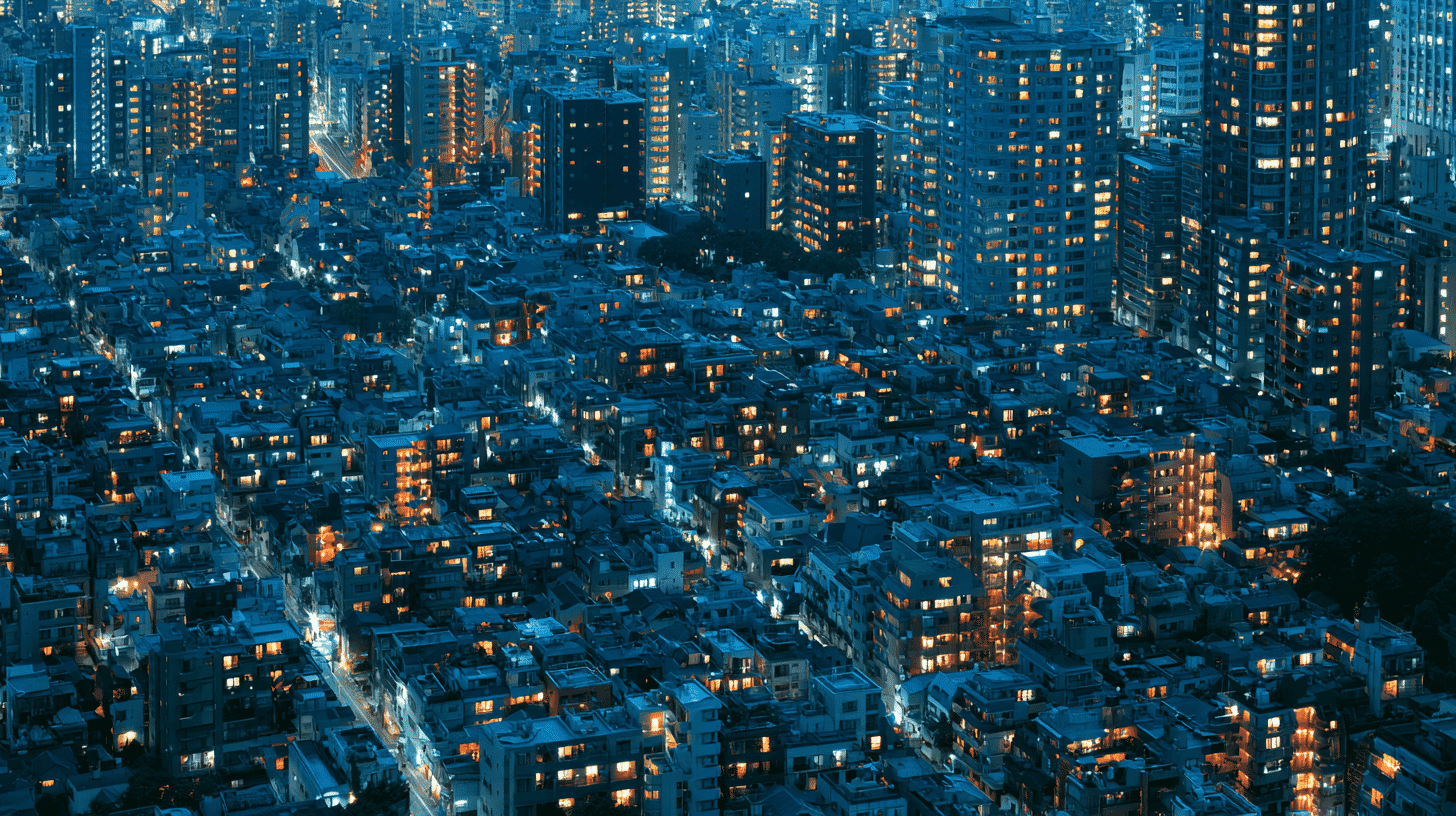
Japan's population is shrinking. Tokyo's is not. That contrast sells apartments and anchors policy speeches, and the resident registry published this year lets you take it apart. Tokyo added 75,018 people during 2025, and foreign residents accounted for 62,478 of them. That is 83 percent of the growth.
Breaking down the 75,018
Japan's resident registry, the jumin kihon daicho, is the list of everyone who has filed an address with a city or ward office. Foreign residents have been on it since July 2012, which makes it one of the few Japanese datasets where nationals and non-nationals can be compared year by year on the same definition.
As of 1 January 2026, Tokyo had 14,077,552 registered residents, according to the Statistics Division of the Tokyo Metropolitan Government. Japanese nationals numbered 13,293,851, up 12,540 on the year, a rise of 0.09 percent. Foreign residents numbered 783,701, up 62,478, a rise of 8.66 percent.
Population change runs on two engines. Natural change is births minus deaths. Social change is arrivals minus departures, whether someone moves from another prefecture or from another country. Most talk about Tokyo is really about the second.
Counting only the Japanese residents
Deaths outnumbered births by 54,121. Arrivals outnumbered departures by 66,661. What survives the subtraction is that 12,540.
Tokyo still gains more Japanese residents on net than any other prefecture, and by a wide margin: second-placed Kanagawa managed 19,278. Yet roughly four fifths of that inflow is spent covering the gap between deaths and births.
Compared with 1 January 2021, Tokyo's Japanese population is down by 3,238. It fell through the pandemic years to a low in 2023 and has risen for three years since, without getting back to where it started. Over those same five years the city gained 234,027 residents in total, so the entire five-year increase, and a little more, came from foreign residents.
So ikkyoku shuchu, the term Japanese officials have used for decades for people draining out of the regions and into the capital, is still happening. It has just stopped being what moves Tokyo's population line. Students and first-jobbers keep arriving; households in their thirties and forties increasingly leave for the suburbs, a pattern visible in how far Tokyo rents have climbed.
Not only Tokyo
Three of Japan's 47 prefectures grew last year: Tokyo, Osaka and Chiba. Osaka's total rose by 3,365, which happened only because a gain of 41,401 foreign residents outweighed a loss of 38,036 Japanese ones. Aichi, home to Toyota and a large slice of Japanese manufacturing, still shrank by 10,458 even after adding 26,066 foreign residents.
Tokyo was the only prefecture where the Japanese population grew at all. Foreign residents increased in all 47. Nationally the registry lost 916,744 Japanese residents and gained 353,696 foreign ones.
The biggest municipal gain was not in Tokyo either. Osaka City added 25,056 foreign residents, more than any other city or ward in the country. Tokyo still holds 19.44 percent of Japan's foreign residents, close to one in five.
A population with an average age of 34
The average age of Tokyo's Japanese residents is 46.54. For foreign residents it is 34.76, and it dropped again last year.
The largest five-year age band among Japanese residents in Tokyo is 50 to 54, with 1,115,308 people. Among foreign residents it is 25 to 29, with 131,271. People aged 20 to 34 account for 351,440 foreign residents, or 44.8 percent of the total.
Tokyo's working-age population, 15 to 64, grew by 82,172 last year, and foreign residents supplied 55,618 of that. The population under 15 went the other way, falling by 17,748, because a decline of 22,222 Japanese children was only partly offset by 4,474 more foreign ones. Tokyo is gaining workers and losing children.
Go slower on the property argument
The step from "Tokyo is growing" to "so buy Tokyo property" is where this data gets used most and inspected least.
Start with who the new residents are. Growth concentrated in people in their twenties and early thirties reads first as demand for rented rooms. Tokyo now counts 501,156 households made up only of foreign residents, up 10.6 percent in a year, and the average household across the city holds 1.81 people. None of that means prices cannot rise, and land prices have been rising. It does mean the link between a rising headcount and rising land values runs through rents, incomes and credit rather than arriving on its own.
Then there is the slope. Tokyo's foreign population grew 11.40 percent in the year to January 2025 and 8.66 percent in the year to January 2026. Still fast. Slower than it was. Three years is a short ruler to lay on a curve that has already begun to bend.
This was not a Tokyo policy decision. The city did not set out to recruit 62,478 people last year, and the main levers sit in national visa rules written largely around labour shortages, and in a national population shift Japan has still not named. What the registry offers is narrower and harder to argue with: a count of who filed an address, and where.
If your city is still growing, do you know who is growing it?









Global Discussion
4 comments