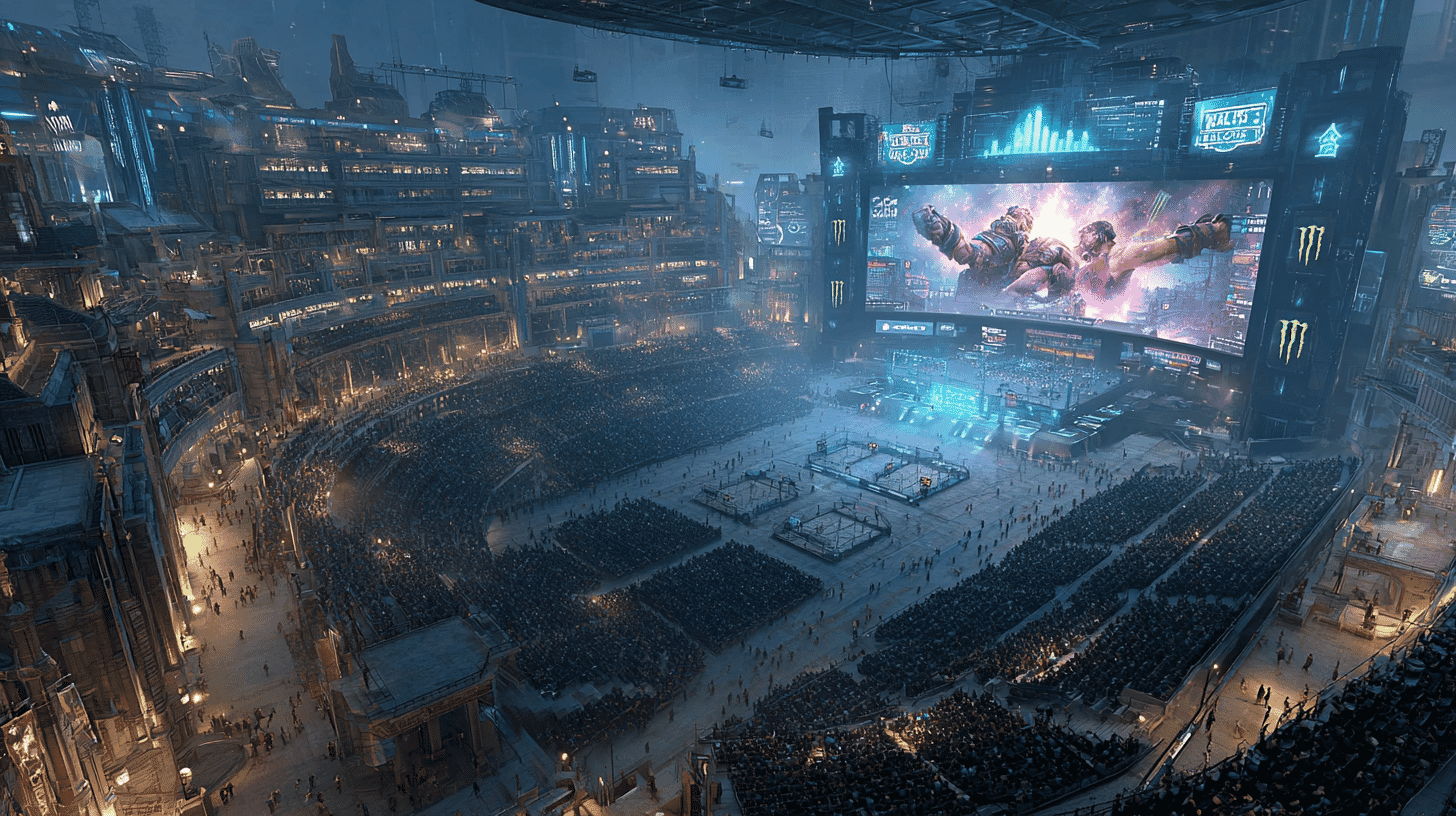
Japan's esports market is set to break the $130 million barrier in 2026. While the rest of the world builds its competitive gaming scene around shooters and MOBAs, Japan runs on fighting games, arcade culture, and homegrown champions. Japanese players have won the Capcom Cup world title two years running. Here's why Japan's esports scene looks nothing like the global mainstream.
The Numbers in the White Paper
On March 26, 2026, the Japan Esports Union (JESU) released its annual report, the Japan Esports White Paper 2025, a 322-page data yearbook covering the latest trends in Japan's domestic esports industry. JESU was formed in 2018 by merging three bodies, and renamed itself in Japanese from Nihon e-Sports Rengo to Nihon e-Sports Kyokai in August 2025.
The headline figure: Japan's domestic esports market reached an estimated 16.1 billion yen (approximately $105 million) in 2024, marking a 9.9% year-over-year increase. The market has maintained a steady average annual growth rate of around 10% since 2020, and JESU projects it will exceed 20 billion yen ($130 million) by 2026.
Breaking down the market composition, event operations account for 37.3% and sponsorship fees for 36.3%, together more than 70% of the total. The establishment of hybrid online-offline event formats has solidified event management as a core business model. Merchandise takes about 14% and streaming about 12.4%, and both are growing faster than the market as a whole. For scale: the market was 4.8 billion yen in 2018, so it has roughly tripled in six years.
Fan Base Approaching 10 Million
The fan base supporting this growth is expanding steadily. JESU estimates that approximately 9.67 million people in Japan qualified as esports fans in 2024, defined as those who have watched competitions or streaming content, up roughly 13% year on year. Of these, 43.3%, or about 4.19 million people, are estimated to actively participate in competitive gaming. The fan count was 6.86 million in 2020, so it has grown about 1.4x in four years, outpacing the market itself.
Driven by the growing influence of international tournaments held both domestically and abroad, JESU projects the fan count will approach 15 million by 2026. Given Japan's total population of about 124 million, that means roughly 1 in 8 Japanese people will have some connection to esports.
Japan in the Global Context
For perspective, the global esports market was estimated at roughly $2 to $2.5 billion in 2024 across various industry reports, with North America accounting for about 30% of the total, followed by Asia-Pacific.
Japan's $105 million represents roughly 4-5% of the global total, smaller than South Korea or China. But the steady 10% annual growth rate is notable for a mature developed economy. Japan's market also proved relatively resilient during the so-called "esports winter" of 2023-2024, when global investment contracted, sponsorships dried up, and several major teams hit financial trouble. The fighting game-centric ecosystem buffered those external shocks.
Back-to-Back Japanese Champions at Capcom Cup
The symbolic centerpiece of Japan's esports scene is the Capcom Cup, the world championship for Street Fighter 6, organized by Capcom.
At Capcom Cup 11, held March 5 to 8, 2025, at Tokyo's Ryogoku Kokugikan (the traditional sumo arena) for the first time, Kakeru of FUKUSHIMA IBUSHIGIN, then 27, beat 15-year-old Chilean prodigy Blaz 3-1 in the Grand Final to claim the $1 million prize.
Then from March 11 to 15, 2026, at Capcom Cup 12, again at Ryogoku Kokugikan, 21-year-old Sahara of Good 8 Squad beat France's Kilzyou 5-1 in the final to take the world title on his first appearance, in his first year as a professional. When asked about the $1 million prize in his victory interview, he could barely contain his disbelief: "Is this... not a dream? I really can't believe this is happening!"
The team event, the Street Fighter League: World Championship 2025, was also won by a Japanese team, REJECT. The week drew a record 20,000 attendees. Capcom announced that Capcom Cup 13 and the Street Fighter League: World Championship 2026 will both return to Ryogoku Kokugikan, with the total prize pool across Capcom's 2026 esports season exceeding $2.1 million.
Why Fighting Games Dominate Japan's Esports Scene
Globally, the biggest esports titles are shooters like VALORANT and Counter-Strike 2, and MOBAs like League of Legends. These genres command the largest audiences and prize pools worldwide.
Japan, however, has built its competitive gaming identity around fighting games. Several factors explain this divergence.
Arcade culture runs deep. Since the Street Fighter II boom of the 1990s, Japan developed a competitive gaming culture centered on "game centers," arcades where strangers challenged each other face-to-face, one 100-yen coin at a time. This tradition of in-person, one-on-one competition cultivated a community and competitive spirit that has endured for over three decades. Icons like Daigo "The Beast" Umehara emerged from this culture and became nationally recognized figures.
PC gaming remains niche. By various industry estimates, more than 40% of gamers worldwide play on PC, while in Japan the figure is under 20%. Since shooter and MOBA esports are built primarily around PC platforms, Japan's console and arcade-centric market wasn't fertile ground for these genres to develop competitively.
Cultural distance from firearms. In the United States, guns are a familiar part of everyday life. South Korea has mandatory military service. In Japan, the vast majority of people go their entire lives without ever touching a firearm. This cultural gap helps explain why gun-based games like FPS titles never achieved the same level of cultural resonance in Japan.
The appeal of one-on-one combat. Fighting games share a structural similarity with sumo and judo: individual competitions where two opponents face each other directly. The action is contained on a single screen, making it easy to follow even for casual viewers. FPS team battles, by contrast, present a higher barrier to entry for spectators unfamiliar with the genre.
Is the Fighting Game Focus a Weakness or a Strength?
The question is often raised: can Japan afford to focus on fighting games when the rest of the world is all about FPS? But Japan's fighting game-centric model carries significant advantages.
First, Japan owns the intellectual property. Street Fighter (Capcom), Tekken (Bandai Namco), The King of Fighters (SNK): the world's most iconic fighting game franchises are Japanese-made. This means Japan's esports scene operates largely with domestically produced content, a competitive advantage no other country can match in esports.
Second, fighting game careers last longer. Shooter professionals often retire in their mid-20s, but fighting game players routinely compete at the highest level into their 30s and 40s. Daigo Umehara, born in 1981, is still active. Tokido, another veteran, remains a fixture at world championships. Set that against 21-year-old Sahara winning Capcom Cup 12 and the generational spread becomes the depth of the talent pool itself. That longevity supports a more sustainable ecosystem.
Third, fighting games align well with broader social initiatives. JESU promotes esports not just through tournaments, but through regional revitalization, international exchange, education, and welfare programs. The accessibility and visual clarity of fighting games make them ideal vehicles for these community-building efforts.
VALORANT, and a Widening Field
That said, Japan's esports landscape isn't exclusively about fighting games. VALORANT has rapidly gained popularity, with Japanese teams beginning to make an impact on the international stage. Shooter awareness is growing among general audiences as well.
The international picture is unsettled. The IOC announced in 2024 that it would stage the Olympic Esports Games in Saudi Arabia in 2027, then in October 2025 terminated its 12-year partnership with the Saudi Arabian Olympic and Paralympic Committee and shelved the event. The IOC says it will look for another format. Meanwhile Saudi Arabia's own Esports World Cup has established itself as the largest tournament in the world; the top four at Capcom Cup 12 earned spots at the 2026 edition.
JESU's projection that the market will exceed $130 million reflects this diversification. The strategy: keep the fighting game foundation while widening into new genres.
"Japanese Games, Japanese Players, Japanese Venues, World Titles"
The market size doesn't rival the U.S. or China. But Japanese games, played by Japanese players, in a Japanese venue, producing world champions: that self-contained loop is not available to anyone else. Not matching the global mainstream has itself become the shape of Japanese esports.
What does the esports scene look like in your country? Which game genres are most popular, and how is the market developing? We'd love to hear your perspective.







Global Discussion
13 comments