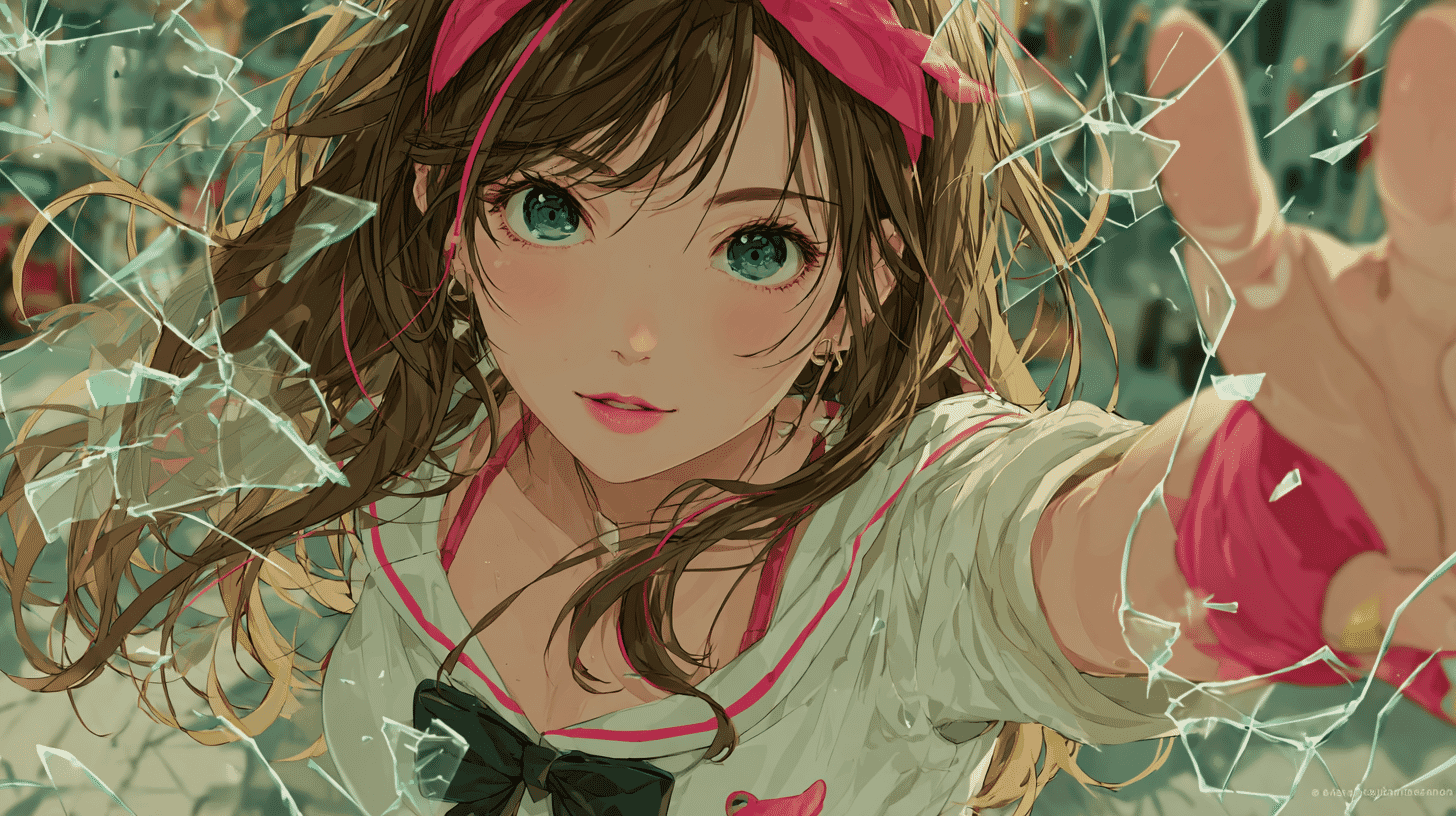
In December 2016, a virtual character appeared on YouTube with a simple mission: to connect with as many humans as possible. That character was Kizuna AI, and she called herself a "Virtual YouTuber", a term that didn't exist until she created it. Over time, that phrase was shortened to "VTuber," and it became the name for an entire global phenomenon.
Ten years on, her main YouTube channel "A.I.Channel" has surpassed 3 million subscribers. Across all social media platforms, her total follower count tops 10 million. She has appeared on Japanese TV, starred in commercials, released original music, and even collaborated with the video game Fortnite, consistently breaking barriers between virtual and physical worlds.
But the journey hasn't been without its challenges. In 2022, Kizuna AI entered what was called sleep, an indefinite hiatus. For roughly three years, the pioneer of VTuber culture went silent. She returned on February 26, 2025, this time with music as her primary vehicle for connecting with the world.
"KAMACHO": A Pop Anthem of Honest Vulnerability
The music video dropped on February 26, 2026, with streaming from the 27th. "KAMACHO" is Kizuna AI's first single of her 10th anniversary year. The title comes from the Japanese slang "kamacho" (かまちょ), which loosely translates to "pay attention to me" or "give me some love", a playful, slightly needy plea that's popular among younger Japanese internet users.
Hayato Yamamoto, known for writing hits like M!LK's "Iijan," wrote the lyrics, music, and arrangement. Choreography was handled by Bunkei, a rising name in Japan's dance scene, and the music video was directed by Kenji Kawasaki of Eallin Japan.
In a recent interview, Kizuna AI explained the motivation behind the song with striking candor. While she has over 10 million followers across social media, she acknowledges a gap: many people know who she is, but fewer are truly engaged fans. Rather than playing it safe as the "legendary pioneer" everyone expects her to be, she chose to strip away the facade and say what she actually feels, "I want you to see more of me."
The result is an upbeat, catchy pop track that radiates genuine emotion, a song about wanting to be loved, not just respected.
A New Look and a Gift to the Community
Alongside the single, Kizuna AI unveiled a completely updated 3D visual design, created by acclaimed illustrator Naoki Saito. The new look retains design elements from her original 2016 model while modernizing her aesthetic with what the team describes as a blend of "cuteness and freshness."
But perhaps the most remarkable move was the free public release of her new 3D model as a VRM file. VRM is a universal format for 3D avatars, widely used in virtual reality platforms like VRChat and in creative tools for 3D animation. By releasing her model for free, Kizuna AI is essentially inviting fans and creators around the world to use her likeness in their own projects, a move that embodies her mission of connection.
In an era where IP ownership is fiercely guarded, this open approach to sharing her virtual identity stands out as a bold, community-first strategy.
How One Character Spawned a Billion-Dollar Industry
The culture Kizuna AI accidentally ignited has become a massive global industry. According to Japan's Yano Research Institute, the domestic VTuber market reached roughly ¥80 billion (around $530 million) in fiscal 2023, up 153.8% year over year, and is projected to hit ¥126 billion (about $840 million) in fiscal 2025. Merchandise accounts for more than half of that at ¥44.5 billion, followed by live streaming at ¥16 billion, B2B at ¥13.1 billion, and events at ¥6.4 billion.
Major agencies like Hololive and Nijisanji have built vast talent rosters and global fanbases. Their listed parent companies, Cover and ANYCOLOR, each now post annual revenue above ¥40 billion. Hololive's Suisei Hoshimachi was selected for Forbes JAPAN's 30 UNDER 30.
Yet Kizuna AI herself says she never set out to create a culture. In her interview, she reflected with characteristic humility: she wasn't trying to spread VTubing or build an industry. She was just desperate to be noticed, to be remembered, to connect. The culture formed around her almost by accident, a testament to the universal appeal of what she represented.
The Online Live: April 11, Free for Everyone
To celebrate the release of "KAMACHO," Kizuna AI will hold a solo 3DCG online concert titled "LOOK AT AI?" on April 11, 2026, streaming free in full on her YouTube channel. A free public viewing runs at namco TOKYO in the Tokyu Kabukicho Tower.
For Kizuna AI, live performance is where music transcends language barriers. She describes the experience of watching someone's emotions shift in real time as she performs as the deepest form of connection she can achieve through her art.
"10 Years Is Still Just a Waypoint"
When asked what has changed and what hasn't over the past decade, Kizuna AI's answer was clear: the environment around her has transformed dramatically, but her core goal remains the same, to connect with people all over the world. If she could speak to her 2016 self, she'd say: "Things are going to be even bigger than you imagine."
And about the 10th anniversary milestone? She considers it "still just a waypoint."
How popular are VTubers in your country? Had you heard of Kizuna AI before? We'd love to hear your thoughts, what does VTuber culture look like where you are?









Global Discussion
13 comments