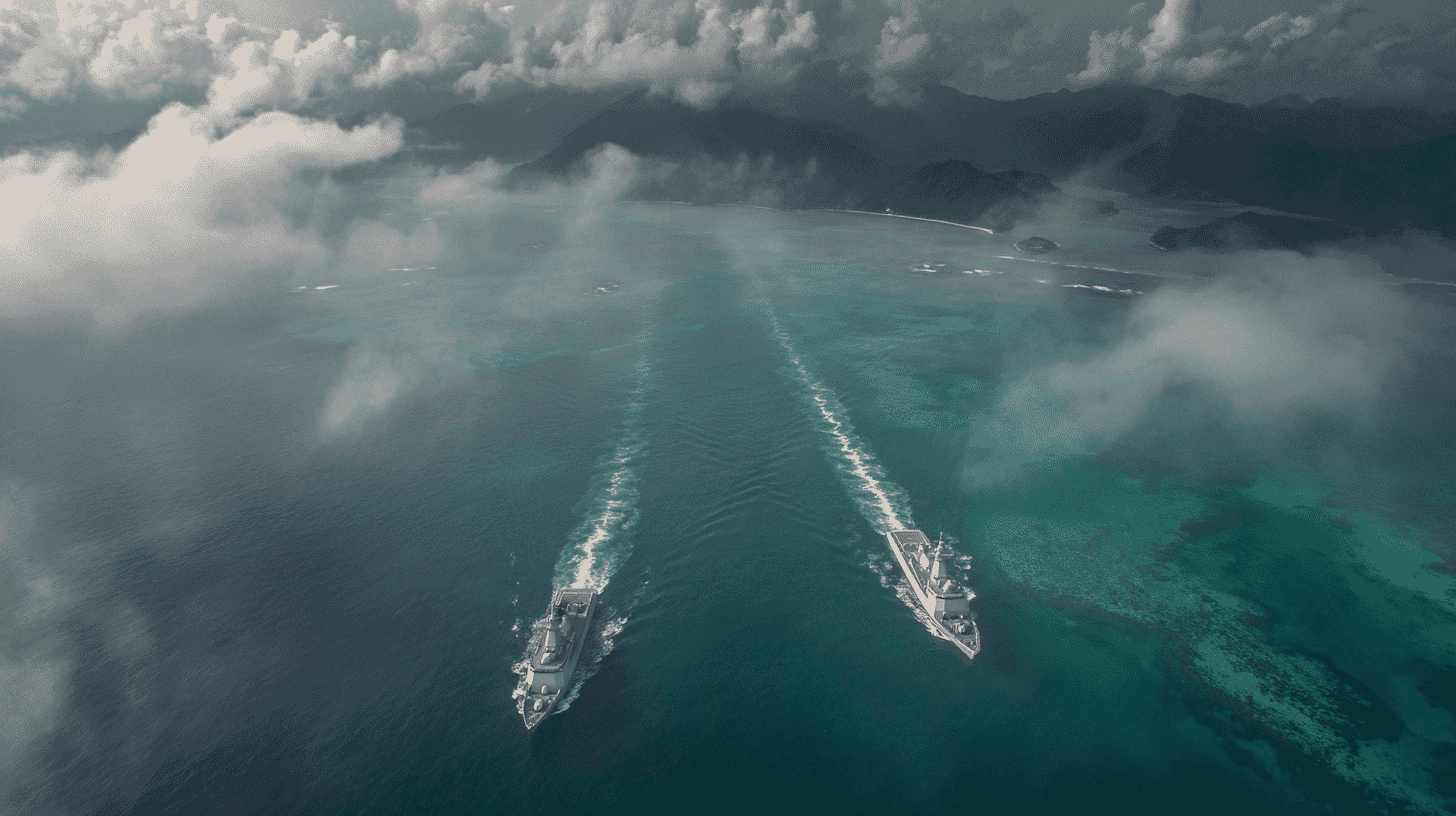
Chinese government vessels were spotted near Japan's Senkaku Islands on 357 days in 2025, nearly every day of the year. In response, Japan has launched a ¥16.6 billion (about $108 million) patrol ship armed with twin 40mm guns and capable of speeds over 25 knots. Meet the "Suruga," the newest addition to the Japan Coast Guard's growing fleet and a symbol of Tokyo's quiet but determined maritime security strategy.
Japan Launches Its Newest Maritime Guardian
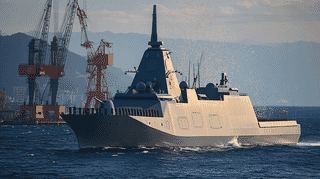
On February 18, 2026, a naming and launch ceremony was held at Mitsubishi Heavy Industries Maritime Systems' headquarters shipyard in Tamano City, Okayama Prefecture. The new vessel, christened "Suruga" (named after Suruga Bay in Shizuoka Prefecture), is the eighth ship in the Miyako-class series of large patrol vessels, carrying the hull number PL-208.
Here are the key specifications:
- Length: 120.0 meters (394 feet)
- Beam: 14.0 meters (46 feet)
- Displacement: Approximately 3,500 gross tons
- Speed: Over 25 knots (approximately 29 mph / 46 km/h)
- Construction cost: Approximately ¥16.6 billion ($108 million)
- Armament: Two 40mm autocannons, remote-controlled water cannons, multilingual stop-order display systems (including Chinese and Russian), and a helicopter landing deck
It has no helicopter hangar, but a flight deck at the stern lets a helicopter take off and land when needed. Among Japan Coast Guard vessels that carry no helicopter of their own, it ranks near the top in size.
The ceremony was attended by about 30 officials along with local elementary school students. One child whose father helped build the vessel said, "I want this ship to protect Japan from many countries." Shipbuilding remains a point of local pride in this coastal city.
Why Japan Needs These Ships: The Senkaku Challenge
The steady buildup of Japan's patrol fleet is driven by an increasingly tense maritime security environment in the East China Sea.
Since Japan nationalized the Senkaku Islands (known as the Diaoyu Islands in China) in September 2012, the presence of China Coast Guard (CCG) vessels in the surrounding waters has escalated. In 2025, Chinese government ships were detected near the Senkakus on 357 days, two more than the previous year's 355 and a record since nationalization. Their longest unbroken run stretched 335 days, from November 19, 2024 to October 19, 2025. China claims the islands, which it calls Diaoyu, while the Japanese government's position is that no territorial dispute over them exists.
The situation took an alarming turn in May 2025, when a helicopter launched from a CCG vessel that had intruded into Japanese territorial waters violated Japan's airspace over the Senkaku Islands. According to Japan's Ministry of Defense, this was the first confirmed airspace violation by a CCG helicopter, prompting the Air Self-Defense Force to scramble fighter jets in response.
China has deployed large 10,000-ton class coast guard vessels equipped with 76mm rapid-fire cannons. Against such ships, Japan's previous mainstay 2,000-ton patrol vessels were at a disadvantage in both endurance and physical presence. The 3,500-ton Miyako-class was designed to fill the gap between these smaller ships and Japan's largest 6,500-ton helicopter-carrying patrol vessels.
The Miyako-Class Fleet
The Miyako-class construction program stems from a December 2016 Cabinet-level decision on strengthening Japan Coast Guard capabilities. The Coast Guard has been building 3,500-ton patrol vessels steadily, and eight have been named and launched so far.
Ships 1 through 6 ("Miyako" through "Daito") have already been delivered and deployed to Nagasaki, Kagoshima, and Okinawa Prefectures, all focused on the East China Sea front. Ship 7, "Hiroshima," was launched in September 2025 and is expected to enter service in fiscal 2026. "Suruga" (Ship 8) will now undergo outfitting work before delivery in fiscal 2026.
What makes "Suruga" particularly interesting is its likely deployment. Coast Guard vessels are typically named after peninsulas or bays, and the Suruga Bay connection suggests assignment to the 3rd Regional Coast Guard Headquarters covering the Kanto and Tokai regions along the Pacific coast. If confirmed, this would mark the first eastern Japan deployment for a Miyako-class vessel, since all previous ships have been stationed in the southwest. It signals Japan's intent to strengthen maritime security across its entire coastline, not just the Senkaku frontline.
Looking Further Ahead: A 30,000-Ton Mega-Vessel
In parallel with the 3,500-ton program, the Japan Coast Guard is pursuing an even more ambitious project: a multipurpose patrol vessel roughly 200 meters long and about 31,000 gross tons.
Estimated to cost ¥68 billion ($443 million), it is due to be laid down in fiscal 2026, launched in fiscal 2028, and commissioned in fiscal 2029. On paper it outsizes the Japan Maritime Self-Defense Force's Izumo-class helicopter destroyers (standard displacement about 19,500 tons). It is designed to accommodate over 1,000 people during emergencies and features a vehicle ramp that can load buses and trucks directly, capabilities aimed at disaster evacuation and humanitarian aid rather than military confrontation.
Notably, unlike the 3,500-ton class, this mega-vessel has no planned weapons systems. That stands in contrast to China's armed 10,000-ton coast guard ships and reflects Japan's emphasis on the Coast Guard's role as a civilian law enforcement agency rather than a quasi-military force.
Japan's "Quiet Breakwater" Strategy
The Japan Coast Guard's role in maritime security is unusual globally. As a civilian law enforcement agency rather than a military branch, it operates under international law to respond calmly and proportionally to provocations, serving as a buffer against military escalation.
When Chinese Coast Guard vessels approach Japanese territorial waters, patrol ships issue warnings and escort them away. The use of force is a last resort, with responses kept within legal boundaries. This "police power" approach is designed to shift seamlessly to Japan Maritime Self-Defense Force involvement if a situation escalates beyond law enforcement capacity, a concept known in Japanese defense circles as "seamless response."
Since 2022, the Coast Guard has also deployed the "SeaGuardian" (an MQ-9B maritime surveillance variant), a large unmanned aerial vehicle capable of flying for up to 35 hours. It significantly enhances surveillance coverage across Japan's vast Exclusive Economic Zone (EEZ), which spans about 4.47 million square kilometers, roughly 12 times the country's land area.
Japan is an island nation whose territorial waters and EEZ dwarf its land area. Protecting these waters is essential for fisheries, shipping lanes, and national sovereignty. The launch of "Suruga" reaffirms Japan's commitment to this maritime mission.
In your country, is the coast guard part of the military or an independent agency?




Global Discussion
16 comments