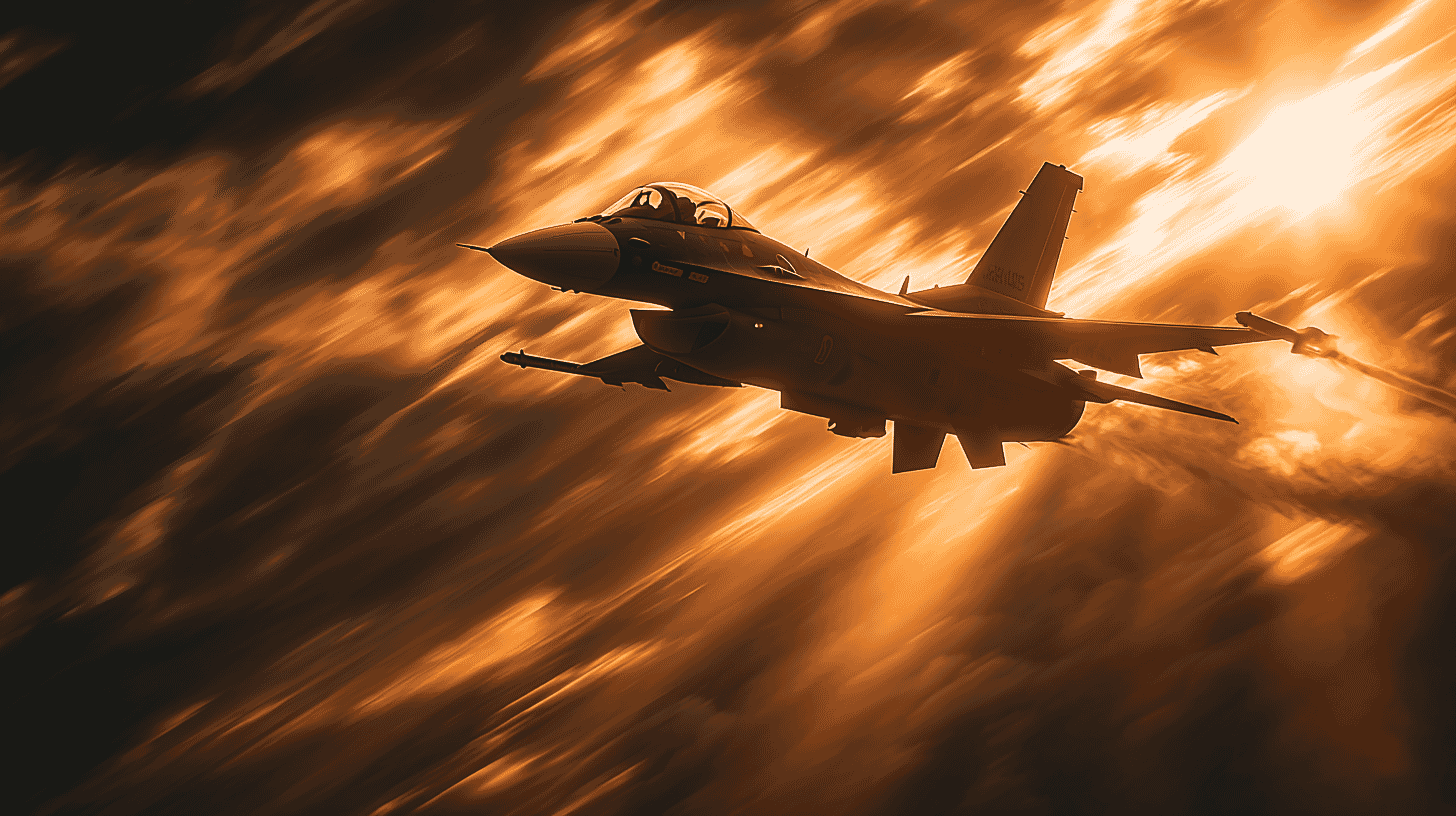
Fighter pilots defending Japan's skies are scrambled over 700 times a year. Operating one F-15 costs about $38,000 per flight hour, and the workhorse jet is already over 40 years old. Chinese drones are cheap and can fly for 24+ hours, and this "asymmetric warfare" is draining Japan. Can the UK-Italy-Japan sixth-generation GCAP fighter, scheduled for 2035, turn the tide?
The Reality of Scrambles
In fiscal year 2024, Japan Air Self-Defense Force (JASDF) conducted 704 scrambles against aircraft potentially violating Japanese airspace. This marked a 35-sortie increase from the previous year's 669, maintaining the consistently high levels of 700+ annual scrambles seen since 2013.
By country, Chinese aircraft accounted for approximately 66% (464 sorties), while Russian aircraft made up roughly 34% (237 sorties). Most notably, scrambles against Chinese unmanned aerial systems (UAS) surged nearly threefold, from 8 in FY2023 to 23 in FY2024.
Fiscal 2024 also witnessed historic events. In August, a Chinese military aircraft committed Japan's first-ever airspace violation by a Chinese military plane. In September, Russian aircraft violated Japanese airspace three times in a single day near Rebun Island, Hokkaido. In response, JASDF deployed flares as a warning for the first time in its history.
Burden Concentrated in the Southwest
The geographic distribution of scrambles reveals a stark imbalance. The Southwestern Air Defense Force, headquartered at Naha Air Base in Okinawa, handled 411 scrambles, approximately 58% of the total. This dwarfs other regional commands: Northern (152), Western (102), and Central (39).
The Southwestern Air Defense Force has exceeded 400 scrambles for five consecutive years, placing enormous strain on F-15J/DJ fighters and their pilots stationed there.
Reports from Naha Base describe days when scrambles occur "morning, noon, evening, and night without rest." Equipment troubles such as engine anomalies and parts falling off testify to the toll taken on overworked aircraft.
The Structural Problem of Cost Asymmetry
These scrambles present a serious "cost asymmetry" problem.
Operating an F-15 costs approximately $38,668 per flight hour. Aviation fuel alone runs about ¥2 million ($13,000) per mission. Add pilot standby and flight time, maintenance crew response, and parts wear, and the burden multiplies.
Meanwhile, Chinese reconnaissance drones are relatively inexpensive and some can stay aloft for over 24 hours. By repeatedly deploying cheap drones to force expensive manned fighters into the air, China can economically and physically exhaust Japan's air defense capabilities, a classic "cost imposition strategy."
Within Japan's Ministry of Defense, there's shared recognition that "China is increasing flights of inexpensive drones to wage attrition warfare against Japan and Taiwan."
Aging F-15 Fleet
JASDF currently operates approximately 200 F-15J/DJ aircraft at bases nationwide. Introduced in 1981, these "long-lived" fighters have served for over 40 years.
The fleet has undergone Multi-Stage Improvement Program (MSIP) upgrades to modernize computers and electronics, but only about half have been upgraded, the rest remain as "Pre-MSIP" aircraft. While the excellent basic design keeps them operational, fundamental airframe age cannot be ignored.
Additionally, although cutting-edge stealth F-35A fighters are being deployed, full fleet replacement won't happen quickly. F-15s will remain the backbone of air defense for the foreseeable future.
Exploring Drone-Based Response
Given these circumstances, the Ministry of Defense has begun studying drone-based scramble response.
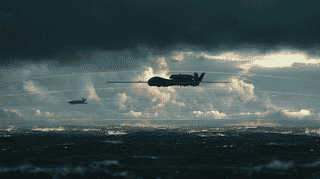
Starting in FY2026, verification tests will use the U.S.-made MQ-9B Sea Guardian unmanned reconnaissance aircraft, which the Maritime Self-Defense Force plans to introduce. Approximately ¥1.1 billion has been requested for related costs. The Sea Guardian measures about 11 meters in length, can stay aloft for over 24 hours, and carries high-performance cameras and infrared sensors.
However, challenges remain. The Sea Guardian lacks warning shot or signal flare capabilities, raising questions about how it would respond to actual airspace violations. Air Chief of Staff Hiroshi Uchikura acknowledges, "At present, JASDF possesses no means other than manned fighters to respond to drones."
Expectations for GCAP
The fundamental solution to the scramble problem lies in GCAP (Global Combat Air Programme), a next-generation fighter being jointly developed by Japan, the UK, and Italy.
GCAP is a sixth-generation stealth fighter intended to replace JASDF's F-2, targeting deployment in 2035. The three-nation collaboration was announced in December 2022, and in July 2025, the joint headquarters of the international organization "GIGO" opened in Reading, UK. Japan's Masami Oka, former Vice-Minister for International Affairs, serves as its first head.
The joint venture "Edgewing" handles development, with Japan's JAIEC (a consortium including Mitsubishi Heavy Industries), UK's BAE Systems, and Italy's Leonardo. Engine development involves IHI, Rolls-Royce, and Avio Aero.
Sixth-Generation Fighter Features
The GCAP fighter will incorporate two major advances over fifth-generation aircraft like the F-35.
First, integration with Collaborative Combat Aircraft (CCA). The manned fighter serves as a mothership, operating multiple drones as part of a "system of systems." This enables a single pilot to control multiple aircraft, potentially improving scramble efficiency.
Second, AI utilization. Artificial intelligence will assist in combat decisions and information processing, reducing pilot burden and accelerating decision-making.
The aircraft will also feature the Integrated Sensing and Non-Kinetic Effects (ISANKE) sensor system and Integrated Communications System (ICS), networking with ships, satellites, and ground stations. Mitsubishi Electric states this will significantly help "clear the fog of war."
Development Challenges and International Cooperation
However, GCAP development isn't entirely smooth. Former Air General Junichi Araki notes, "To achieve 2035 initial deployment, prototype manufacturing should have begun in 2025, but concrete progress is still coming."
Saudi Arabia's participation also remains contentious. While the UK and Italy are receptive, Japan remains cautious about extended negotiations from adding members and human rights concerns. Italian Prime Minister Meloni expressed support but noted it wouldn't happen "immediately," indicating time would be needed.
For the aircraft's name, the Ministry of Defense reportedly is considering "Reppū" (Strong Wind), named after a late-WWII Imperial Japanese Navy fighter.
What It Means to Defend Japan's Skies
JASDF scrambles aren't just statistics. They represent the mission of pilots and ground crews maintaining 24/7/365 readiness to be airborne within five minutes.
Upon scramble orders, they're airborne within minutes, sometimes approaching unidentified aircraft at supersonic speeds, photographing them, issuing warnings, and forcing them to depart. This happens over 700 times annually.
With China's military activities intensifying and drone operations entering a mature phase, Japan's air defense stands at a crucial turning point. The limits of F-15s, the search for drone solutions, and next-generation GCAP development, multiple timelines intersect as Japan faces the question of how to maintain "air superiority," the fundamental premise of national defense.
In Japan, there are various opinions about increased defense spending and next-generation fighter development. What discussions exist in your country about "air defense"?




Global Discussion
17 comments