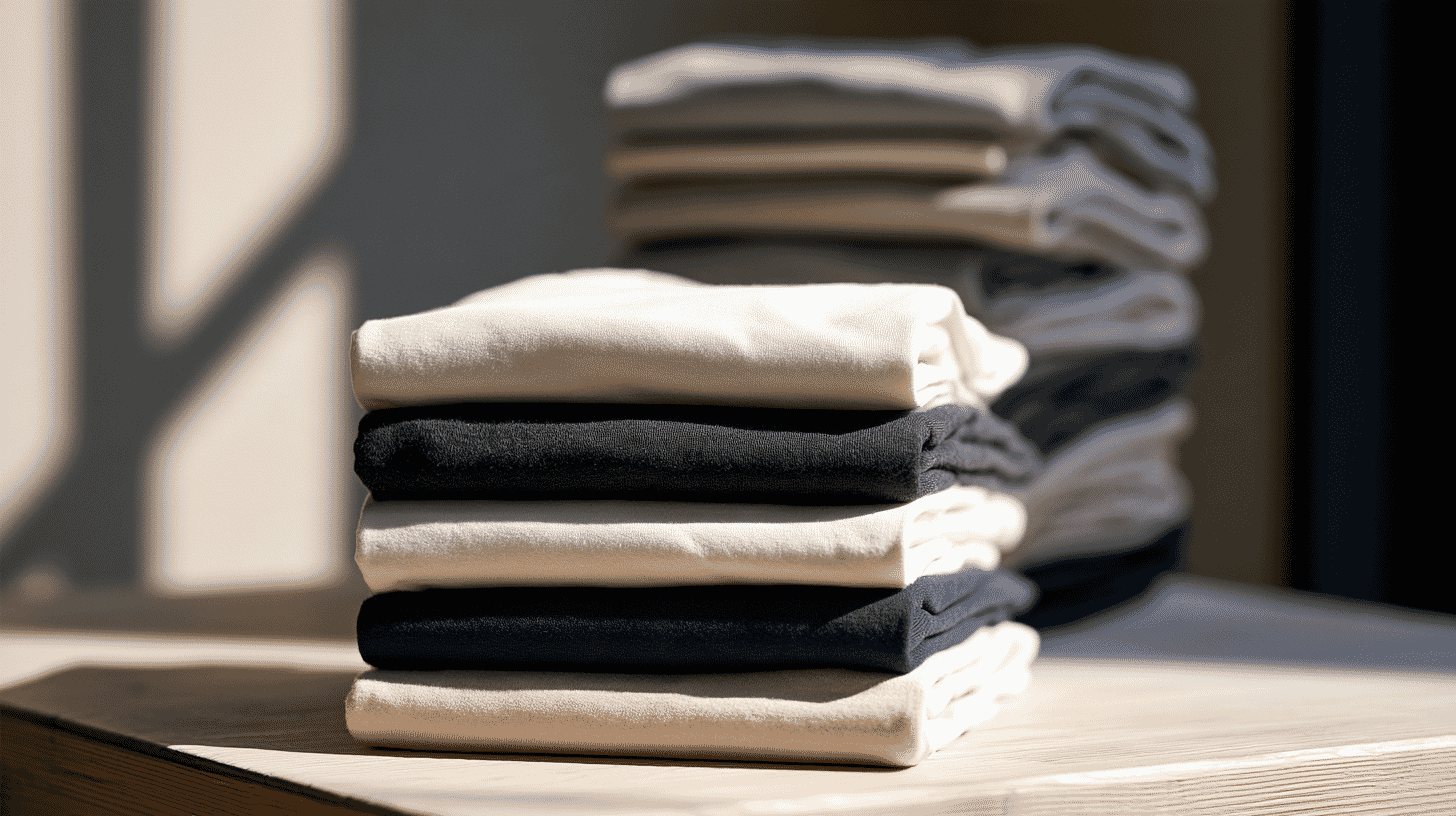
👕 Fast Retailing, the company behind Uniqlo, has closed a year with revenue of 3.9633 trillion yen ($25.1 billion), enough to move it past Sweden's H&M. Among specialty apparel chains, the companies that design their own clothes and sell them in their own stores, only Inditex, the Spanish owner of Zara, now sells more. At that size, China, US tariffs, wages and succession also weigh more on the business.
Second place, measured how?
Fast Retailing's fiscal year ended August 31, 2026. Revenue rose 16.6%, and operating profit climbed 31.7% to 743.1 billion yen ($4.7 billion), its fifth straight record year, the company reported on October 8.
H&M runs on a different calendar. Its last full year, to November 2025, brought net sales of SEK 228.3 billion, about 3.61 trillion yen or $22.8 billion at today's rates. The Japanese trade paper WWDJapan used that comparison to put Fast Retailing in second place among specialty apparel chains. By its count, online seller Shein reported about 6.5 trillion yen ($41 billion) for 2025, which is bigger, but Shein falls outside that category. Kyodo News was more careful, saying only that Fast Retailing could become No. 2, since H&M's current year does not close until the end of November.
That caveat is largely a formality. In the nine months to August 2026, H&M's sales came to SEK 161.6 billion, down from SEK 169.1 billion a year earlier. Over the latest 12 months, H&M sold about $22.1 billion.
So did Fast Retailing climb, or did H&M slip? Both. According to WWDJapan, Fast Retailing passed Gap for third place in fiscal 2016 with revenue of 1.7864 trillion yen, and it has more than doubled since. By the same paper's count, H&M sold SEK 209.9 billion ten years ago, so its sales in krona are only about 9% higher a decade later. In local currencies, H&M grew 2% in its last full year and was flat for the first nine months of this one.
Where the growth came from
Uniqlo's business outside Japan brought in 2.4111 trillion yen ($15.2 billion), up 26.2%. Europe grew 38.7% to 512.6 billion yen ($3.2 billion), and North America grew 34.6% to 364.9 billion yen ($2.3 billion). For the first time, Europe and North America combined outsold Greater China, which rose 11.3% to 724.0 billion yen ($4.6 billion), as well as the region covering South Korea, Southeast Asia, India and Australia, which reached 809.4 billion yen ($5.1 billion).
At home, Uniqlo Japan grew 5.7% to 1.0848 trillion yen ($6.9 billion). How the brand won over shoppers abroad is covered in how Uniqlo turned around in the West.
Did the weak yen do it?
Fast Retailing reports in yen but earns most of its money abroad, so a weak yen makes foreign sales look bigger. Greater China revenue rose 11.3% in yen, but in mainland China, sales grew only about 3% in local currency.
The same applies in the West. During Fast Retailing's fiscal year, the euro averaged about 11% more yen than a year earlier, and the dollar about 5% more. A rough calculation that strips this out puts Europe's growth closer to 25% and North America's near 28%.
The ranking is a different matter. Uniqlo Japan and GU, its cheaper sister chain that sells mainly in Japan, together account for about 36% of revenue, most of it earned in yen. A weak yen makes that part worth fewer dollars. Converted into dollars, Fast Retailing's $25.1 billion is still ahead of H&M.
The real cost of the weak yen shows up at home. Uniqlo Japan pays for its imports through forward currency contracts, and weaker yen rates on those contracts cut its first-half gross margin by 0.2 point. For fiscal 2027, the company expects Uniqlo Japan's profit to stay roughly flat for the same reason. Its forecast assumes 156.2 yen to the dollar and 181.8 yen to the euro.
What second place puts at stake
China. Greater China accounts for 18.3% of group revenue. It also earned 112.0 billion yen ($708 million) in business profit, about a quarter of the 439.8 billion yen made by Uniqlo outside Japan. Mainland sales grew modestly, and profit rose about 18% in local currency.
Relations between Tokyo and Beijing soured after Prime Minister Sanae Takaichi's remarks in parliament about Taiwan in November 2025. Beijing warned its citizens about travel to Japan, and visitors from China fell 55.9% in March 2026. In January 2026, China barred shipments of dual-use goods to Japan. The two countries' leaders last met on October 31, 2025. On October 8, the South China Morning Post reported that Trump urged Xi at their September summit to meet Takaichi, and Xi was not receptive.
So far, Uniqlo's China sales have kept growing through all this. Still, a retailer with large businesses in both the US and China has been caught in the middle before. In January 2021, US Customs and Border Protection blocked a shipment of Uniqlo shirts over suspected forced labor in Xinjiang. In November 2024, Uniqlo founder Tadashi Yanai told the BBC that Uniqlo does not use Xinjiang cotton, and calls for a boycott spread on Chinese social media.
Tariffs. In July 2025, chief financial officer Takeshi Okazaki said US tariffs would hit the business significantly from autumn, and that the company would raise prices where it could, Reuters reported. Most Uniqlo products sold in the US are made in Southeast and South Asia. North America still grew 34.6%, with business profit up 53.3%. But the more the region contributes, the more any change in US trade policy matters.
Labor costs. Personnel costs rose 17.1% to 550.4 billion yen ($3.5 billion), about 37% of selling and administrative expenses. In March 2026, Fast Retailing raised starting monthly pay for graduate hires on its global-leader track from 330,000 yen ($2,086) to 370,000 yen ($2,339). So far, sales have grown fast enough to cover it: Uniqlo Japan's expense ratio improved by 0.4 point to 32.6%. Uniqlo Japan, however, grows far more slowly than the business abroad: 5.7% against 26.2%.
Succession. Yanai, born in 1949, is still chairman and president. Daisuke Tsukagoshi has run Uniqlo since September 2023 and joined the board in November 2025, and Yanai has called him qualified to succeed him. Yanai's two sons sit on the board, but he has said they will not run the company and will instead oversee it as shareholders. No handover date has been set. Founder-led Japanese companies have struggled with this before, as Nidec's leadership changes show.
How far away is Zara?
Inditex reported sales of €39.9 billion for the year to January 2026, about 7.06 trillion yen or $44.6 billion. That is about 1.8 times Fast Retailing, a gap of about 3.1 trillion yen ($19.6 billion). Inditex grew 3.2% in euros and 7.0% at constant currency. At the end of July 2026 it ran 5,444 stores, while Fast Retailing plans 3,545 by August 2027.
In percentage terms, Fast Retailing is growing faster. In money terms, the gap is not closing as quickly as the percentages suggest. Inditex added about €1.4 billion ($1.6 billion) in sales in the first half of 2026 alone, growing 9.2% at constant currency. Fast Retailing's forecast for fiscal 2027 adds about 486.7 billion yen ($3.1 billion) over the full year. If Inditex's second half matches its first, the two are adding roughly the same amount each year.
In Japan, Uniqlo is simply where people buy everyday clothes. What is it known for where you live: the cheap place for basics, a step up from fast fashion, or not on your radar at all?
References
- https://www.fastretailing.com/jp/ir/news/2610081800.html
- https://www.fastretailing.com/eng/ir/news/2610081800.html
- https://www.fastretailing.com/jp/ir/library/pdf/tanshin202608_4q.pdf
- https://www.wwdjapan.com/articles/2522699
- https://www.daily.co.jp/society/economics/2026/10/08/0020907569.shtml
- https://hmgroup.com/news/h-m-hennes-mauritz-ab-full-year-report-2025/
- https://mb.cision.com/Main/769/4400093/4285249.pdf
- https://www.inditex.com/itxcomweb/api/media/1da2c9d1-dbca-49fb-9563-982a8a27fae6/INDITEXFullYear2025.pdf
- https://www.inditex.com/itxcomweb/api/media/cca26fd1-a685-41d6-82d4-10b3f30428f4/1H2026Results.pdf
- https://www.enca.com/news/china-tells-citizens-avoid-japan-travel-taiwan-row-grows
- https://www.caixinglobal.com/2026-01-07/china-bans-exports-of-dual-use-items-to-japan-following-taiwan-remarks-102401228.html
- https://www.travelvoice.jp/20260415-159620
- https://www.thewirechina.com/2026/09/06/china-and-japan-still-arguing-but-still-mostly-trading/
- https://www.japantimes.co.jp/news/2026/10/08/japan/trump-xi-urge-takaichi/
- https://www.supplychainbrain.com/articles/33129-us-blocks-uniqlo-shirts-on-xinjiang-forced-labor-concerns
- https://www.freemalaysiatoday.com/category/business/2024/11/29/uniqlo-risks-boycott-in-china-after-ceos-xinjiang-comment
- https://www.theglobeandmail.com/business/article-uniqlo-tariff-impact-price-hike
- https://www.fashionsnap.com/article/2025-12-22/fastretailing-increase-in-starting-salary/
- https://www.fashionsnap.com/article/2025-10-10/fast-retailing-daisuke-tsukagoshi/
- https://www.fastretailing.com/jp/about/company/profile.html
- https://api.frankfurter.dev/v1/latest?base=USD&symbols=JPY,EUR,SEK







Global Discussion
4 comments