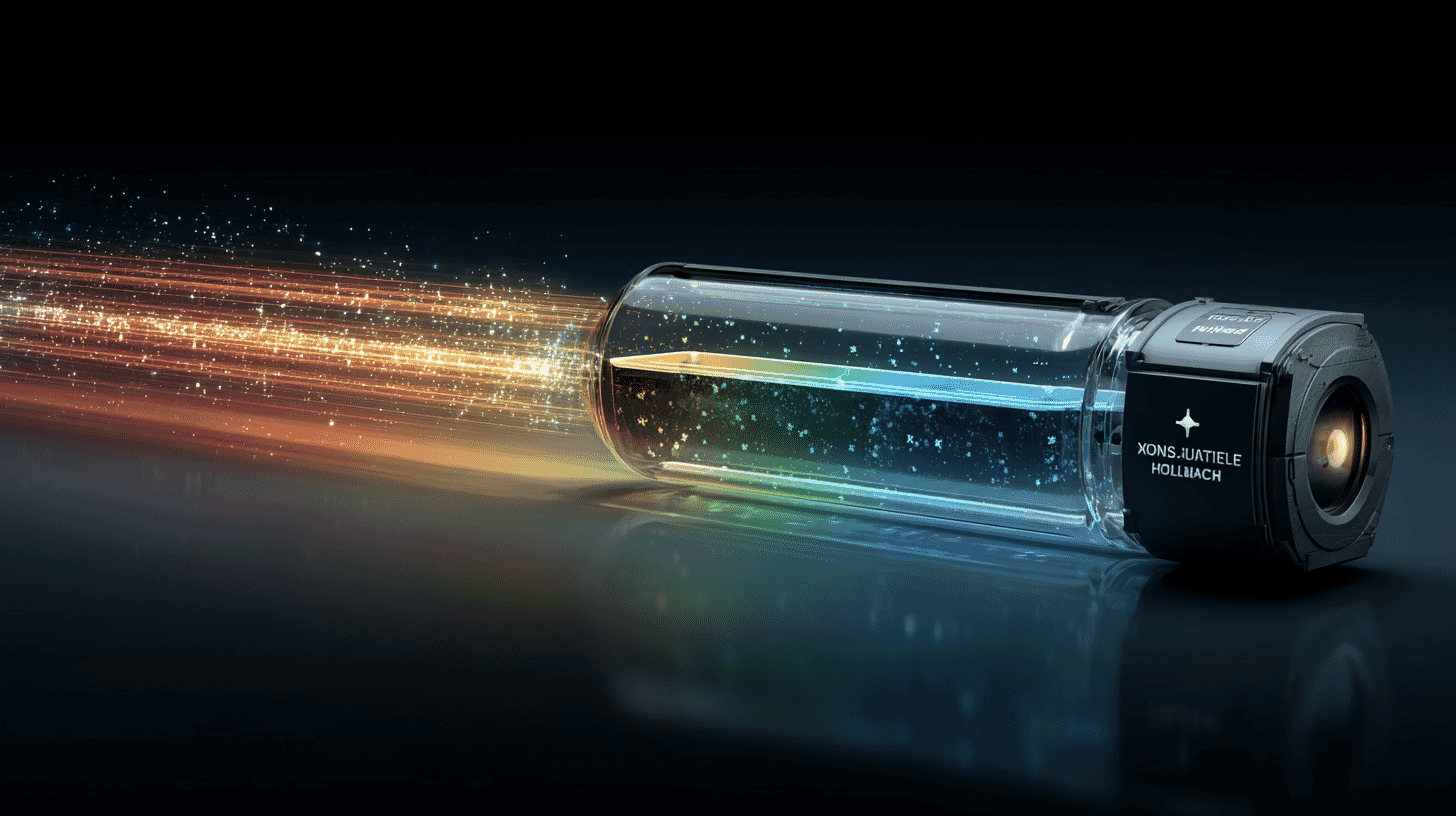
What if a special camera could detect cancer just by analyzing your urine, and even tell you which organ is affected? A Japanese startup is turning space satellite technology into a cancer screening tool, using a camera that sees 141 wavelengths of light invisible to the human eye. Here is how "color AI" could change what we know about cancer diagnosis.
Cancer: Humanity's Most Persistent Enemy
Cancer remains the leading cause of death in Japan, where one in two people will develop cancer in their lifetime. Among the deadliest forms, pancreatic cancer is particularly devastating, with a five-year survival rate of just 7–13%. Because the pancreas is a "silent organ," tumors often go undetected until it's too late.
Yet early detection dramatically changes outcomes. For colorectal cancer caught while still localized, the five-year survival rate exceeds 90%. But once it has spread to distant organs, that number plummets below 20%. The message is clear: in the fight against cancer, finding it early is everything.
The Problem with Current Cancer Diagnosis
Today, the definitive way to diagnose cancer is through pathological examination, a doctor examines tissue samples under a microscope, assessing cell shapes to determine whether they're malignant. While this method is the gold standard, it comes with significant limitations.
First, it's highly subjective. Diagnoses depend heavily on the individual pathologist's experience, and different doctors can reach different conclusions from the same sample. Second, there's a severe global shortage of pathologists. Japan has roughly 2,600 certified pathology specialists, far fewer than needed. In countries like Cambodia, the number drops to fewer than ten. Third, the process is slow, often taking weeks for results to come back, adding anxiety and delaying treatment.
From Space Satellites to Cancer Screening
Enter Milk. Inc., a Japanese deep-tech startup founded in 2019 that's tackling these challenges with an unexpected tool: a camera originally designed for outer space.
The "hyperspectral camera" was initially developed for mounting on satellites, where it could identify mineral deposits on Earth's surface by analyzing reflected light across hundreds of wavelengths. While a standard camera captures images using just three colors (red, green, and blue, mimicking human vision), a hyperspectral camera captures 141 distinct color channels simultaneously. That's 47 times more color information than our eyes can perceive, spanning from ultraviolet to near-infrared wavelengths.
The camera's original developer was Professor Shin Satori, a former JAXA (Japan Aerospace Exploration Agency) engineer who worked on the microwave ion engine for the Hayabusa asteroid probe and built the hyperspectral camera for use aboard satellites. Milk.'s CEO, Daiki Nakaya, hails from Ehime Prefecture. After studying physics in America, he became fascinated with applying this space technology to medicine. His driving question: "Can we decode cancer through the lens of physics?" In 2015, he began researching cancer cell analysis using hyperspectral cameras, teaching himself AI and machine learning along the way.
Detecting Cancer by "Color"
So how can a camera spot cancer cells? The key lies in spectral signatures, unique patterns of how materials absorb and reflect light at different wavelengths.
Every substance has a distinct "light fingerprint." While cancer cells and healthy cells may look identical under a standard microscope, analyzing them across 141 wavelengths reveals subtle but measurable differences in their spectral patterns. Milk.'s proprietary "Color AI" analyzes these microscopic color variations to identify cancerous cells with remarkable precision.
Through collaborative research with Kitasato University and other medical institutions, Milk. has reported the following accuracy on pathology samples: 98% accuracy in identifying pancreatic cancer, 98.7% accuracy in distinguishing four stages of colorectal disease (from ulcerative colitis through mild and severe dysplasia to cancer), and 95.2% accuracy in classifying four types of ovarian cancer. The pancreatic cancer result is particularly noteworthy, as this type of cancer has long been considered one of the hardest to detect early using conventional methods.
A Future Where Urine Tests Can Find Cancer
Perhaps the most groundbreaking application is using this technology for non-invasive cancer screening through urine analysis. It's known that cancer-derived components exist in blood, sputum, and urine. By combining the hyperspectral camera with Color AI, Milk. has demonstrated the potential to determine not only whether cancer is present, but even which organ is affected, all from a simple urine sample.
If this technology reaches clinical use, it could eliminate the need for expensive CT and MRI machines, remove radiation exposure concerns, and make cancer screening as simple as providing a urine sample. In Japan, where cancer screening participation rates remain stubbornly low, the sheer convenience could be transformative.
The Road to Commercialization
Milk. is currently developing a product called "ANSWER for Pathology", a pathology diagnosis support system. It uses a "Hyper Slide Scanner" equipped with hyperspectral cameras to photograph cell samples, which the Color AI then analyzes to generate instant diagnostic reports. The company has already photographed approximately 10,000 clinical cases and is collaborating with five medical institutions to build datasets for pancreatic and bile duct cancers.
The company's trajectory has been impressive. In 2021, it won the top prize in the Medical & Healthcare category at the "Mirai 2021" pitch event hosted by Sumitomo Mitsui Banking Corporation. In 2022, it was selected for the Tokyo Metropolitan Government's Advanced Medical Device Acceleration Project (AMDAP), gaining a dedicated catalyzer's hands-on support and eligibility for the program's development subsidy of up to 300 million yen per phase. In 2025, Milk. gained widespread attention when it received a unanimous 100 million yen (about $670,000) investment from four investors, including tech entrepreneur Takafumi Horie, on NewsPicks' popular show "Make Money Survive."
Beyond healthcare, hyperspectral camera technology has applications in food freshness assessment, infrastructure inspection, and agricultural monitoring. Milk.'s mission is nothing less than "a world free from the suffering of disease."
A Global Race with a Japanese Edge
Hyperspectral imaging for cancer detection is an active research field worldwide. At the University of Texas at Dallas, researchers have developed a micro-imaging device small enough for endoscope integration, with visions of smartphone-based self-scanning. Teams in Taiwan and India are also combining deep learning with hyperspectral techniques.
What sets Milk. apart is its unique combination of JAXA-derived space camera heritage, 141-channel color resolution, and Japan's unparalleled expertise in endoscopic technology. Japan holds nearly 100% of the global endoscope market share, giving it a significant advantage in merging optical and medical technologies.
Cancer is a challenge every country faces. If this Japanese-born technology reaches practical application, it could fundamentally change how we fight cancer worldwide. How does your country approach early cancer detection? Would you take a simple urine test if it could screen for cancer?
References
- https://milk-med.com/
- https://amdap.metro.tokyo.lg.jp/interview_milk_med.html
- https://prtimes.jp/main/html/rd/p/000000014.000076265.html
- https://www.tv-tokyo.co.jp/broad_tvtokyo/program/detail/202601/27984_202601311030.html
- https://news.utdallas.edu/health-medicine/advanced-micro-imaging-device-cancer-detection-2025/









Global Discussion
14 comments