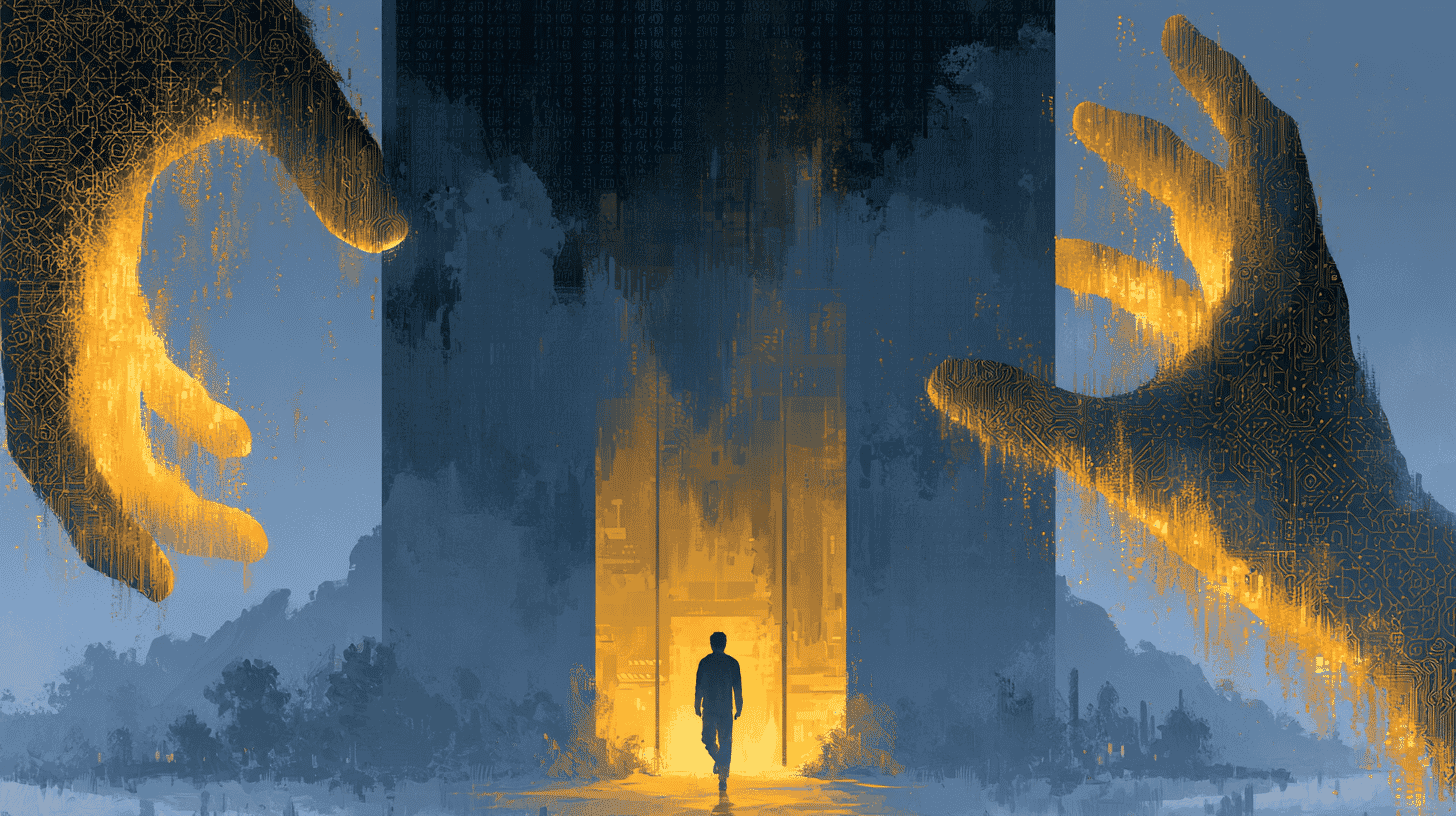
🎮 In barely a year, three of Japan's most celebrated game creators walked out of the country's biggest studios to start over. Here's the part nobody quite says out loud: almost none of the money keeping them afloat is Japanese. It's Saudi. It's Korean. And the reason why points to something uncomfortable about how Japan handles its own talent.
Three exits in six months
Start with the headline name. Katsuhiro Harada spent 31 years at Bandai Namco as the face of Tekken, then left at the end of 2025. Four months later he resurfaced as CEO of a new Tokyo studio called VS Studio, established as a consolidated subsidiary of SNK, the old King of Fighters house. Harada framed it as a creative reset, a return to making games with people he trusts. He has been careful to add that nothing concrete has been decided about the first project yet.
Then there's Shinji Mikami, the man who created Resident Evil. After leaving the studio he himself founded, he set up an independent outfit, Unbound Games, back in 2022 to build an original AAA title. For three years it ran as a fully independent shop. In April 2026, Unbound was acquired outright and became a wholly owned subsidiary of SHIFT UP, the South Korean studio behind Stellar Blade and the gacha hit NIKKE.
And then the quieter case. Daisuke Taka, producer on Harvestella and the early days of Another Eden, left Square Enix in early 2024. He didn't announce a studio right away. He didn't take contract work to pay the bills. By his own account in an interview, he spent close to two years living off his savings before finally registering a company, Impachi, in January 2026. His reason was almost defiantly personal: taking on big assigned projects, he said, just doesn't suit him.
They left for different reasons. They landed in the same place.
It's tempting to mash these into a single story, "talented people flee broken Japanese corporations," but that's not what the men themselves describe. Harada talks about creative renewal and old friendships. Taka talks about temperament, about wanting to answer only to himself. Mikami's timeline doesn't even fit the 2026 wave; he went independent years ago. The why-they-left answer is genuinely case by case.
What's striking is the where-they-landed answer. Line them up and the destinations converge on a single thing: external, mostly foreign capital. Harada is now under SNK, which is Saudi-owned. Mikami's studio is now under a Korean publisher. The exits are individual; the safety nets underneath them are not. Japan keeps producing world-class creators and then, increasingly, watching someone else pay to catch them.
Why Japan's giants can't keep them
So why doesn't the old employer simply build the dream studio and write the check? On paper it sounds obvious. In practice, the structure works against it.
The Japanese majors are profit machines built on owning long-lived IP: Final Fantasy, Dragon Quest, Monster Hunter, Tekken. That portfolio throws off steady, predictable income, and it rewards a very particular instinct: keep feeding the franchises that already work. Greenlighting a star's brand-new, unproven original project, the kind that needs years and a fat budget with no guaranteed payoff, runs against the grain of a listed company answering to quarterly earnings and a cautious board.
There's a second, blunter problem. A superstar creator inside a Japanese company is, at the end of the day, a salaried employee. Even at the highest-paying studios, the ceiling is a good salary, not ownership. By most accounts there is little mechanism for the person who created a billion-dollar franchise to hold a real equity stake in the upside they generate. If you want to own what you build, your name and your studio and your share, leaving is often the only door. So the rational move for the company (keep milking the franchise) and the rational move for the star (walk) push in opposite directions.
You can hear the economics in Mikami's own camp. People at his studio have described the Western AAA model, hundreds of staff, tens of billions of yen, five to seven years per game, as simply unrealistic in Japan, and adopted a "AAA quality, AA volume" philosophy instead. Read between the lines and it's an admission that the domestic capital to bankroll a veteran's most ambitious swing has thinned out. You either make a safe sequel inside a giant, or you go lean and independent. The fat, patient middle has mostly vanished.
Two very different wallets: Riyadh and Seoul
That vacuum is exactly what foreign money has rushed to fill, and it comes in two distinct flavors.
The Saudi version is state money with a national agenda. Under Crown Prince Mohammed bin Salman, the kingdom's sovereign Public Investment Fund stood up Savvy Games Group with a roughly $38 billion (about ¥6 trillion) war chest, all part of the Vision 2030 push to wean the economy off oil. In January 2026 PIF said it would move roughly $12 billion (about ¥1.8 trillion) of gaming shares, including its holdings in Nintendo and Bandai Namco, into Savvy. Once the transfers complete, Savvy is set to hold about 10% each of Square Enix, Koei Tecmo, Nexon and NCSoft. Separately from Savvy, PIF is also the lead investor in the consortium bidding $55 billion for Electronic Arts. SNK itself sits under Saudi ownership. The crucial trait of this money is patience: it largely takes a hands-off, passive posture, and because the goal is soft power and economic diversification rather than next quarter's return, it can wait five or ten years and absorb risk a Japanese listed firm simply can't stomach.
The Korean version is cash, earned and aggressive. Krafton, riding PUBG, posted record 2024 results: revenue of 2.71 trillion won, up 41.8%, and operating profit of 1.18 trillion won, up 54%. Revenue kept climbing in 2025, to 3.33 trillion won, though operating profit slipped 10.8%. It has been on a global buying spree to reduce its dependence on that one franchise, reviving Tango Gameworks in 2024 and then, in June 2025, paying ¥75 billion (about $517 million) for ADK, the Japanese advertising and animation group behind anime like Doraemon and Crayon Shin-chan. SHIFT UP turned NIKKE and Stellar Blade money into the acquisition of Mikami's Unbound. The logic here is straightforward: Korean publishers built enormous war chests on mobile and live-service revenue, and they're spending it to buy the console pedigree, the original IP and the auteur prestige they don't yet have. Tellingly, they tend to let the studios keep operating independently, with Mikami still CEO and Harada still CEO, which is its own kind of pitch to a creator who just left a big company precisely to stop taking orders.
The studio leaves the house, and the house is being bought too
Here's the twist that makes this more than a feel-good "go get 'em" story. The very same pools of capital catching Japan's runaway creators are also quietly accumulating the houses those creators left. Saudi money owns a piece of Nintendo, Capcom, Square Enix, Bandai Namco. Korean money is buying studios and IP holders across the country.
So picture the nesting doll. A star creator walks out of a Japanese giant to chase independence. He lands under foreign capital. And that foreign capital, in turn, holds a growing slice of the giant he just walked out of. The talent leaves through the front door while the building's deed changes hands out back. None of this is illegal or even necessarily bad for the games themselves: more money can mean bigger, bolder projects. But it does reframe the question. The story isn't really "creators escaping bureaucracy." It's that Japan, a country that mints some of the best game-makers alive, increasingly can't be the one to bankroll them, and the rest of Asia has noticed.
In Japan, the coverage of all this tends to celebrate each new studio as a romantic second act. From the outside, the more revealing thread is the balance sheet underneath. So here's the question worth sitting with: when your favorite Japanese studio ships its next game, whose money do you think actually made it? And does that change how you feel about it? Tell us where you're reading from.
References
- https://www.snk-corp.co.jp/us/press/2026/announcement-of-new-studio-establishment-katsuhiro-harada-appointed-as-representative/
- https://automaton-media.com/articles/newsjp/20260401-433906/
- https://automaton-media.com/articles/interviewsjp/takad-20260421-438790/
- https://www.4gamer.net/games/999/G999905/20260310018/
- https://www.gameinformer.com/2026/05/12/former-tekken-boss-katsuhiro-harada-to-lead-new-snk-studio
- https://www.bloomberg.com/news/articles/2026-01-14/saudi-arabia-moves-billions-in-video-game-stock-to-subsidiary
- https://www.kedglobal.com/games/newsView/ked202506240006
- https://naavik.co/digest/kraftons-global-ma-strategy/
- https://www.gamespot.com/gallery/all-the-gaming-companies-saudi-arabia-owns-or-has-invested-in/2900-7081/








Global Discussion
4 comments