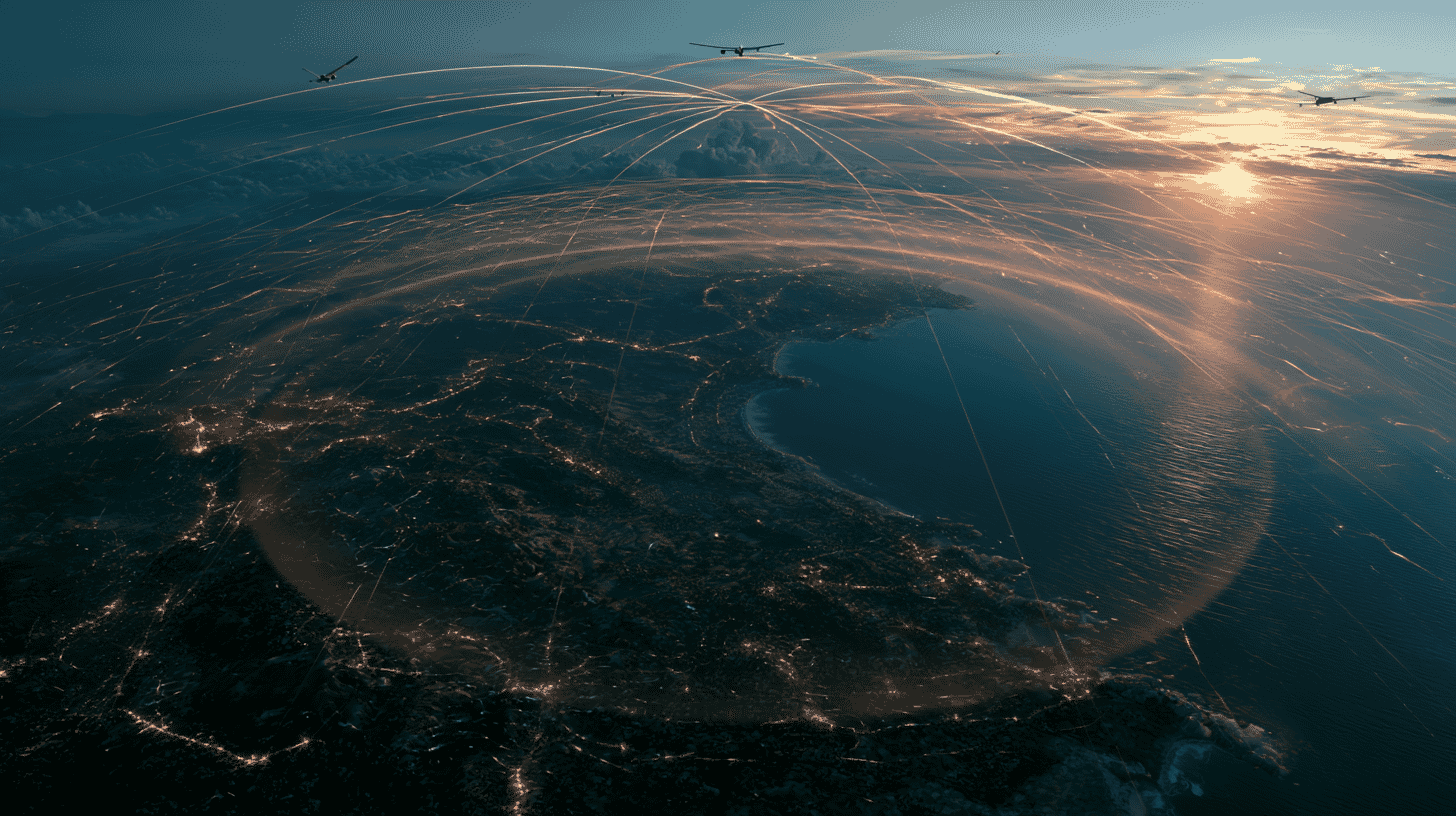
🛡️ A Tokyo drone company just bought controlling stakes in two Ukrainian firms whose drones have shot Iranian-made attack drones out of the sky over a live war. Terra Drone isn't a hands-off backer anymore. It has taken the wheel, and it wants to build these interceptors by the thousand.
From investor to owner
On June 15, Terra Drone announced it had turned two Ukrainian defense-tech startups, WinnyLab and Amazing Drones, into consolidated subsidiaries. The company had already taken minority stakes in both back in spring. This time it went further. The holdings sat with a Dutch subsidiary; they have now moved to a newly created Estonian arm, which owns 50% of each firm's issued shares as the largest shareholder. Terra Drone also installed a majority of both boards, giving it effective control. The price wasn't disclosed.
So why move from backer to majority owner? For Terra Drone, the answer is speed. Attack drones are improving on a timescale of months, and the company describes the situation as a constant game of cat-and-mouse between attack drones and the interceptors built to stop them. Traditional defense programs run on multi-year development cycles, which is hopelessly slow against that. Holding the controlling stake lets Terra Drone make development calls fast. CEO Toru Tokushige also framed it as bringing hard-won battlefield know-how into the group, and back to Japan, as a hedge against future contingencies.
What the two companies actually build
Both firms make "interceptor drones," drones whose entire job is to knock other drones out of the air. Both have a combat record in Ukraine, where they've intercepted Iranian-made "Shahed" one-way attack drones, the cheap, buzzing kamikaze aircraft Russia launches in waves.
Their strengths are deliberately opposite. Amazing Drones makes the Terra A1, a rocket-type interceptor built for short range and fast reaction, the snap shot at something close in. WinnyLab makes the Terra A2, a fixed-wing interceptor built for long range and long loiter time, the patrol aircraft that can stay up and reach distant threats. Put them together and you get a layered net rather than a single fence. Terra Drone's plan is to fuse the two into one multi-layered air-defense system that covers everything from point-blank to far out.
The economics that make it work
Here's the part that has militaries paying attention. For years, the only reliable way to stop a cheap one-way attack drone was an expensive missile, often costing several million dollars a shot. Against a swarm of $20,000-to-$30,000 Shaheds, that math collapses: the defender runs out of money and missiles long before the attacker runs out of drones.
The interceptors from these two companies flip the equation. They lean heavily on 3D printing in both development and manufacturing, which keeps the unit cost below the price of the attack drones they're shooting down, into the range of a few thousand dollars. And Terra Drone says it will scale production up to 1,000 units a month to meet demand. Cheap, and lots of them, is the entire point.
Selling the war's lessons to the world
Terra Drone wants to sell these combat-tested drones in Japan, Europe and the Middle East. Tokushige has said the company is already fielding inquiries from Gulf states and from European countries near Russia.
The acquisitions came bundled with two more moves. The same day, Terra Drone said it is setting up a joint venture with Besomar, a Ukrainian reconnaissance-drone maker, to supply a recon drone called the Terra C1, adding "eyes" to a lineup that already had the interceptors. And for the European market it has created a new company in Estonia, Terra Defense Europe, to handle supply, maintenance and logistics across the region.
A Japanese company, an uneasy business
For Japan, this is more loaded than an ordinary corporate acquisition. The country spent decades keeping a careful distance from the arms trade, and selling or making weapons still carries a particular weight in domestic debate. Tokushige's argument has been that established Japanese firms hesitate over reputational risk, so a younger company has to be the one to step up. Buying foreign companies whose weapons are being fired in an active war is a long way from where Japan's defense-industrial caution sat a few years ago. That tension isn't going away.
In your country, would a homegrown tech company buying foreign weapons makers feel like progress, or like crossing a line?
Update: On July 21, 2026, Terra Drone said it had finished development and testing of the Terra A1 Autonomous and begun bringing it to market. The drone flies a mid-course leg on its own, closing from about 7km to 200m from the target, then detects and tracks the target autonomously inside 800m, cutting the need for a skilled operator.
Reference
- Terra Drone acquires Ukrainian defense drone companies, accelerating global expansion (Reuters via Yahoo News Japan)
- Terra Drone to buy two Ukrainian defense drone firms, eyeing global rollout (Nikkei)
- Terra Drone acquires Ukrainian interceptor-drone makers, strengthening Japan's defense with battlefield data (Business+IT via Yahoo News Japan)
- Terra Drone begins market rollout of the Terra A1 Autonomous interceptor (Terra Drone)







Global Discussion
4 comments