Zero Escape creator Kotaro Uchikoshi has revealed Crash Keys, a studio founded in March 2025, after a game it spent about a year and a half on was canceled. He is asking for work and investors, as he did in 2014.
Square Enix offers 300 million yen for first place and 1 billion yen across 15 games. Only Japan residents can enter, of any nationality, and winners transfer half their copyright with no release guaranteed.
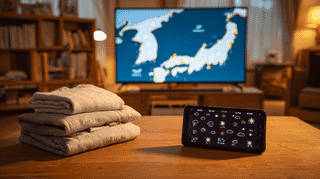
Pokémon director Shigeru Ohmori made a free-to-play phone game about magical girls, real forecasts and laundry alongside Pokopia, which shipped in 9 languages. This one is slated for Japan only.
Sony cancelled Physint in June and Xbox picked it up in September. English-language forums blamed Sony. Japanese forums argued about deadlines, budgets, and where they would even be able to play it.
1 million units on day one, 10 million for the series. Capcom's own sales list has the three PS2 Onimusha games at 1.52 to 2.10 million lifetime, and the habit of borrowing movie stars' faces goes back to 2001.
State of Play, KONAMI PRESS START and the run-up to Tokyo Game Show all landed in one week. Final Fantasy VII Revelation, Gundam Rogue Orbit and Rev. NOiR all got release windows, and every one of them falls in 2027.
Godot has moved on Japan with a CRI Middleware partnership. Why an engine at 5% in GDC's 2026 survey gets called the third engine, why its MIT licence stops at the console door, and what Unity and Unreal actually cost.
CAVE built an assist mode that slows bullets instead of removing them, plus a 10-player Royale mode. Steam's overall rating came back Mostly Negative. The complaints are about missing content and price, not difficulty.
Some 21 years after launch, the developer of the 2005 arcade fighter Fist of the North Star explains where the basket bug came from. The code meant to stop infinite combos is what created them.
A dissolution notice in Japan's Official Gazette wound up SNK Entertainment, the subsidiary once behind KOF and Metal Slug licensing. It handed that work to parent SNK in 2022. So why did an empty shell make headlines?
Kohei Ikeda, game director on Tekken 7 and 8, has joined Katsuhiro Harada's SNK-backed VS Studio, putting the three men who ran Tekken 7 under one roof. The response is less unanimous than it looks.
At Disney's D23, Tetsuya Nomura and Tai Yasue promised Kingdom Hearts IV arrives in 2027 with absolutely no delay. Given the studio's history, that is an unusual thing to say out loud.
At CEDEC 2026, Nintendo explained how Donkey Kong Bananza's QA team kept fun exploits as features, planned for sequence breaks, and embedded testers in the dev team.
Famitsu's 40th-anniversary Miyamoto interview, read whole: Nintendo has been feeling like a preservation society, and film scripts now drive the release calendar.
Japan's Patent Office has issued a final rejection of Nintendo and The Pokemon Company's application for a touchscreen creature-capture patent. The decisive prior art was a 2013 fan-made 3D Pokemon video, and the examiner dismissed Nintendo's argument that a copyright-infringing video cannot count. Here is what it means for the Palworld lawsuit, fact separated from speculation.
Sony will stop producing discs for new PlayStation games from January 2028, going download-only. Here's what it means for physical culture, the used-game market, ownership, and how it compares to Xbox, PC and Nintendo.
Shueisha, the publisher behind ONE PIECE, revealed Wild Wild Eden, an original game that uses none of its manga IP. Co-developed with a Malaysian studio, this open-world survival RPG treats monsters as family, not tools. Steam Early Access is planned for spring 2027. Here's what sets it apart in the crowded post-Palworld field.
Breaking down Game*Spark's interview with director Naoki Hamaguchi: postgame bosses tougher than the final boss, Knights of the Round, an auto-leveling story-focus option, the Wear system, Vincent and Cid in combat, and the snowboard going canon.
Fumito Ueda, the creator of ICO and Shadow of the Colossus, revealed gen ATLAS at Summer Game Fest 2026: a sci-fi action game about piloting a giant robot on a ruined planet, his first title in a decade and his first ever to leave PlayStation.
Tekken 8 game director Kohei Ikeda has left Bandai Namco after 20 years, the third series lead to exit in roughly nine months after Katsuhiro Harada. We unpack his career, what his statement does and doesn't say, the backdrop of fan backlash, and whether he'll reunite with Harada at VS Studio SNK.