🐾 Shueisha, the publisher behind ONE PIECE and Demon Slayer, just announced a game that borrows none of those famous characters. No pirates, no swordsmen. Just a wild planet, a bottle that tames monsters, and one promise: the creatures you catch are family, not tools.
On July 1, Shueisha Games unveiled Wild Wild Eden, an anime-style open-world survival-craft RPG built by a Malaysian studio, heading to Steam Early Access in spring 2027. In a monster-taming genre that has gone from niche to gold rush since Palworld, its pitch is almost stubbornly simple: what if the monsters you catch actually mattered to you?
A wild planet, and a bottle to tame it
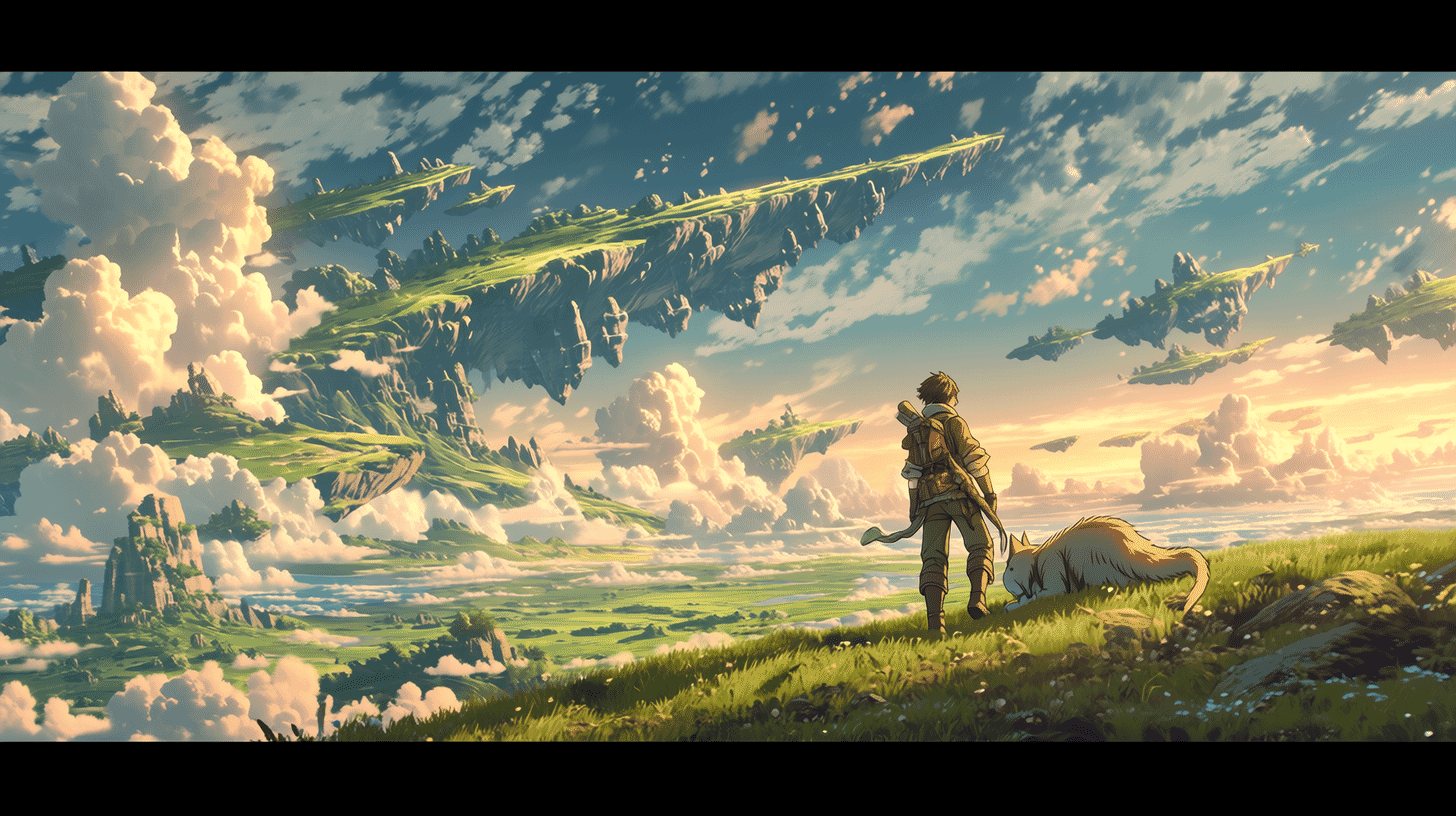
The setting is an untamed world of floating landmasses and forgotten ancient ruins. Your home planet is gone, so you and the other survivors land here and start over: exploring, gathering materials, crafting tools and gear, and building a base almost anywhere you like, from the top of a waterfall to the inside of a volcano. There's farming and fishing too, and the whole thing can be played solo or with others in online multiplayer.
The creatures are the heart of it. You tame them by setting a trap and using an item called a "dream jar," after which they'll carry you across land, take to the sky on your back, fight beside you, and pitch in around your base. Launch languages are Japanese, English, Traditional and Simplified Chinese, and Korean. Price, age rating, and the multiplayer player cap are all still undecided.
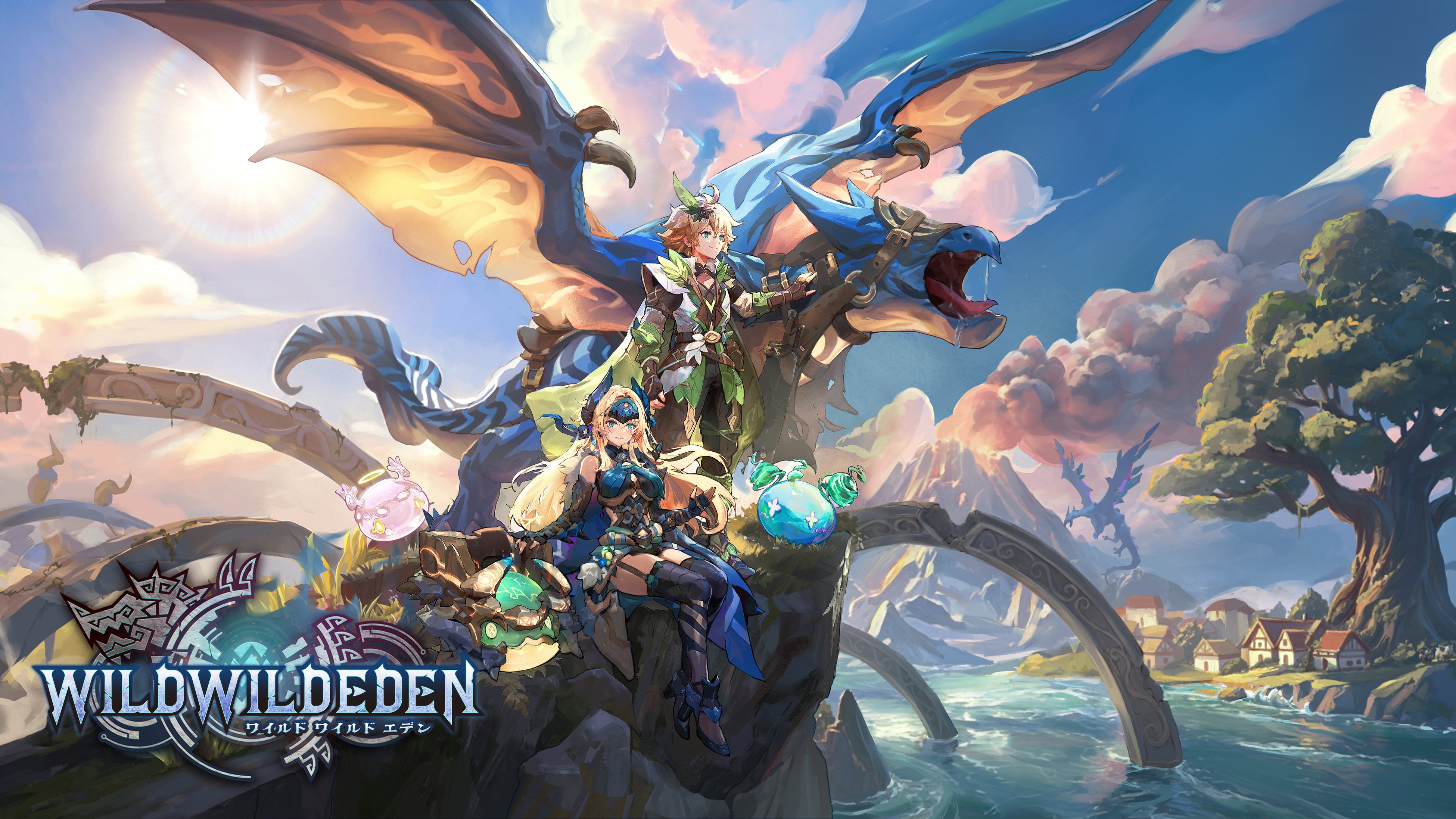
Source: Shueisha Games / PR TIMES
Monsters as family, not labor
Here's where the game plants its flag. Plenty of survival titles treat creatures as walking resource nodes, something to harvest, exploit, and replace. Wild Wild Eden wants the opposite. According to the announcement, the team's guiding idea was to make monsters feel like actual family rather than convenient tools: creatures that trot over at feeding time, sprawl out in a favorite spot, roughhouse with each other, and sometimes stumble around the base doing their clumsy best to help. The assistant producer framed the goal not as a short survival "vacation" but as a place players would want to actually live in.
That philosophy runs into the mechanics, too. A breeding system lets you cross same-species monsters to pass down stats and quirks, and rare-colored individuals can turn up. Anyone who spent a childhood chasing shiny Pokémon will recognize the hook: a single companion that exists nowhere else. Even the farming leans into it: a "water slime" tags along as your gardening buddy and handles the watering for you.
Why the Shonen Jump company is building a brand-new IP
For readers who know Shueisha only as a manga powerhouse, the interesting part isn't the game. It's who's making it. Shueisha Games, the publisher's interactive arm, was set up in 2022 and, by design, is not a factory for churning out Jump license games. That work gets handed to others. Instead, the studio keeps taking swings at original titles, and Wild Wild Eden is the clearest example yet: a wholly new world with no manga attached.
It's also not made in Tokyo. The developer is Magnus Games Studio, a roughly 40-person outfit founded in Kuala Lumpur in 2017 and an early winner of a Southeast Asian "best rising star" studio award. Co-founders DC and Welson Gan have stuck with monster-raising games since the studio's first days, and say the inspiration traces back to a love of animals they have had since childhood, including their own dogs and reptiles. A major Japanese publisher backing a Southeast Asian studio on an original IP is, in itself, a marker of how far game development has spread beyond the usual capitals.
The road to here wasn't a straight line. The game first appeared in July 2023 at the BitSummit Let's Go!! indie showcase under the placeholder title PROJECT SURVIVAL, then went through roughly three years of development, including a mid-project switch to a different game engine that the producer described as a major decision. It re-emerges now with its real name and a Steam page open for wishlists.
Can it win over the post-Palworld crowd?
Optimism aside, the finish line is a long way off. Early Access doesn't begin until spring 2027, and with price and scope still blank, there's a lot the studio hasn't shown. The "monsters plus survival crafting" lane is also no longer empty. Palworld turned it into one of the most crowded corners of gaming, and the shadow of Pokémon looms over any game that lets you breed and collect creatures.
The emotional-bond angle is a real differentiator on paper. Whether it holds up depends entirely on the minute-to-minute play. "Your monsters are family" is an easy line to write and a hard feeling to build. For now it's a promising trailer and a philosophy, not a finished game, but specific and unusual enough to be worth watching.
And if the original-IP gamble doesn't pan out? Shueisha has a fallback older than most of the players it's chasing. Back in 1989, Bandai's Famicom Jump, a crossover RPG that stuffed the magazine's historical hero lineup into a single game, moved roughly 1.1 million copies on brand power alone, jank and all. The all-star cash lever, call it Switch 2 Jump or PS5 Jump, is always sitting there to pull. Choosing not to pull it is the whole point.
One of Japan's biggest manga publishers is betting on an original game, made in Malaysia and aimed at the whole world. How does game development look where you live: homegrown, co-produced across borders, or somewhere in between?







Global Discussion
4 comments