TSMC, the world's largest foundry, is quitting GaN power-chip manufacturing. ROHM, which built its flagship 650V parts inside TSMC's fabs, has licensed the technology and is racing to mass-produce in Hamamatsu by 2027. A look at the China-US rivalry and Japan's vertical-integration bet.
A ball bearing with a 0.6mm bore, smaller than a sesame seed. One firm in a former coal town in Hokkaido reportedly makes around 70% of the world's sub-millimeter bearings. Here's how.
Tokyo Ohka Kogyo is No. 1 in photoresist with a 24.7% share and No. 2 in EUV resist with 28%. How a 1936 maker of coal-lamp battery material became a chokepoint in the AI chip supply chain.
Japan's navy just put 45,000 personnel on SAP ERP for logistics. The US Army got there in 2018, Germany in 2011. Inside Japan's late arrival, its siloed legacy systems, and whether Fujitsu can deliver.
Intel installed the first production-grade High-NA EUV machine; TSMC bought one but kept it out of production. Being slow to the newest lithography once cost Intel a lost decade. Is TSMC repeating that mistake? Its confidence rests on Japan: Mitsui Chemicals' EUV pellicle and the HOYA/Shin-Etsu/AGC mask-blank near-monopoly (about 90% share).
Mitsui Chemicals was first in the world to mass-produce the EUV pellicle, a free-standing film tens of nanometers thick. From the ASML license to the carbon-nanotube pivot and a 2027 upgrade, here is why one invisible bottleneck sits with a single Japanese plant.
Not TSMC, not ASML. A Japanese chemical maker with ~$240M in sales quietly supplies about 70% of the world's photoresist sensitizer: the ingredient inside the ingredient that prints every advanced chip.
Japan discards 650,000 tons of small electronics a year, yet recovers only a little over a tenth of it. The rest mostly leaks abroad through an untracked invisible flow. On June 5, 2026, the Environment Ministry picked six pilots enlisting movers and couriers to keep the metals home.
Dysprosium and terbium, essential to EV magnets, were China's one unbroken monopoly. In 2025, Australia's Lynas, backed by Japan since 2011, produced them outside China for the first time. What it means, and what it doesn't.
JX Advanced Metals, maker of roughly 60% of the world's sputtering targets, is investing about 23 billion yen to expand its Hitachinaka plant by 1.6x and selling its Chilean copper mine stake to Lundin Mining for $215 million, redirecting the cash into chip materials. A look at a 120-year-old miner remaking itself as an advanced-materials company.
A fresh 150-billion-yen government injection pushes the state's share of Rapidus's capital to roughly 60%. Yet Tokyo capped its voting rights at 11.5%, keeping the firm out of state-enterprise territory by design. We unpack subsidies versus equity, the fate of the 2nm skeptics, and the question of who will actually buy the chips.
METI has unveiled Japan's first post-Fukushima numeric target for replacing nuclear reactors: up to 5 by the 2040s, 14 by the 2050s. Behind the decarbonization, energy-security and AI-demand drivers lies a harder question: regulatory capture, the Nuclear Village, and whether the regulator can be trusted.
Japan's government and three megabanks gained access to a frontier AI model for cyber defense, with the digital minister calling to expand it to critical infrastructure. Set against the new US executive order and the EU AI Act, here is how Tokyo's approach differs.
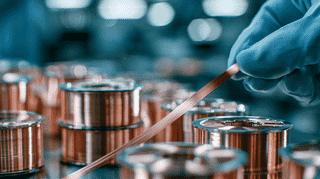
A single fusion reactor needs about 10,000 km of high-temperature superconductor tape, and five years ago almost no one could make that much. Now four Italian physicists at startup Suprema are building Europe's largest tape plant to break in. But the companies that already dominate this wire are mostly Japanese: two of the four global fusion-grade producers are based in Japan. Inside the race over the thin ribbon fusion runs on.
Ultra-pure water is the invisible backbone of chipmaking, so clean that a stadium of it may hold less impurity than a single sugar cube. Three Japanese firms, Kurita, Organo and Nomura Micro Science, lead the world. We unpack their technical edge and the contest with global rivals like Veolia.
China overtook Japan in net external assets at the end of 2025, dropping it to third place, yet Japan's holdings hit a record high. Here is what the numbers really mean for the yen.
At the APEC trade ministers meeting in Suzhou, China, Japan's industry minister demanded that exporting countries rectify arbitrary rare earth curbs. A look at the slow squeeze on Japan, its roots in a Taiwan remark, and Tokyo's exit strategy.
Kawasaki Heavy Industries, maker of jets, bullet trains and motorcycles, has opened a physical AI development hub in Silicon Valley, teaming up with NVIDIA, Analog Devices, Microsoft and Fujitsu. We unpack why a 130-year-old industrial giant is betting on AI that acts in the real world, and where Japan stands in the US-China robotics race.
OpenAI is moving to offer its newest cyber-focused AI model, GPT-5.5 Cyber, to the Japanese government and industry. Former NSA Director Paul Nakasone, now an OpenAI board member, flew to Tokyo to pitch critical-infrastructure cooperation. We unpack the contrast with Anthropic's tightly controlled Claude Mythos, the China-threat framing, and what it means that OpenAI wants Japan as its first international partner.
Eleven days, 44 countries, 400 delegates. We score the five expectations from our pre-meeting article against the MOFA outcome communique: emperor penguin protection blocked, tourism rules deferred, Annex VI stalled, only the transparency resolution delivered.