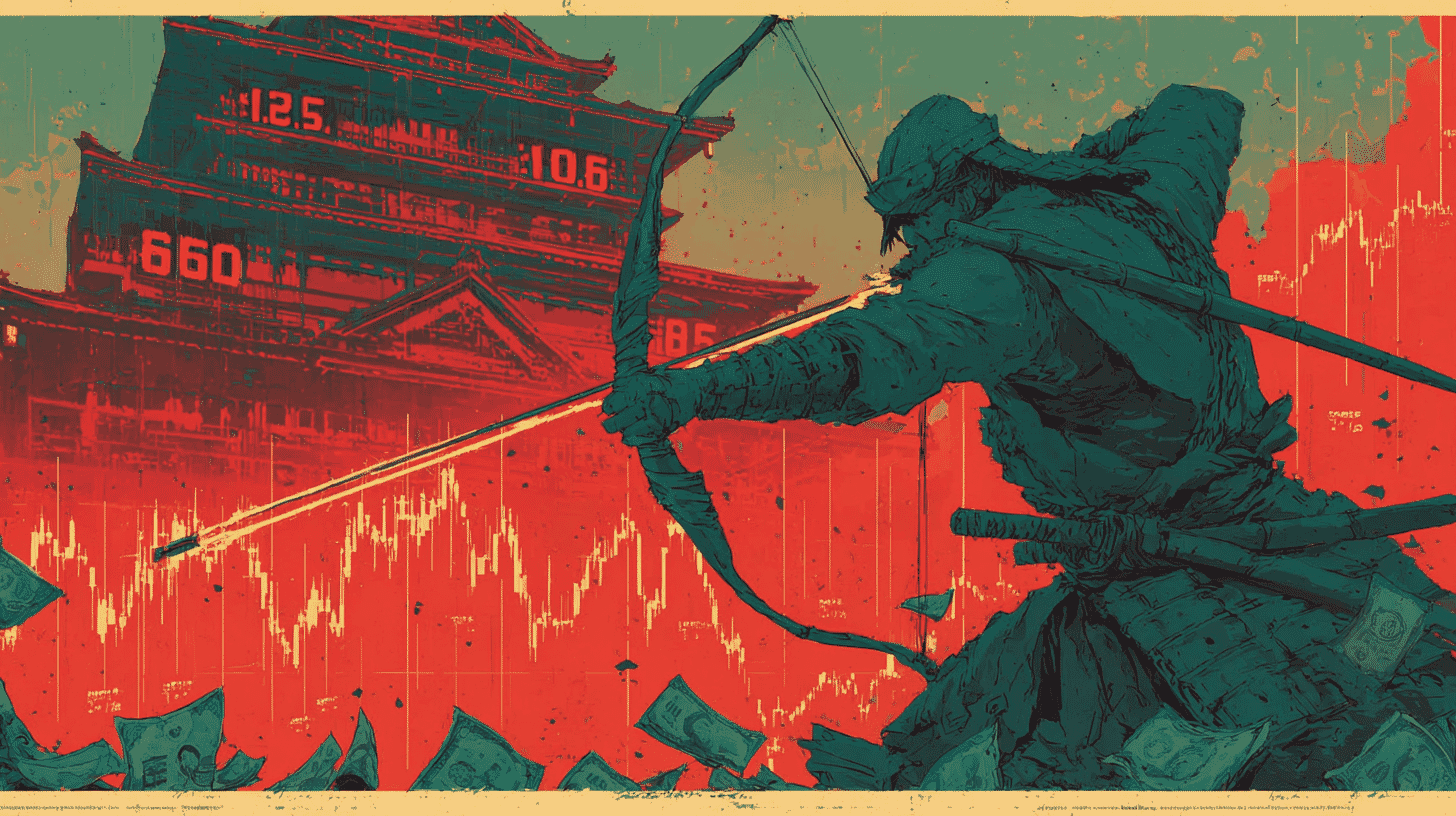
"This is our final evacuation warning." A few hours after Vice Minister of Finance Atsushi Mimura uttered those words on April 30, the dollar plunged from above 160 yen to 155.50. Japan had pulled the trigger on its first yen-buying intervention in 21 months. Two days after the BOJ held rates steady, the Finance Ministry delivered the government's answer. It would later emerge as the largest monthly intervention on record.
What Happened in 24 Hours
USD/JPY climbed all morning on April 30, fueled by Middle East tensions. WTI crude oil briefly topped $110 per barrel, hitting Japan with a triple squeeze: safe-haven dollar buying, widening trade deficit expectations, and the priced-in BOJ pause. By 3 p.m. Tokyo time, the pair touched 160.66, the weakest yen level in 21 months.
Then Finance Minister Satsuki Katayama spoke. Just after 4 p.m., she told reporters at the Ministry that "the timing for taking the decisive action I have repeatedly mentioned is approaching." She added a pointed line aimed at speculators: "Even when you go out, even on your day off, keep your smartphone close." A barely veiled signal that intervention could come during Japan's Golden Week holidays.
Vice Minister of Finance for International Affairs Atsushi Mimura followed, going even further. After noting that "extremely speculative moves are increasing" and that "the timing for decisive action is nearing," he delivered the line that would echo across global markets: "This is our final evacuation warning."
"Evacuation warning" is the kind of language reserved for tsunami alerts or wartime civilian alerts. For a Vice Minister of Finance to use it about a currency market is highly unusual. Global media seized on the phrase. CNBC headlined it as Japan's "final warning to markets." The Financial Times noted the resulting yen surge was "the biggest in three years."
Then, late that night Tokyo time (around 19:26 GMT), as Asian trading handed off to European desks, USD/JPY suddenly collapsed. The pair tumbled to as low as 155.50, a roughly 5-yen drop that bears all the hallmarks of official intervention. Nikkei confirmed the intervention with a government source, and Reuters followed up. This was Japan's first yen-buying intervention since July 2024, the first in 21 months.
The dollar's one-day decline of around 3% was the largest single-day drop since December 2022.
Why This Timing
Three factors converged.
First: right after the BOJ held. On April 28, the Bank of Japan held its policy rate at 0.75% in a 6-3 vote, with three dissenters favoring 1.0%, the first time three members dissented under Governor Ueda. But Ueda's press conference avoided giving any clear signal about a hike, and markets unwound the initial yen-buying reaction completely. The setup became: "If the BOJ won't move, the Finance Ministry will."
Second: just before Golden Week. Japanese markets enter holidays starting May 3. Liquidity drops during long holidays, making it easier for speculators to push the yen down. Authorities needed to pre-empt this. Katayama's "keep your smartphone close" line directly hinted at intervention risk during the break.
Third: an opportune gap after the FOMC. The April 29 FOMC also held rates, but four dissenters (the most since 1992) gave the meeting a hawkish reading, supporting the dollar. Combined with surging oil prices, all the yen-bearish forces concentrated on April 30. US tacit approval was already in place, the New York Federal Reserve reportedly conducted a rate check with major banks in January 2026, which markets read as implicit US support. Mimura confirmed that on FX, Japan has been "coordinating with the US since the September 2025 joint statement."
The Scale: 11.7 Trillion Yen, a Record
The full picture arrived on May 29, when the Ministry of Finance published its monthly intervention data. Between April 28 and May 27, Japan spent 11.7349 trillion yen buying yen. That beat the previous record for a yen-supporting campaign, the 9.7885 trillion yen deployed between April 26 and May 29, 2024, by roughly 2 trillion yen, making it the largest monthly total ever recorded.
Sumitomo Mitsui DS Asset Management estimates roughly 5 to 5.5 trillion yen went in on April 30, with a further 4.5 to 5 trillion yen across May 1, 4 and 6. The authorities worked the thin holiday market in bursts rather than in one shot. Daily figures and exact dates are due in the quarterly release in early August.
Japan's foreign reserves total about $1.2 trillion, providing room for tens of trillions of yen worth of additional intervention. But mass-selling US Treasuries to fund yen buying would itself impact the US bond market, so this card cannot be used without limits.
| Intervention | Scale | Move | Trigger |
|---|---|---|---|
| Sep-Oct 2022 | ~9.1 trillion yen | Gradual | First in 24 years, 145 level |
| Apr-May 2024 | ~9.7 trillion yen | ~7 yen drop | Largest ever, 160 level |
| Jul 2024 | ~5.5 trillion yen | ~5 yen drop | 161 level |
| Apr 28 - May 27, 2026 | 11.73 trillion yen (record) | ~5 yen drop | 160-plus, first in 21 months |
Will the Effect Hold?
Historical precedent suggests intervention effects are short-lived. Bank of America's Kamal Sharma noted that "the willingness to intervene is real, but if fundamentals don't change, the effect won't last." Société Générale's Kenneth Broux said the move "looks like both intervention and short covering."
After the July 2024 intervention, USD/JPY did fall from 161 to 141 within a month, but that was driven mainly by changes in monetary policy: rising Fed cut expectations and a BOJ rate hike. Without those structural shifts, intervention alone rarely reverses a trend.
The same logic applies now. Until WTI crude eases below $110 and the US-Japan yield gap of over 190 basis points narrows, the structural pressure on yen remains. CFTC data shows speculative yen short positions at the highest level since July 2024. Once short-covering exhausts, selling pressure can return.
What followed was uncomfortable for the authorities. Having been pushed back to 155, the dollar was back at 159 yen by the end of May and touched 162.84 on July 1, a roughly 40-year high. The BOJ did raise its policy rate from 0.75 to 1.0 percent at its June 15-16 meeting, the highest level since 1995, and the trend still did not turn. Tsuyoshi Ueno of NLI Research Institute credited the intervention with keeping the slide from accelerating amid Middle East tensions and a hawkish Fed, while flagging the possibility of another round.
As of late July, that second round has not come. Speculative yen shorts have built well past the level that triggered the first operation, and the authorities have stayed out. The likely reason: another ineffective intervention would do more to confirm the market's expectations than to break them.
A First for the Takaichi Government
This is the first intervention under Prime Minister Sanae Takaichi's government, in office since October 2025. The administration's expansionary fiscal stance has fueled fiscal-deterioration fears in markets, contributing to both yen weakness and rising long-term yields.
The result is a self-defeating loop: the government's fiscal policy weakens the yen, and the government then intervenes to prop the yen up. Many market participants argue: "Unless fiscal posture changes, intervention is just buying time."
Katayama is a former Finance Minister herself with deep familiarity with FX issues. Her own decision-making and coordination with Governor Ueda were tested for the first time today. But depending on how the Trump administration responds, future intervention space may narrow.
The Final Act of a Three-Part Drama
Looking back at the past 72 hours, a clear three-act structure emerges:
- Act 1 (April 28): BOJ holds, three dissenters, Ueda's cautious tone.
- Act 2 (April 29): Market verdict, USD/JPY at 160.67, 10-year JGB yield at 2.535% (27-year high). "Behind the curve" gets priced in.
- Act 3 (April 30): "Final evacuation warning," followed by Japan's first yen-buying intervention in 21 months. The government's response.
Three layers, central bank judgment, market verdict, government response, activated in sequence. The structure mirrors Japan's 2024 Golden Week interventions, but with added complexity from the FOMC's hawkish split and the unresolved Iran crisis.
The BOJ did move in June. The yen still went to 162, and 10-year JGB yields to the 2.7 percent range. A record 11.7 trillion yen of live ammunition bought time; it did not change direction. Whatever does that will have to come from monetary and fiscal policy, not the intervention desk.
In Japan, the final week of April saw FX, interest rates, and oil prices triangulate into a "triple concern" that pushed the government into intervention. Does your country's government intervene in currency markets? How do you evaluate the effectiveness of intervention? Tell us in the comments.
References
- https://www.bloomberg.com/jp/news/articles/2026-04-30/TEARGCKK3NY900
- https://www.nikkei.com/article/DGXZQOUB30BGC0Q6A430C2000000/
- https://www.jiji.com/jc/article?k=2026043000978&g=eco
- https://asia.nikkei.com/business/markets/currencies/japan-launches-fx-intervention-briefly-pushing-yen-to-155-from-160
- https://www.cnbc.com/2026/04/30/yen-surges-as-japan-reportedly-intervenes-to-counter-currency-weakness.html
- https://www.gaitame.com/media/entry/2026/04/25/120000
- https://kantenna.com/topic/boj-april-2026-rate-hold-three-dissenters-ueda-press-conference
- https://kantenna.com/topic/boj-april-2026-rate-hold-market-verdict-yen-160-jgb-yield-27-year-high








Global Discussion
14 comments