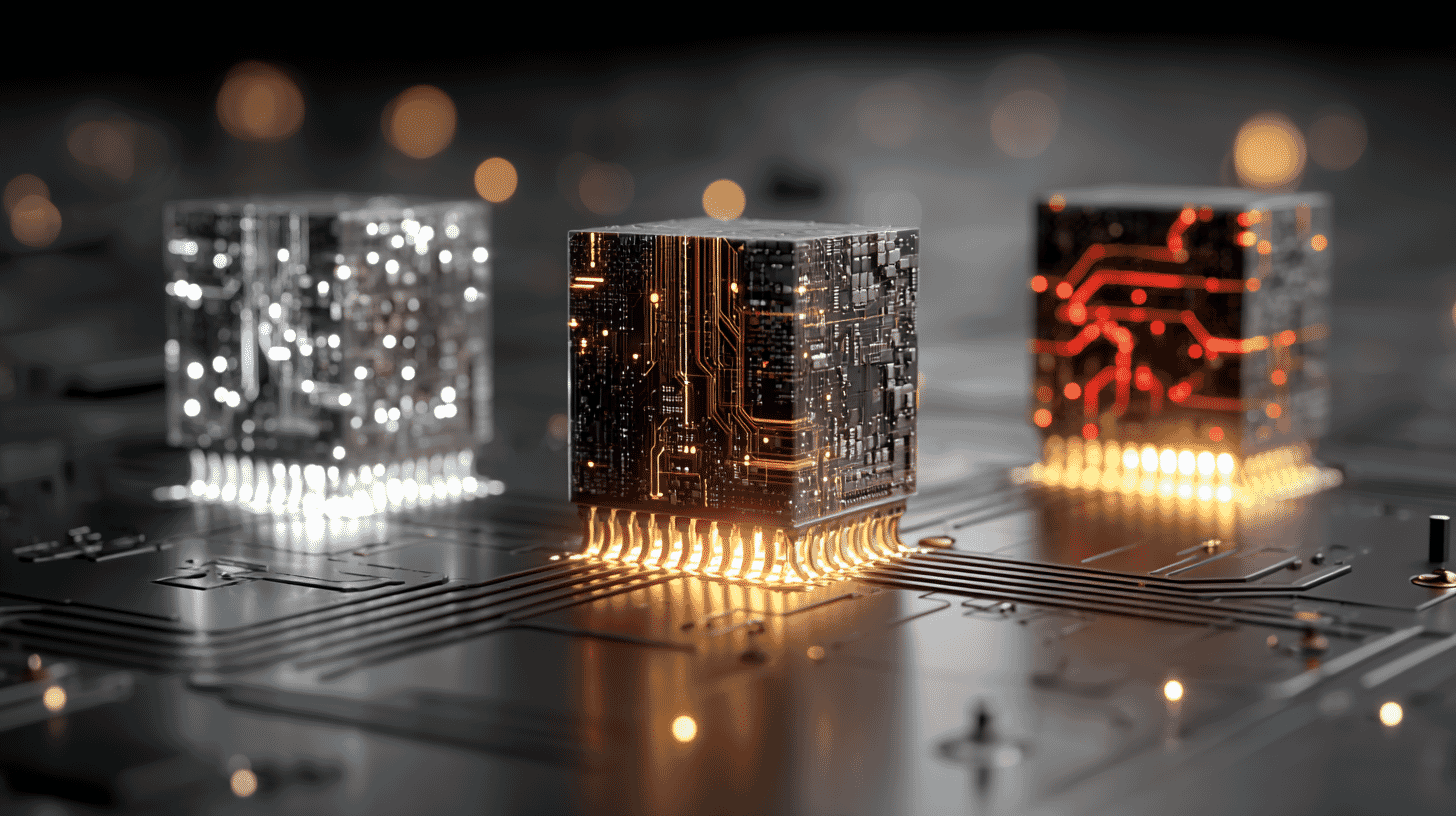
"Don't fight U.S. GPUs, coexist with them." Fujitsu's bet on its FUJITSU-MONAKA processor series for sovereign AI takes a sharply different path from Europe's semi-autonomous SiPearl or China's fully independent Loongson. With Rapidus as ally and NVIDIA as partner, Japan is forging a uniquely pragmatic "third way."
Fujitsu's Triple Play: Sovereignty × AI × Semiconductors
In April 2026, Nikkei xTECH reported that Fujitsu is making another bold move in next-generation CPU development for AI servers.
The centerpiece is "Fugaku NEXT," the successor to Japan's flagship supercomputer, being co-developed with the RIKEN research institute. Fujitsu CTO and Senior Executive Vice President Vivek Mahajan emphasized: "Our work on the original Fugaku has been deeply meaningful. HPC products developed based on Fugaku technology are selling not just in Japan but overseas." Building on this momentum, Fujitsu is using its proprietary FUJITSU-MONAKA CPU series to seriously break into the global sovereign AI market.
The target customers are sectors where confidentiality is paramount, defense, manufacturing, healthcare, and finance. Fujitsu's pitch: AI infrastructure with security as the top priority, combining enhanced AI capability with industry-leading power efficiency. The MONAKA series is positioned as a high-speed, low-power CPU offering for AI server customers worldwide.
MONAKA-X: A 1.4nm Bid for the Frontier
The most striking detail is the successor to the upcoming FUJITSU-MONAKA (slated for 2027 release, manufactured on TSMC's 2nm process): a chip called FUJITSU-MONAKA-X.
MONAKA-X targets a 1.4nm process node, bleeding-edge by any measure, with an aim of reaching production around 2029. It's earmarked for installation in Fugaku NEXT (operational target: ~2030), which is designed to deliver 100x the performance of the original Fugaku. The Japanese government is expected to invest over ¥100 billion (approximately $630 million USD at the current 159 yen/dollar rate) in the project.
The technical architecture is interesting. Both MONAKA and MONAKA-X are built on Arm's CPU architecture, augmented with Fujitsu's proprietary 3D stacking technology and low-voltage design. MONAKA-X will be the world's first server CPU to integrate the Arm SME (Scalable Matrix Extension), a dedicated matrix computation engine, directly on-die, enabling low-latency AI inference workloads.
Why Rapidus Matters: Strategic Manufacturing Sovereignty
The biggest news from the Nikkei report: Fujitsu is "prioritizing consideration" of Rapidus, Japan's national-strategy semiconductor maker, as a manufacturing partner for MONAKA-X.
Rapidus is currently building a 2nm logic foundry in Chitose, Hokkaido, with mass production targeted for 2027. The Japanese government has committed approximately ¥900 billion (about $5.7 billion USD) in support, making Rapidus the symbolic "last bastion" of Japan's semiconductor revival.
Reportedly, Fujitsu is also considering taking an equity stake in Rapidus, and the Ministry of Education and Science (MEXT), which oversees Fugaku NEXT development, has stated openly: "There's no wall between us and METI [the ministry backing Rapidus]. Developing the Fugaku successor cannot be separated from advanced semiconductor initiatives." A clear signal that Japan is treating next-gen supercomputer development and domestic chip manufacturing as a single national project.
That said, Fujitsu hasn't abandoned TSMC, Taiwan's semiconductor giant remains an alternative manufacturing candidate. This diversification reflects a pragmatic approach: backing the domestic champion while keeping the proven foreign option in reserve.
The "Coexistence" Pact with NVIDIA
The defining feature of Fujitsu's strategy isn't going head-to-head with NVIDIA, it's partnering with them.
In October 2025, Fujitsu and NVIDIA announced an expanded strategic partnership covering AI infrastructure and AI agent development. The plan is to tightly couple MONAKA CPUs with NVIDIA's GPUs using the latter's high-speed interconnect technology, NVLink Fusion. The result: a CPU+GPU system that operates as a unified, full-stack AI processor.
PC Watch reports that Mahajan framed the deal in striking terms: "Fujitsu MONAKA is a 2nm Arm processor focused on power efficiency. Connecting our technology directly to NVIDIA's architecture is a monumental step in our vision of advancing AI through world-leading computing technology, opening the path to a new class of AI systems that are scalable, sovereign-compliant, and sustainable."
Crucially, Fujitsu has no GPU or AI accelerator product of its own. The two companies are complementary rather than competitive, which made this partnership a natural fit. Japan has accepted the reality that it cannot realistically challenge NVIDIA in GPUs, and instead focused its sovereignty efforts on CPUs, sourcing GPUs from the strongest available partner. This pragmatic compromise is the very essence of the coexistence strategy.
Comparison 1: Europe's SiPearl, "Same Arm Path, Different Scale"
Europe has its own player following a similar philosophy: France-based SiPearl.
SiPearl is the lead company in the European Processor Initiative (EPI), developing an Arm-based CPU called Rhea1 for JUPITER, Europe's first exascale supercomputer at the Forschungszentrum Jülich in Germany. Rhea1 packs 80 Arm Neoverse V1 cores and 61 billion transistors, manufactured on TSMC's 6nm (N6) process, with sample silicon shipping in early 2026.
SiPearl and FUJITSU-MONAKA share key DNA: both build on Arm and aim for sovereignty through regional/domestic manufacturing. Rhea1 also touts "backdoor-free, kill-switch-free" security features, explicitly designed to meet European sovereignty requirements.
But the differences are sharp:
Process node gap. Rhea1 was originally slated for 2021 but suffered repeated design churn, ending up at 6nm, already considered behind-the-times by launch. Fujitsu's MONAKA targets 2nm in 2027, and MONAKA-X targets 1.4nm in 2029.
Geographic manufacturing sovereignty. SiPearl depends entirely on TSMC in Taiwan; Europe has no domestic 2nm/1.4nm-class fab. Fujitsu, by contrast, has Rapidus as a candidate domestic foundry, a more complete sovereignty stack.
Investment scale. SiPearl has raised about €130 million ($152 million USD) total, while Fugaku NEXT alone is expected to receive over ¥100 billion (~$630 million USD) in government investment.
Comparison 2: China's Loongson, The Polar Opposite Path
China's Loongson Technology operates on an entirely different philosophy.
The defining feature: Loongson uses LoongArch, a fully proprietary instruction set architecture (ISA), depending neither on x86 nor on Arm. Released in 2020, LoongArch contains roughly 2,500 instructions and was designed from the ground up as an independent ISA. It's a direct response to U.S. technology export restrictions: every layer, from hardware to software, stays under domestic Chinese control.
Performance has been improving. The 16-core server CPU "Loongson 3C6000" is rated as comparable to Intel's 2021-era 16-core Xeon Silver 4314, with reports suggesting it actually beats Xeon on integer SPEC CPU 2017 benchmarks. The newer 3A6000 reportedly approaches Intel Core i5-14600K performance on a clock-for-clock basis.
But Loongson faces serious challenges:
- Process technology gap: The 3A6000 is built on a 12nm process, five-plus years behind today's 2nm/1.4nm leading edge
- Immature ecosystem: Software support lags far behind x86 or Arm. Despite aggressive contributions to GCC/LLVM/Linux, the U.S. entity-list designation makes commercial software compatibility limited
- Limited overseas markets: The fully autonomous architecture means foreign customers face significant porting costs to adopt LoongArch
China's strategy is to build a beachhead in critical infrastructure sectors, power grids, transportation, manufacturing, where security concerns favor "controllable domestic CPUs" over performance leadership. They accept performance lag in exchange for absolute sovereignty. The opposite of Fujitsu's pragmatism.
Japan's "Third Way": Arm + Domestic Manufacturing + GPU Coexistence
Putting it all together, Fujitsu's strategy stands out:
| Japan (FUJITSU-MONAKA) | Europe (SiPearl Rhea1) | China (Loongson) | |
|---|---|---|---|
| ISA | Arm (licensed) | Arm (licensed) | LoongArch (proprietary) |
| Leading process | 2nm / 1.4nm | 6nm | 12nm |
| Foundry | Rapidus + TSMC | TSMC | Domestic (SMIC, etc.) |
| GPU strategy | Tight NVIDIA coupling | NVIDIA/AMD compatible | Self-development focus |
| Govt investment | ¥100B+ (Fugaku NEXT) | EU funds + private | National budget |
| Overseas sales | Aggressive | Mostly intra-region | Limited |
Japan's approach is a calculated balance between "sovereignty" and "global competitiveness." Using the Arm ecosystem grants access to the world's accumulated software stack. Cultivating Rapidus secures manufacturing sovereignty. Partnering with NVIDIA preserves cutting-edge AI performance. This three-pillar combination is unique, neither European nor Chinese.
As Mahajan put it: "We have to make this a commercial success, otherwise we can't continue developing CPUs." Fujitsu isn't relying solely on government subsidies; it's explicitly targeting domestic and international AI data center customers. Reconciling economic security with viable business, that's the heart of Japan's sovereign AI approach.
The Open Questions
That said, the strategy has weak points.
Arm dependency is the biggest unknown. Arm is headquartered in the UK but owned by SoftBank Group. Building on someone else's ISA limits true technological sovereignty. This is exactly why China developed LoongArch, to eliminate that dependency.
The GPU gap persists. No matter how Japanese the CPU is, GPUs, the heart of AI processing, still come from NVIDIA. Whether the "semi-sovereign" state created by NVLink Fusion truly satisfies economic security requirements will remain a debate.
Rapidus execution risk is real. The 2027 mass-production target is just a plan. Whether a Japan that's been absent from leading-edge manufacturing for 30+ years can suddenly succeed at 2nm/1.4nm is a question the global semiconductor industry is watching with bated breath.
Even so, the attempt itself matters. Moving from being a passive consumer of AI technology to actively building AI infrastructure could fundamentally reshape the trajectory of Japan's tech sector.
Sovereign AI is now a shared challenge for nations worldwide. Japan has chosen its own path: "Arm + domestic manufacturing + GPU coexistence." But what's the conversation in your country? Should you aim for full autonomy, like China? Or is international collaboration the smarter bet? We'd love to hear your thoughts in the comments.
References
- https://xtech.nikkei.com/atcl/nxt/column/18/03549/041700004/
- https://xtech.nikkei.com/atcl/nxt/column/18/03549/041600001/
- https://xtech.nikkei.com/atcl/nxt/mag/ne/18/00001/00575/
- https://www.riken.jp/pr/news/2025/20250822_1/index.html
- https://global.fujitsu/ja-jp/pr/news/2026/02/12-01
- https://sipearl.com/rhea1
- https://www.theregister.com/2025/07/09/sipearl_rhea1_tape_out/
- https://oyako-programming.com/fa-cpu-loongson
- https://pc.watch.impress.co.jp/docs/news/event/2015083.html








Global Discussion
14 comments