
The price of cutting Trump's tariffs was a promised financing ceiling of about $550 billion. Japan has now sent the first $2.2 billion of it across the Pacific.
JBIC and Japan's three megabanks signed the opening round of loans under the US-Japan tariff deal. The destinations: an Ohio gas plant powering AI data centers, a crude export terminal on the Texas Gulf coast, and a synthetic diamond factory in Georgia. Behind those three projects sits a much larger story about tariff politics, dollar funding, and a Japanese public starting to ask uncomfortable questions.
The First $2.2 Billion: What's Actually Being Funded
On May 1, 2026, the Japan Bank for International Cooperation (JBIC) announced loan contracts totaling roughly $2.221 billion, about 340 billion yen at the prevailing rate of around 156 yen to the dollar, for the first wave of US investment projects under the bilateral tariff agreement. The contracts were dated April 17 and are structured as lending to three special-purpose companies JBIC established in the US, Japan Invest 1 through 3 LLC.
JBIC is not lending alone. The financing is structured as a syndicated loan with Japan's three megabanks, MUFG Bank, Sumitomo Mitsui Banking Corporation, and Mizuho Bank. The portion lent by the megabanks is backed by guarantees from Nippon Export and Investment Insurance (NEXI), Japan's state-affiliated trade insurance body.
The first tranche covers three projects:
1. Ohio gas-fired power plant: $1.885 billion in loans The largest project by far. Total project cost runs roughly $33.3 billion. SoftBank Group is the lead developer, and the plant is designed to supply electricity to AI data centers, a large bet on the energy demands of generative AI.
2. Gulf of Mexico crude oil export terminal: $313 million in loans Located in Brazoria County, Texas. The total project cost is around $2.1 billion. The terminal expands US crude oil export capacity, with stable energy supply to Japan listed as one of the strategic benefits.
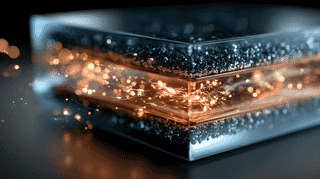
3. Georgia synthetic diamond manufacturing facility: $23 million in loans The smallest of the three, with a total project cost of about $600 million. Synthetic diamonds are used in semiconductor manufacturing equipment for polishing and heat dissipation. Strategically tied to the broader push for semiconductor supply chain security.
Combined project value: approximately $36 billion. These loans are an initial slice. The megabanks picked projects they could realistically fund in dollars, and additional tranches are expected to follow.
The $550 Billion "Tariff Avoidance Package"
Why is this much money moving? The trail leads back to July 2025, when Tokyo and Washington reached a tariff deal that reshaped the bilateral economic relationship.
In April 2025, the Trump administration imposed a 25% additional duty on Japanese cars under Section 232 of the Trade Expansion Act, taking the total to 27.5% on top of the 2.5% base rate. Separately, it imposed reciprocal tariffs under the International Emergency Economic Powers Act (IEEPA). After three months of negotiations, Japan agreed to a financing ceiling of up to $550 billion (about 88 trillion yen) and both rates came down to 15%. That the two tariffs rested on different statutes would matter enormously later.
To put $550 billion in perspective: it equals about 13% of Japan's nominal GDP and roughly 8% of US federal spending in FY2024. The White House has called it "the single largest foreign investment commitment ever secured by any country."
Crucially, this $550 billion is not a Japanese government check made out to the United States. It is a financing ceiling: a combined cap on JBIC equity and loans, NEXI guarantees, and private bank lending available to support Japanese corporate investment in the US. Japan's framing is that it supports "voluntary corporate investment decisions." The Trump administration's framing is that it is a strategic investment fund "directed by President Trump." Those two descriptions are not the same thing, and the gap remains a source of friction.
The three Phase 1 projects were announced on February 17, 2026, US Eastern time. The loan signing is the moment actual money begins flowing. A second wave worth up to $73 billion was unveiled at the March 19 summit between Prime Minister Sanae Takaichi and President Trump, including small modular reactor plants in Tennessee and Alabama and natural gas plants in Pennsylvania and Texas.
Why "Dollars" Are the Real Problem
Behind the splashy numbers, Japan's banking sector has a quieter and more uncomfortable concern: where does the dollar funding come from?
Japanese banks fund themselves primarily in yen. Lending in dollars requires raising dollars in the wholesale market, typically by swapping yen, which can move exchange rates and is expensive when the yen is weak. The first three projects are manageable because their scale is modest and NEXI guarantees mitigate credit risk. But scale up to the full $550 billion and the picture changes dramatically.
Toyo Keizai reported in April 2026 that of the $550 billion, JBIC is expected to cover roughly one-third (about $181 billion) and the three megabanks the remaining two-thirds (about $363 billion). That works out to roughly $120 billion per megabank, a multi-year burden that, executed clumsily, could crowd out the dollar lending capacity these banks need for their existing global business.
Megabank executives have reportedly told the government that without external dollar-funding support, they cannot commit to Phase 2 and beyond. The yen has not made things easier: it broke past ¥160/$ on April 30, 2026, before snapping back to ¥156 on May 1 amid suspected currency intervention by the Ministry of Finance. Pursuing massive dollar loans in the middle of historic yen weakness creates a feedback loop that risks weakening the yen further.
A Sense of Scale: Comparing Past Deals
For context, JBIC and the megabanks finalized a $1.5 billion syndicated loan to Saudi Arabia's Ministry of Finance in early 2026, a high-profile sovereign deal that drew significant attention at home. The $2.2 billion first tranche is a step up from that, but not radically so.
What is radical is the totality of the package. JBIC submitted an additional FY2026 fiscal investment and loan request of 7.2 trillion yen, roughly $46 billion, split between low-interest loans of 3.6 trillion yen and government guarantees of 3.5 trillion yen, solely to support US-bound investment. That's an enormous expansion of JBIC's footprint relative to its historic lending volumes.
For another reference point: Nippon Steel completed its acquisition of US Steel for $14.9 billion in June 2025, which itself was widely described as "one of the largest Japanese cross-border M&As in history." The $550 billion strategic investment initiative would equal 37 such acquisitions stacked back to back.
Echoes of the 1980s
This is not the first time Japanese capital has flowed into the US under tariff pressure. In the 1980s, voluntary export restraints on Japanese cars triggered a wave of factory construction: Honda's Marysville, Ohio plant in 1982; Toyota's joint venture with GM in California in 1984; Nissan's Tennessee facility in 1983.
Three things distinguish today's situation from the 1980s. First, scale: individual 1980s plants ran from the hundreds of millions to the low billions of dollars; this package is a $550 billion ceiling. Second, agency: the 1980s investments were nominally voluntary corporate decisions; today's package is a top-down government framework with quasi-binding commitments. Third, sectoral mix: the 1980s focused on manufacturing and jobs; today's package targets energy, AI infrastructure, nuclear power, and critical minerals, sectors aligned with the Trump administration's strategic priorities rather than with Japan's traditional industrial strengths.
The "9-to-1 profit split" clause favoring the US has also stirred debate. Akazawa Ryosei, who ran the tariff talks as economic revitalization minister and now serves as industry minister, has argued the clause applies only to JBIC's equity portion, 1 to 2 percent of the total, and that readings of Japan being "stripped of 90% of returns and reduced to a vassal state" miss the technical point. Whether that interpretation holds when actual project returns materialize remains to be seen.
Critical Voices at Home
Two of the three Phase 1 projects, the Ohio gas plant and the Texas oil terminal, are fossil fuel projects. Japanese environmental NGOs including FoE Japan have issued strongly worded statements arguing that the financing contradicts Japan's stated decarbonization commitments. They also note that the Brazoria County terminal sits in the same county as the 2022 Freeport LNG explosion, raising legitimate safety questions.
Economic commentators raise a different concern: opportunity cost. With Japanese households squeezed by inflation and wage growth lagging, the question of whether 88 trillion yen in financing capacity could have been better deployed at home, on AI infrastructure, semiconductor fabs, or regional revitalization, surfaces regularly in social media debate.
But the counterfactual matters. If the 25% auto tariff had stayed in place, Japan's seven major automakers would have absorbed roughly ¥1.4 trillion in tariff costs in just the April-September 2025 half-year. The economic value of bringing that down to 15%, compounded over years, is non-trivial.
Then the legal foundation gave way. On February 20, 2026, the US Supreme Court ruled 6-3 in Learning Resources, Inc. v. Trump that IEEPA does not authorize the President to impose tariffs. The reciprocal tariffs lost their statutory basis, Japan's 15% rate included.
The auto tariffs that matter most to Japan rest on Section 232 and were untouched by the ruling. The administration responded the same day by invoking Section 122 of the Trade Act of 1974 for a flat 10% charge on nearly all imports, and floated raising it to 15% a day later. The Court of International Trade found the Section 122 duties unlawful on May 7, 2026, and the administration appealed to the Federal Circuit. Section 122 is itself capped at 150 days, so the legal ground remains unsettled.
Tokyo has said it will keep implementing the $550 billion program regardless. The awkward position this article once described as a risk, tariffs invalidated with the commitment still on the books, is roughly where things stand.
What This Tells Us
This story is not really about a $2.2 billion loan. It sits at the intersection of tariff politics, currency stress, AI's energy hunger, fossil fuel ethics, and a structural shift in the US-Japan economic relationship.
JBIC governor Hayashi Nobumitsu said in February that the three projects are bankable, and with NEXI guarantees the immediate credit risk is contained. Whether the full $550 billion materializes is another question. Japanese officials keep stressing that the figure is an upper limit, not a target. Wall Street analysts at firms including Piper Sandler have called the broader pledge vaporware, money that may never fully materialize now that the tariffs it bought have been struck down.
The first $2.2 billion is the opening line of a long story.
How does this look from where you're sitting? Has your country had similar conversations, public banks underwriting strategic projects abroad in exchange for trade concessions? What would the public reaction be where you live? We'd love to hear your perspective.
References
- https://news.yahoo.co.jp/articles/d364db1192b98c1a231f1bfa4b04d9098093b560
- https://news.yahoo.co.jp/articles/cfa0af56447cb86fd62dfadaf6c0e5c55874ce95
- https://www.bloomberg.com/news/articles/2026-02-17/trump-announces-first-japan-investments-under-trade-deal
- https://www.japantimes.co.jp/business/2026/04/24/japan-banks-us-projects/
- https://www.whitehouse.gov/fact-sheets/2025/07/fact-sheet-president-donald-j-trump-secures-unprecedented-u-s-japan-strategic-trade-and-investment-agreement/
- https://www.afslaw.com/perspectives/alerts/us-japan-trade-agreement-update-tariff-reductions-and-550-billion-investment
- https://www.justsecurity.org/123478/trump-japan-deal-appropriations-clause/
- https://www.hudson.org/economics/financing-550-billion-strategic-investment-fund-update-william-chou
- https://toyokeizai.net/articles/-/941263





Global Discussion
14 comments