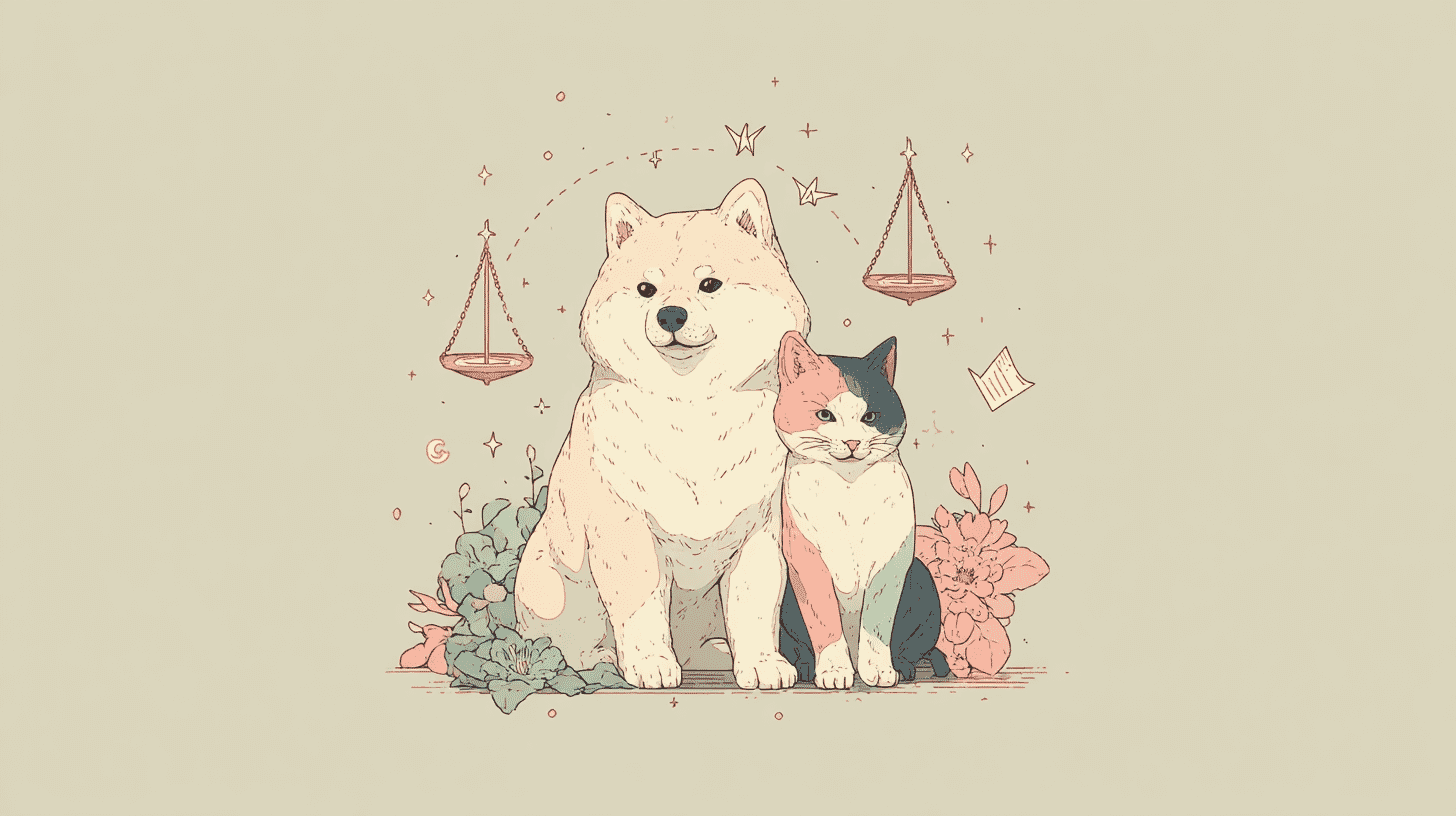
Imagine you're 80 years old, living alone, with one beloved cat by your side. What happens to that cat if you collapse tomorrow? In Japan, this anxiety is rapidly becoming the norm for elderly pet owners. Behind the country's flashy ¥2 trillion ($12.5 billion) pet market lies a quiet but growing crisis: when something happens to the owner, there's nowhere for the pet to go.
Now, four organizations led by pet-tech leader PETOKOTO have stepped up. On April 24, 2026, they launched the Pet Guardianship Lab, a Japan-first cross-industry platform designed to make sure no pet becomes a "refugee" when their owner can no longer care for them.
What Is the Pet Guardianship Lab?
On April 24, 2026, four Japanese organizations jointly announced the founding of the Pet Guardianship Lab (ペット後見ラボ, petto kouken labo):
- PETOKOTO Inc. (Tokyo), Japan's leading pet media and rescue-matching platform
- Human-Animal Coexistence Center (Gifu), an NPO specializing in pet welfare research
- Little Family Small-Amount Short-Term Insurance (Tokyo), a pet-focused insurer
- HAL Administrative Lawyer Office (Yokohama), a legal-document specialist
The Lab is a cross-industry platform aimed at making "pet guardianship" a piece of social infrastructure, not a niche legal product. The launch event drew about 30 companies and 40 attendees, including convenience-store chains, housing developers, and pet food manufacturers, signaling broad cross-sector interest.
Why Japan Faces a Unique "Pet Refugee" Risk
Why is this initiative needed now, and here? Three structural forces are converging in Japan in a way that's nearly unique among developed nations.
1. The single-household tsunami. As of 2024, roughly 40% of Japanese households are single-person, projected to reach 44.3% by 2050. More and more pet owners simply have no household member to step in if they're hospitalized or pass away.
2. Super-aging and dementia risk. According to Japanese government estimates, by 2025 about 20% of Japan's elderly, one in five, will live with dementia. That's not just sudden death; it's a gradual erosion of the ability to feed, walk, or even remember a beloved animal. Many older owners surrender pets simply because they've moved into care facilities that don't allow them.
3. Pets as family, and pets as elders too. Japan now has approximately 15.95 million dogs and cats, about 1.94 million more than children under 15. Roughly 56% of dogs and 46.5% of cats kept in Japan are now seniors. Pets aren't disposable companions; they're family members with long-term care needs of their own.
The intersection of these three trends has created what insiders call a "pet refugee risk", and it's hitting at a scale that other countries haven't yet seen.
"Pet Guardianship": A Distinctly Japanese Concept
If you live in the US or UK, you've probably heard of a "pet trust." All 50 US states and DC now have pet trust laws on the books (Minnesota, the last holdout, enacted one in 2016). UK pet owners can write a guardianship clause into their will, leave money in a discretionary trust, or use legacy schemes from charities like RSPCA's Home for Life or the Cinnamon Trust.
Japan's "pet guardianship" (pet kouken) is similar in spirit but built on a different legal foundation, and that difference matters.
Under Japanese civil law, pets are classified as property (the same legal category as a car or piece of furniture). You cannot leave money or property directly to a pet. To get around this, in 2013 a judicial scrivener named Yasuhiro Kawai pioneered and trademarked Pet Trust® (ペット信託®), which uses Japan's civil-trust framework. The owner (settlor) entrusts a sum of money to a trustee, who pays the actual caregiver (beneficiary) for the pet's expenses. It's a workable structure, but it requires legal expertise, and most Japanese owners have never heard of it.
"Pet guardianship" goes a step further. It explicitly covers not just death, but also the gradual erosion of an owner's capacity, dementia, hospitalization, moving to a care facility. The goal is continuous coverage from the moment the owner can no longer care for the pet themselves.
What's new about the Pet Guardianship Lab is that it tries to standardize this whole ecosystem instead of leaving it to individual lawyers to puzzle out case by case.
A Four-in-One Japanese Model
Each of the four founding organizations brings a different competency to the table:
| Organization | Role | Flagship Service |
|---|---|---|
| PETOKOTO | Awareness & media | Pet rescue matching "PETOKOTO Omusubi"; pet-life media |
| Human-Animal Coexistence Center | Research & policy design | Pet Guardianship Mutual Aid "Tomonowa" |
| Little Family Insurance | Financial safety net | "Mirai no Yakusoku" (Promise of the Future) insurance |
| HAL Lawyer Office | Legal documentation | "Wan-Nyan End-of-Life Support" |
The combination of NGO + insurance + legal + media is unusual in any country, and uniquely Japanese in its cross-sector, consortium-style approach.
The Lab's stated activities focus on four pillars: sharing knowledge to build a common industry vocabulary; forming a multi-tier network of accepting facilities; advocating for staged regulatory progression (recommended → standard → mandatory); and broadcasting awareness through media and SNS.
How Japan Compares Globally
A quick global snapshot reveals just how different Japan's approach is:
- United States: Pet trust laws in all 50 states + DC. Pets are property, but trusts can name them as effective beneficiaries.
- United Kingdom: Pets are property. Owners can name a guardian, leave money in trust, or rely on charity legacy schemes (RSPCA, Cinnamon Trust, Dogs Trust).
- Canada: Pet trusts aren't legally permitted. Owners typically leave a cash legacy to someone they trust.
- Japan: Civil-trust-based "Pet Trust®" exists but adoption is low. The Pet Guardianship Lab is trying to convert what's been an individual choice into social infrastructure.
In short: where the US used legislation to solve the problem state by state, Japan is trying to solve it through a private-sector consortium. This collaborative approach is a hallmark of how Japanese society addresses complex challenges that cross multiple professional silos.
A New Market, Not Just a Welfare Issue
The 30+ companies that turned up to the launch event tell their own story. Pet guardianship isn't being treated as charity, it's being treated as a new market category where pet care, insurance, finance, real estate, and legal services intersect.
PETOKOTO CEO Taisuke Okubo has framed pet guardianship as a market that lies at the crossing of three major industries: pet-related products, insurance and finance, and legal/administrative services. Imagine housing developers building "senior-friendly residences that allow pets," convenience stores bundling pet supplies with elder-care delivery, and pet food makers offering long-term contracts for senior pets. All of these are plausible adjacent businesses, and that's why the launch drew interest from sectors that have nothing obvious to do with animals at first glance.
From "Give Up the Pet" to "Stay Together to the End"
There's a quiet sadness in Japan's elderly demographic, countless older people have considered adopting a pet, only to stop themselves with the thought, "What if I die first?" Some have surrendered beloved animals to shelters when moving to care homes. Others have chosen to live alone, foregoing the documented benefits of pets for cognitive health and loneliness reduction, simply because the future feels too uncertain.
The Pet Guardianship Lab is proposing a different framing: not "you're too old to have a pet," but "society should make it safe for the elderly to have pets all the way through."
Pets may be classified as property under Japanese law. But to their families, they're irreplaceable. The anxiety of "what if I go first" shouldn't have to be carried alone, and Japan's super-aging society is the place where that anxiety hits at scale, which makes it also the place where solutions are being invented first.
It's an early-stage initiative. But the four-way approach, combining a major media platform, an established NPO, a specialized insurer, and a legal practice, is the kind of cross-sector coordination Japan often does well. If it takes hold, it could become a template that other rapidly-aging societies study closely.
How are pets protected in your country if their owner suddenly dies or becomes incapacitated? Are pet trusts or pet-specific wills common where you live? What systems exist for elderly pet owners? Tell us in the comments below.







Global Discussion
14 comments