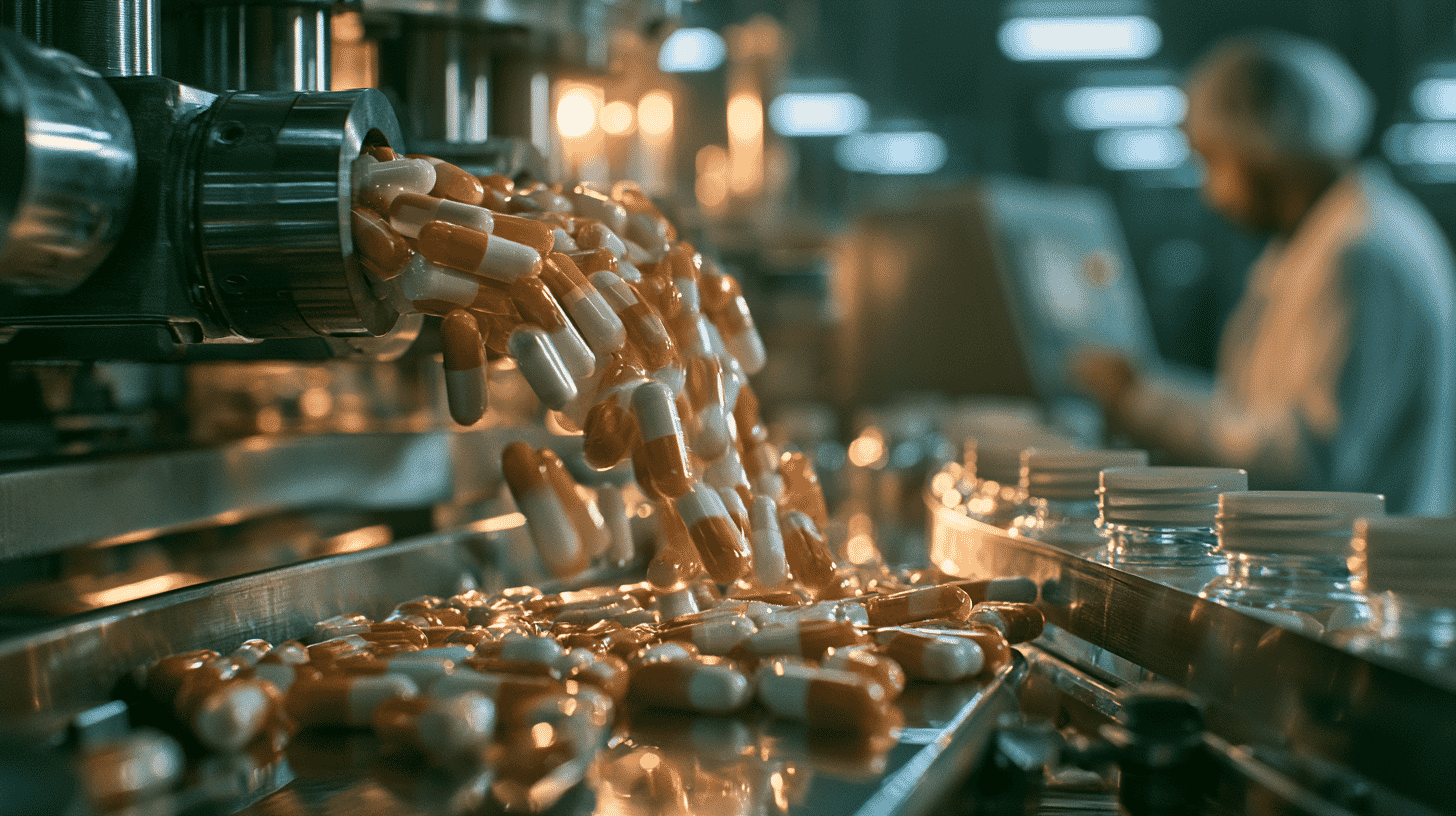
🍺 The company behind Ichiban Shibori just agreed to spend C$1.898 billion on multivitamins.
Kirin Holdings is buying Jamieson Wellness, the 104-year-old maker of Canada's best-selling vitamin brand. It is the third supplement company Kirin has bought in four years, and the first outside Asia-Pacific. "Beer company diversifies into health" badly undersells how odd, and how risky, this actually is.
What Kirin is actually buying
The deal was announced in Toronto on August 6, 2026, and in Japan the following morning. Kirin pays C$45.75 per share in cash, valuing Jamieson at roughly C$2.0 billion on a fully diluted equity basis and about C$2.5 billion including debt, or something near US$1.8 billion. Kirin puts the yen figure at ¥218.3 billion. The offer sits 27% above Jamieson's 20-day volume-weighted average price as of June 24, the last full trading day before word leaked that the company was exploring a sale, and 32% above the 60-day average.
Jamieson Wellness was founded in Toronto in 1922 and runs the number-one vitamins, minerals and supplements brand in Canada. Nikkei reports its products sit in roughly 32,000 Canadian retail outlets. In the United States the company leans on youtheory, a collagen brand it acquired in 2022 and sells at premium price points through Costco and Walmart. Revenue for the year to December 2025 came to C$822 million, about US$590 million. Canada supplies more than 40% of that; add the US and North America accounts for 65%. China contributes roughly another 20%. Four plants across the continent handle manufacturing, and the brands reach more than 50 countries.
Nothing is final yet. Two-thirds of Jamieson shareholders must approve at a special meeting expected in September 2026, and Canadian courts and regulators still have to sign off. As of August 2026, Kirin expects to close in the October-to-December quarter. Every Jamieson director and senior officer has signed a voting support agreement, and a C$70 million break fee applies if the board walks away for a better offer.
Why a brewer wants a vitamin company
The push half of this is easy to see. National Tax Agency figures put Japan's alcohol sales volume at 7.73 million kiloliters in fiscal 2024, down from a peak of 9.66 million in fiscal 1996, a drop of about 20%. Yano Research Institute projected in January 2026 that the domestic alcohol market would shrink to ¥3.274 trillion in fiscal 2025, 97.4% of the prior year and the first contraction in four years. Price increases have been propping up the value line while volumes slide, and that trick has a shelf life.
Kirin's answer is Health Science, a business it launched in 2019. The plan for the year to December 2026 is ¥257.0 billion in revenue, roughly US$1.6 billion. By 2035 the company wants ¥500 billion, about US$3.1 billion, with business profit of ¥75 billion, 6.8 times the 2025 level. The segment turned profitable for the first time only in fiscal 2025. The distance between here and there is enormous.
The pull half rests on a different claim. Kirin does not see itself as a company assembling a shelf of health brands. It thinks it has an ingredient. LC-Plasma is a strain of lactic acid bacteria Kirin isolated in its own labs. In 2020 Japan's Consumer Affairs Agency accepted its filing under the Foods with Function Claims system for supporting immune function, and it now sells in drinks and supplements under the iMUSE name. The argument beneath it is that brewing is applied microbiology, and that 141 years of fermentation and biotech work, dating to the founding of Japan Brewery in 1885, is the same capability that produces a supplement ingredient.
Read that way, the acquisitions form a distribution map rather than a shopping spree. Blackmores, bought in 2023 for A$1.88 billion (about ¥170 billion at the time), opened Oceania and Southeast Asia. FANCL, in which Kirin took roughly a third in 2019 before a 2024 tender offer took it whole, covers Japan and skincare. Jamieson buys the North American shelf. Kirin COO Takeshi Minakata described the region in the announcement as "the world's largest vitamins and dietary supplements market."
Kirin is not alone in the pivot. In April 2026, Suntory Holdings agreed to pay ¥246.5 billion for Daiichi Sankyo Healthcare, maker of Japan's most familiar cold and pain remedies. But that deal points inward, at Japanese pharmacy shelves. Kirin's points out.
Kirin has gone global before, and it went badly
In 2011 Kirin spent around ¥300 billion on Schincariol, then Brazil's second-largest brewer, betting on a growing middle class. The Brazilian economy turned, the real fell, a price war broke out, and Kirin slipped to third. It booked a special loss of about ¥110 billion in fiscal 2015 and sold the business in 2017 to Bavaria, a Heineken subsidiary, for roughly ¥77 billion. Six years, start to finish.
In 2015 it paid US$560 million, about ¥69.7 billion at the time, for 51% of Myanmar Brewery, which held close to 80% of that market. Then came the February 2021 coup. Kirin's joint venture partner was a military-linked conglomerate. It spent more than a year hunting for a buyer with no ties to the army, failed, and in 2022 sold the stake back to the venture itself for about ¥22.4 billion. Roughly a third of the original investment was written off as unrecoverable.
The pattern is uncomfortable. Kirin bought market leaders in growth markets and then lost to variables nobody at head office could control. Its counterargument is that supplements behave differently from beer. Beer is heavy, local and bound to specific drinking cultures; a vitamin capsule carries the same proposition across borders. Canada is also a stable jurisdiction whose courts will not be reordered by a coup. That reasoning holds up. It is also, roughly, what every acquirer says before integration starts.
What Western drinks giants did instead
The big Western brewers face the same demographic squeeze Kirin does, and nearly all of them have responded by staying inside the glass. AB InBev has pushed non-alcoholic beer and its Beyond Beer range of canned cocktails and alternatives, reporting no-alcohol beer revenue up 27% and Beyond Beer up 44% in the second quarter of 2026. Molson Coors bought the ready-to-drink cocktail brand Monaco Cocktails and the energy drink ZOA, took an 8.5% stake in Fever-Tree, and is rolling out Coors 0.0%. Heineken has cut jobs and leaned harder on Heineken 0.0. Even Molson Coors, which ranged furthest from beer, stopped at functional drinks. Not one of them bought a vitamin manufacturer.
The companies that did move into supplements were food companies. Nestlé assembled Nestlé Health Science through a long run of acquisitions. Danone agreed to buy the British nutrition brand Huel for about US$1.2 billion, roughly €1 billion, under its Renew Danone strategy. PepsiCo took an 11% stake in the energy drink maker Celsius. Each of those is a step into functional nutrition, adjacent to what the buyer already sold.
Kirin's closest analogue is not AB InBev but Nestlé. Its justification, fermentation science as the connective tissue between beer and capsules, is structurally the same claim Nestlé makes about nutrition science.
The prize is real. Grand View Research put the global dietary supplements market at about US$209.5 billion in 2025, with North America the largest single region at 36.1%. Kirin had essentially no presence there.
The parts that could go wrong
Integration is the obvious one. Kirin will be running Blackmores, FANCL and Jamieson as three independent supplement companies with three heritages, three regulatory environments and three sets of loyal customers, under a holding structure it only finished building in April 2026 with Kirin Health Science International in Australia. Nikkei reported the company expects more than ¥10 billion in savings from unifying procurement and systems. Procurement is the easy part. Deciding which brand owns which category in which country is not.
Price is another. A 27% premium, in a process that began with an unsolicited approach in March 2026, is full freight.
Then there is the claims problem, and it is the sharpest one. LC-Plasma's immune-function claim is cleared under Japan's regulatory system. That clearance does not travel. Putting the ingredient into Canadian or American products means fresh evidence, fresh labels and unfamiliar regulators, and North American supplement rules run on entirely different logic from Japan's. The synergy Kirin is buying is precisely the piece that cannot simply be shipped.
And roughly 20% of Jamieson's revenue comes from China, where Kirin already carries exposure through Blackmores. Doubling down on a bet you have already placed is not quite the same thing as spreading risk.
Japan's drinks companies are now openly wagering that the next century of their business is health rather than alcohol. Do the beer and soft drink brands where you live sell vitamins too, and would you trust a brewer with what is in your supplement bottle?
References
- https://jamiesonwellness.com/jamieson-wellness-enters-into-definitive-agreement-to-be-acquired-by-kirin-in-c2-5-billion-transaction/
- https://www.kirinholdings.com/en/newsroom/release/2026/0807_05.pdf
- https://newswitch.jp/p/49965
- https://www.nikkei.com/article/DGXZQOUC0705G0X00C26A8000000/
- https://www.jiji.com/jc/article?k=2026080700258&g=eco
- https://www.kirinholdings.com/jp/newsroom/release/2020/0928_04.html
- https://www.nikkei.com/article/DGXZQOUC073F70X00C26A7000000/
- https://www.nikkei.com/article/DGXZQOUC274PG0X20C23A4000000/
- https://www.kirinholdings.com/jp/newsroom/release/2024/0912_02.html
- https://www.nikkei.com/article/DGXLASDZ13IS9_T10C17A2TI1000/
- https://toyokeizai.net/articles/-/602293
- https://www.nikkei.com/article/DGXZQOUC152O90V10C26A4000000/
- https://www.beveragedaily.com/Article/2026/03/25/ab-inbev-heineken-molson-coors-how-brewers-are-future-proofing-beer/
- https://www.beveragedaily.com/Article/2026/07/30/investment-and-innovation-boost-ab-inbev-sales/
- https://www.nutraingredients.com/Article/2026/03/31/q1-2026-mergers-acquisition-and-investment-in-the-supplement-sector/
- https://www.foodnavigator.com/Article/2025/11/19/big-food-ma-trends-nestle-mars-unilever-and-kraft-heinz-drive-2026-industry-shake-up/
- https://www.grandviewresearch.com/industry-analysis/dietary-supplements-market-report
- https://www.nta.go.jp/taxes/sake/shiori-gaikyo/shiori/2026/index.htm
- https://www.yano.co.jp/press-release/show/press_id/4009






Global Discussion
3 comments