⚡ A 48-fold jump in quarterly net profit. Forty-eight times, not 48 percent.
That is what Kioxia Holdings, Japan's NAND flash memory specialist, told investors on Friday, May 15. The company expects 869 billion yen (about $5.5 billion at the current rate of roughly 158 yen per dollar) of net profit in just the April–June quarter of fiscal 2026. The figure comfortably blew past the QUICK consensus estimate of 405.6 billion yen and lands Kioxia second only to Toyota among Japanese companies projected to earn that much profit in a single three-month window.
This is the same Kioxia that struggled to find investors at its December 2024 IPO. Eighteen months later, its market value has multiplied roughly thirty-fold and, as of May, exceeds both Sony and Fast Retailing, the parent of Uniqlo. For a country whose semiconductor industry was largely written off two decades ago, this is the most concrete sign yet that something has shifted.
What Kioxia actually makes, and why it suddenly matters so much
Kioxia is the inventor of NAND flash memory. The technology was developed at Toshiba in 1987, eventually spun out as Kioxia in 2019, and then carried through years of ownership turmoil, including a 2017 carve-out by a Bain Capital-led consortium during Toshiba's accounting scandal, before finally listing on the Tokyo Stock Exchange in late 2024.
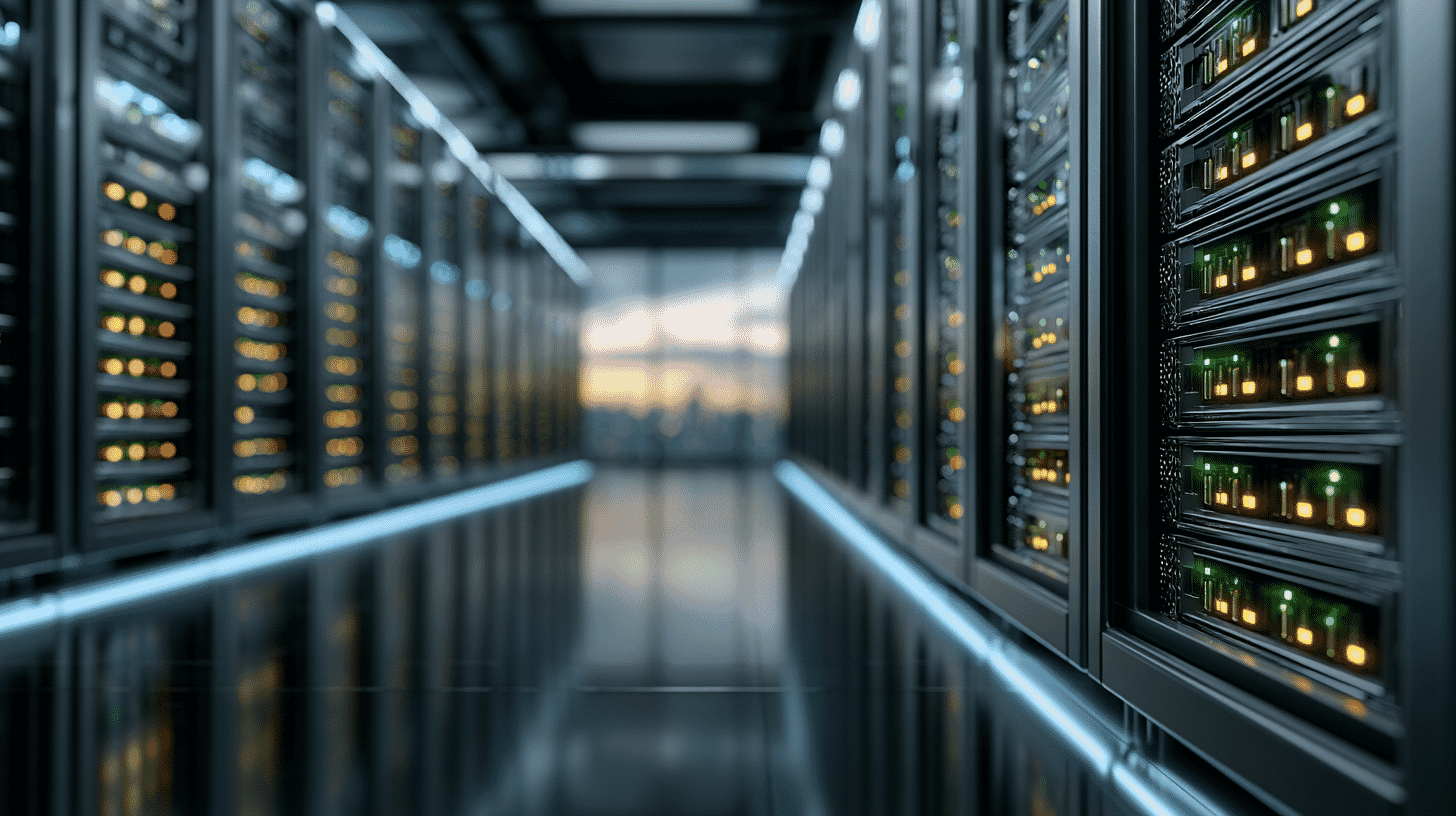
NAND is the chip inside every SSD, every smartphone, every memory card. Crucially, it is also the long-term storage layer inside AI data centers. While the headline-grabbing chips in an AI server are Nvidia's GPUs and the high-bandwidth memory (HBM) stacked next to them, the model weights, training datasets, and inference outputs all have to live somewhere. That somewhere, increasingly, is enterprise-grade NAND.
The arithmetic is unforgiving for hyperscalers. Each new generation of large language models is larger than the last; each new generation of inference workloads needs more vector caches, more retrieval indexes, more checkpoint storage. Phison's CEO warned earlier this year that NAND shortages could "kill" consumer electronics makers in 2026 if they could not secure supply. Samsung and SK Hynix have separately said that memory shortages will persist through 2027 and possibly beyond.
That is the macro picture. The micro picture is the one Kioxia put on the screen Friday afternoon.
The numbers, in plain English
For the fiscal year ended March 2026, Kioxia reported revenue of 2.3376 trillion yen, up 37%, and net profit of 554.4 billion yen, roughly double the prior year and the second consecutive record. Operating profit reached 870.4 billion yen, up 92.7%. The fourth quarter alone (January–March 2026) produced 407.7 billion yen of net profit, a twentyfold jump from the same quarter a year earlier. Operating margin in that quarter surged from 10.7% to 59.5%. Memory companies do not normally print numbers like this.
But the guidance is where the market's attention is going. For the April–June 2026 quarter:
- Revenue: 1.75 trillion yen (~$11.1 billion), 5.1 times the prior year
- Operating profit: 1.298 trillion yen (~$8.2 billion), 29 times the prior year
- Net profit: 869 billion yen (~$5.5 billion), 48 times the prior year
To put 869 billion yen in context: Toyota's projected quarterly net profit is in a similar ballpark. A single quarter of Kioxia's projected earnings would have ranked among the highest in the Topix index just a few years ago. CEO Hiroo Ota, who took the top job on April 1, told the press the company had "ridden the great wave of AI demand to record growth in both revenue and profit."
There is a wrinkle, though. Kioxia did not issue a full-year forecast for fiscal 2026 (ending March 2027). Management cited geopolitical risks, particularly tied to the Middle East, code in part for the impact of the Iran war on energy prices, shipping lanes, and indirectly on the dollar-yen rate and customer planning horizons. Analysts have been penciling in roughly 2.84 trillion yen of full-year net profit, more than five times the year just ended. The decision to withhold the official number, combined with concerns that the stock had already priced in heroic assumptions, sent shares lower in afterhours trading despite the obviously blockbuster quarter.
Why this is happening: the AI memory supercycle, explained
Bank of America has called what is unfolding in the memory market a "1990s-style supercycle." Three things are happening at the same time.
First, AI inference is moving out of the lab. ChatGPT-class workloads were until recently dominated by training, which is GPU- and HBM-intensive. Inference at scale requires very different storage architecture, and a lot more NAND per server.
Second, large hyperscalers are signing multi-year supply contracts. Kioxia said at its February earnings briefing that some customers were proposing prepayment arrangements stretching into 2027 and 2028 to lock in NAND supply. The company has said its entire 2026 NAND production is sold out, with bit growth expected in the high teens this year versus mid-teens last year.
Third, the rivals' priorities are pulling capacity elsewhere. Samsung and SK Hynix are pouring investment into HBM, the stacked DRAM that sits beside Nvidia GPUs. SK Hynix alone controls more than half the global HBM market and has had its 2026 capacity sold out since last year. Micron exited consumer memory entirely in late 2025 to refocus on AI data center clients, retiring its Crucial brand. The net effect is that conventional NAND capacity is not growing as fast as demand, and prices are responding. TrendForce reports NAND flash contract prices rose 55-60% quarter-over-quarter in Q1 2026 and are forecast to climb another 70-75% in Q2, the first time in the current cycle that NAND's increase has outpaced DRAM's.
For a pure-play NAND maker like Kioxia, this is a near-perfect setup.
The HBM gap, and the case for caution
The unflattering version of the Kioxia story is that the company is not in HBM, the highest-margin product in the memory industry. That market is essentially a duopoly between SK Hynix and Samsung, with Micron in a distant third. Kioxia has no commercial HBM offering. What it has is NAND, and the dollar value of NAND is dwarfed by the dollar value of HBM in any given AI server bill of materials.
The bull case is that this does not matter as long as NAND is in shortage. The bear case is that memory is the most viciously cyclical part of semiconductors. Industry veterans remember Elpida Memory, a Japanese DRAM maker that went bankrupt in 2012 after a price collapse, and the long, painful boom-bust cycles that defined NAND in the 2010s. Some analysts at Nomura and elsewhere have warned that the memory cycle could turn as early as 2028 if capacity additions catch up. Bit growth of "high teens" is not unlimited supply, but it is not zero supply either, and capex from Chinese rival YMTC continues to grow.
There is also a quieter problem: Kioxia's joint venture with SanDisk (the partner formerly within Western Digital) is transitioning to a compensation-based model, with about $1.165 billion paid over four years from 2026 to 2029. The relationship has been recalibrated, but the technical entanglement between the two companies remains a structural feature of the industry.
A US listing, and a louder voice in global markets
On the same day, Kioxia disclosed that it is preparing a listing of American Depositary Shares on a US exchange. The timing and venue are not yet set, but the strategic logic is straightforward: AI memory is now a global capex story, and US-listed semiconductor names such as Nvidia, AMD, and Micron trade at premium multiples to most Tokyo-listed peers. An ADS listing widens the pool of dedicated US technology investors, anchors the company's identity as an AI infrastructure play rather than a legacy Japanese hardware name, and gives it a dollar-denominated capital instrument for future M&A or share issuance.
Kioxia and Dell also announced on the same day a tie-up to ship what they describe as the world's highest-capacity AI server, a tangible reminder that the company's customer list is now dominated by US hyperscalers and OEMs, not Japanese consumer electronics makers.
What this means for Japan's semiconductor revival
For two decades, "Japanese semiconductors" was code for nostalgia. The country that once held 50% of the global chip market in 1988 saw its share fall below 10% by the 2010s. Elpida went bankrupt. NEC, Hitachi, and Mitsubishi all exited or merged out of memory. The story was over.
Then it wasn't. TSMC opened its first Kumamoto fab (JASM) in late 2024 with up to ¥476 billion in Japanese government subsidies and is now building a second one. Rapidus, a Japan-government-backed national champion, is targeting 2nm logic production at its Chitose, Hokkaido site in 2027, with cumulative government support already topping ¥2 trillion. Sony Semiconductor Solutions dominates image sensors. Tokyo Electron and Disco are global heavyweights in semiconductor equipment.
And now Kioxia, the inventor of NAND and the one survivor of Japan's memory wars, is generating more quarterly profit than almost any other company in the country.
The pieces do not yet add up to "Japan reclaims the chip industry." TSMC Kumamoto produces relatively mature nodes (28nm and 22nm at first, 12/16nm planned). Rapidus is years from volume production and faces enormous execution risk. Kioxia has no HBM exposure and remembers its scars. But for the first time in a generation, Japan has visible momentum across multiple parts of the semiconductor stack: NAND (Kioxia), foundry-mature (JASM), foundry-leading-edge (Rapidus), image sensors (Sony), equipment (Tokyo Electron, Disco, Screen), and materials (JSR, Shin-Etsu, Sumco).
That momentum is now being measured not just in subsidies and groundbreaking ceremonies, but in something more concrete: 869 billion yen of forecast quarterly profit at a single company.
The geopolitical asterisk
The reason Kioxia withheld its annual guidance is worth dwelling on. "Middle East risk" is shorthand for several real things: oil prices spiking back above $90 a barrel and potentially higher if Iran-Israel tensions widen, shipping delays through the Strait of Hormuz feeding into longer lead times for semiconductor equipment, and a dollar that has been stubbornly strong against the yen in part because higher US inflation has revived bets on a Federal Reserve rate hike rather than a cut.
A weaker yen is a tailwind for Kioxia's dollar-denominated revenue. But a much weaker yen could also trigger Japanese government intervention. Tokyo intervened repeatedly in 2024 and 2026 to slow the slide, and would feed back into US-Japan trade frictions. The Trump administration's Treasury Secretary, Scott Bessent, has publicly supported Japan's efforts to stabilize the currency, but Washington's tolerance for a 160-yen dollar is not unlimited.
In short: the AI memory story is global, and the bottlenecks are global. NAND coming out of Kioxia's fab in Yokkaichi depends on equipment from the Netherlands and the US, materials from Germany and Japan, customers in the US and China, and shipping routes that pass through a region currently at war. The 48x profit forecast is real. So are the asterisks.
From Toshiba's Problem Child to Japan's Earnings Engine
For Japan, this is the closest thing to a "redemption arc" the semiconductor industry has had in decades. A company once seen as Toshiba's troubled appendage is now generating Toyota-class profits and preparing to court US investors directly. Whether the AI memory supercycle lasts two years, five years, or, as Bank of America suggests, becomes a structural rerating of the entire industry, Kioxia has already changed the conversation about what Japanese manufacturing can be.
In your country, is the AI infrastructure boom showing up in the local economy yet, in jobs, stocks, electricity bills, or politics? And is there a domestic company you would point to as your equivalent of Kioxia, the unlikely beneficiary nobody saw coming?
Update (June 25, 2026)
On June 25 Kioxia said it plans to offer US depositary shares in the spring of 2027 and is actively considering a domestic stock split, putting dates on a listing plan that was still described as undecided in May. The shares kept climbing in the meantime, hitting an all-time high of 112,700 yen on June 22 and making Kioxia the most valuable listed company in Japan by market capitalization.
References
- https://www.nikkei.com/article/DGXZQOUB1483A0U6A510C2000000/
- https://asia.nikkei.com/business/tech/semiconductors/japan-s-kioxia-forecasts-48-fold-quarterly-profit-jump-on-ai-demand
- https://finance.yahoo.com/sectors/technology/articles/memory-maker-kioxia-sees-8-073359470.html
- https://www.trendforce.com/news/2026/02/13/news-kioxia-posts-record-%C2%A5543-6b-q3-fy25-revenue-confirms-2026-nand-fully-booked/
- https://www.tomshardware.com/tech-industry/artificial-intelligence/samsung-and-sk-hynix-warn-ai-driven-memory-shortages-could-last-until-2027-and-beyond-as-hbm-demand-explodes-customers-already-reserving-supply-years-ahead-while-the-wider-dram-market-begins-to-tighten
- https://news.skhynix.com/2026-market-outlook-focus-on-the-hbm-led-memory-supercycle/
- https://tradingeconomics.com/japan/currency





Global Discussion
5 comments