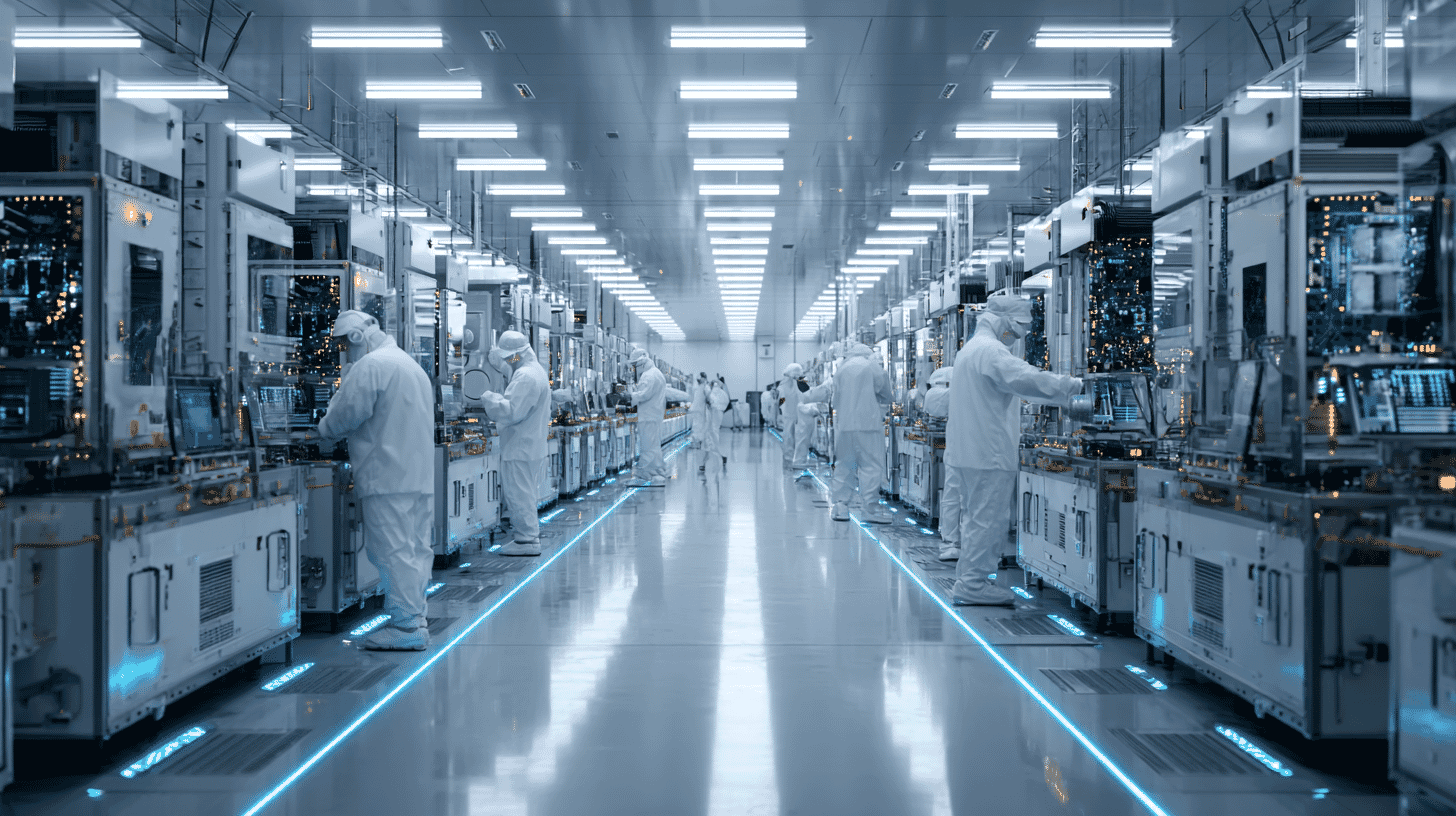
Whether a country can make the "heart" of AI itself is becoming a question of national destiny. In March 2026, Fujitsu began fully domestic manufacturing of AI servers at its factory in Ishikawa Prefecture. With the technology that produced the supercomputer Fugaku, it has made a new move to protect Japan's digital sovereignty.
Fujitsu Announces "Made in Japan" AI Server Manufacturing
On February 12, 2026, Fujitsu made a major strategic announcement: beginning in March, the company would manufacture AI servers entirely within Japan at its Kasashima factory in Ishikawa Prefecture.
The initial product line includes AI servers equipped with NVIDIA's latest GPUs, the HGX B300 and RTX PRO 6000 Blackwell Server Edition, branded as "Made in Japan" sovereign AI servers. Assembly of complete server units was to begin in March, followed by in-house printed circuit board (PCB) assembly from June.
Even more significantly, Fujitsu plans to begin manufacturing servers powered by its proprietary Arm-based processor, FUJITSU-MONAKA, as Made in Japan products within fiscal year 2026.
Why Domestic Manufacturing Matters Now
Behind this announcement lies a concept gaining traction worldwide: Sovereign AI.
Sovereign AI is the ability of a nation to control its AI infrastructure (servers and data centers), data and AI models themselves within its own borders, without relying on foreign services. In Japanese it is also called "digital sovereignty."
Today, the majority of AI services used by Japanese businesses and government agencies come from U.S. companies, think ChatGPT, Gemini, and similar platforms. When organizations use these services, their data is processed on servers located abroad. This creates potential risks: service disruption due to geopolitical tensions, data exposure, or sudden policy changes by foreign governments.
Japan's government formally addressed this concern in December 2025, when the cabinet approved the "AI Basic Plan", a five-year strategy with approximately $6.7 billion in AI-related support aimed at making Japan "the world's most AI-friendly country." Under Japan's Economic Security Promotion Act, operators of critical infrastructure, telecommunications, energy, finance, and railways, are now designated as "specified critical infrastructure operators" and face stricter security requirements. Domestic AI infrastructure has become a matter of national policy.
The Kasashima Factory: Built on Fugaku's Legacy
Fujitsu's choice of manufacturing site is no coincidence. The Kasashima factory is where the company built Fugaku, the supercomputer that ranked as the world's fastest in 2020. Fugaku played a crucial role in COVID-19 research simulations and continues to serve at the forefront of scientific computing.
The factory's key advantage is its end-to-end production capability: from mounting components on PCBs to final system assembly, everything happens under one roof. By eliminating overseas contract manufacturers from the process, Fujitsu dramatically reduces the risk of supply chain attacks, scenarios where unauthorized components or backdoors are introduced during manufacturing.
Additionally, Fujitsu implements rigorous traceability for all key components, tracking where each part was manufactured and when it was integrated. For clients handling sensitive data, banks, government agencies, defense contractors, this level of transparency is essential.
FUJITSU-MONAKA: Japan's Homegrown Next-Gen Processor
At the heart of Fujitsu's long-term sovereignty strategy sits FUJITSU-MONAKA, a next-generation processor designed entirely in-house.
MONAKA is a 144-core CPU based on Arm's architecture, manufactured using cutting-edge 2-nanometer (nm) process technology. It's the successor to the A64FX processor that powered Fugaku, with a planned release in 2027.
Key features include:
- Double the energy efficiency: Fujitsu aims for 2x power efficiency compared to competing CPUs, a critical advantage as data center energy consumption becomes a global concern
- Confidential Computing: Built-in hardware encryption ensures that data remains protected even during processing. Not even the server administrator can access the encrypted contents, a game-changing security feature for government and financial institutions
- 3D Chiplet Architecture: By stacking 2nm compute chiplets on top of 5nm cache memory using advanced 3D packaging, MONAKA achieves high performance while keeping costs manageable
MONAKA is also expected to power FugakuNEXT, the successor to the Fugaku supercomputer, planned for around 2030.
Expanding Partnership with Super Micro Computer
Fujitsu isn't going it alone. The company is deepening its strategic partnership with U.S. server giant Super Micro Computer (Supermicro) to provide a complete "plan-develop-manufacture-sell-maintain" pipeline for Made in Japan sovereign AI servers.
Supermicro brings expertise in custom server configurations and advanced liquid cooling technology. Combined with Fujitsu's domestic manufacturing capabilities, the partnership aims to deliver both performance and reliability.
These Made in Japan servers will be sold not only domestically but also in European markets, where the EU's AI Act has heightened interest in sovereign AI solutions. The "Made in Japan" brand, long associated with quality and reliability, could prove to be a significant competitive advantage.
The Global Race for Sovereign AI
Japan's push for AI sovereignty mirrors a worldwide trend. Countries around the globe are racing to secure their own AI infrastructure.
Japan's government invested over $740 million in AI infrastructure partners, including NVIDIA and domestic cloud providers like Sakura Internet, SoftBank, and KDDI, in 2024. Meanwhile, Japan's National Institute of Advanced Industrial Science and Technology (AIST) is building ABCI 3.0, a next-generation AI supercomputer with approximately 6,000 NVIDIA GPUs.
The EU released its "AI Continent Action Plan" in 2025, aiming to triple cloud and data center capacity within 5-7 years. Italy developed "Italia 9B," a large language model optimized for Italian. South Korea is building national AI infrastructure with over 250,000 NVIDIA GPUs. And in Southeast Asia, Thailand and Vietnam are partnering with NVIDIA to establish sovereign AI capabilities.
According to industry research, by 2027, 60% of Asia-Pacific governments are expected to embed sovereignty requirements into their AI procurement processes. The AI race is no longer just about model performance, it's about who controls the infrastructure.
Challenges Ahead: Can Japan Secure Digital Independence?
While Fujitsu's move is significant, Japan's path to full AI sovereignty faces real obstacles.
GPU dependency remains a key concern. The GPUs that power AI servers come almost exclusively from NVIDIA, an American company. MONAKA addresses the CPU side, but Japan has no domestic alternative for high-end AI accelerators yet.
Talent shortages present another challenge. AI infrastructure engineers are in fierce demand globally, and Japan competes for the same limited pool.
Energy costs are also a factor. Running large-scale AI servers requires enormous amounts of electricity, and Japan's energy prices remain among the highest in developed nations.
Despite these hurdles, Fujitsu's announcement marks an important shift, from Japan being primarily a consumer of AI technology to becoming an infrastructure provider. The company that proved Japan's engineering prowess with Fugaku is now applying that same expertise to the sovereignty challenge. How far Fujitsu can go in the sovereign AI space will serve as a litmus test for Japan's tech industry ambitions.
In Japan, "economic security" and "digital sovereignty" have become major themes in the AI conversation. How is your country approaching the question of who controls your AI infrastructure?








Global Discussion
16 comments