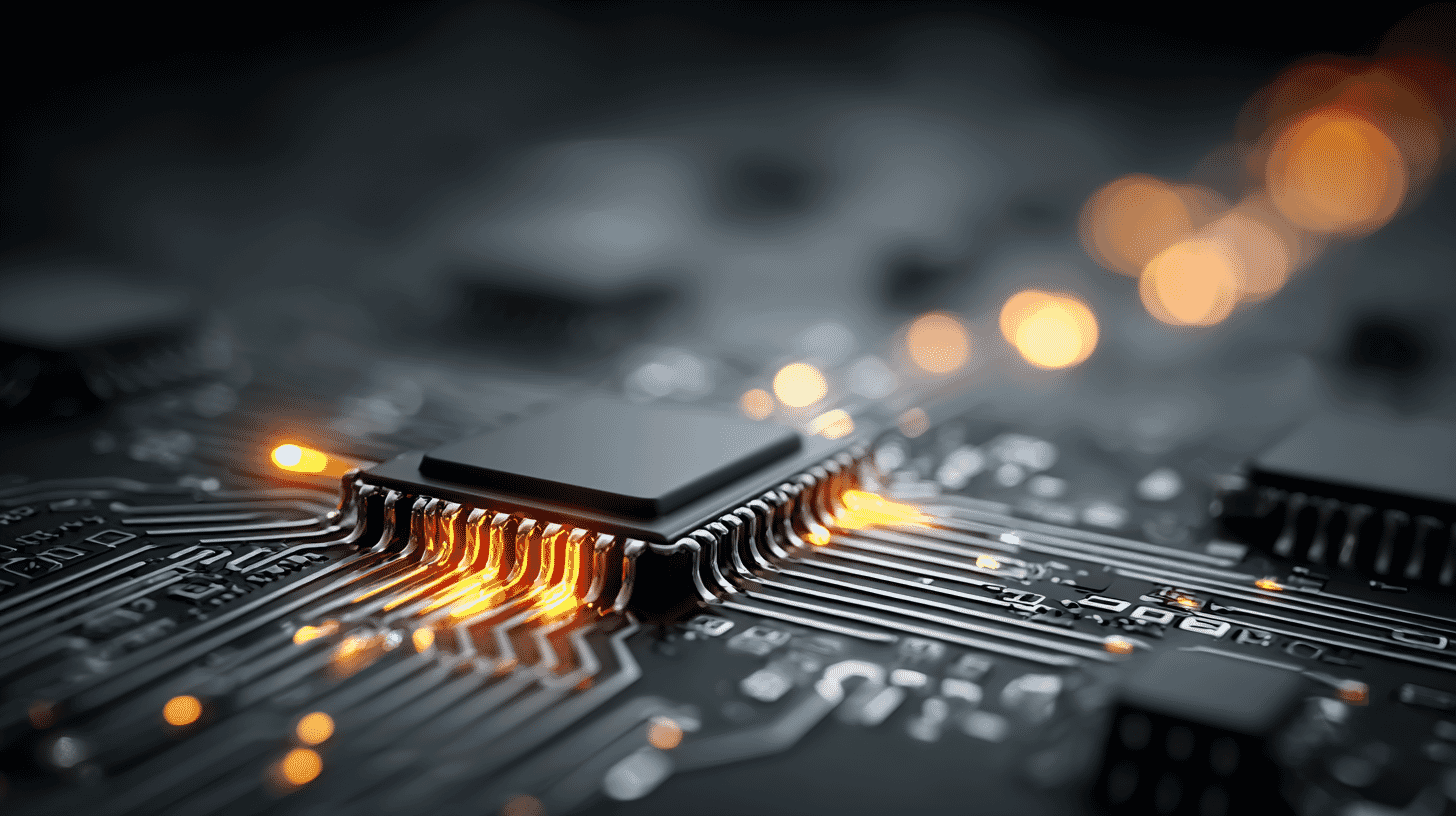
AI data centers are devouring electricity. In 2023 they consumed 4.4% of all US power, and the projections keep climbing. The culprit is copper: moving data between chips at speed wastes enormous energy. The fix is to replace electrical signals with light. A Japanese company you have probably never heard of has entered the race, and its strategy for taking on TSMC is not to fight TSMC at all.
Shinko Electric's Bold Bet: Becoming the World's "Photonic OSAT"
In February 2026, Shinko Electric Industries, a semiconductor package substrate maker headquartered in Nagano, Japan, unveiled an ambitious new strategy. The company aims to become a "photonic-electronic convergence OSAT" (Outsourced Semiconductor Assembly and Test), a specialized manufacturer that assembles and tests devices merging light and electricity on a single chip package.
It's a mouthful of technical jargon, so let's break it down: Shinko wants to be the factory that builds the next generation of chips, ones that use light beams instead of electrical wires to move data, dramatically cutting power consumption.
Shinko isn't starting from scratch. The company is already a major supplier of semiconductor package substrates to global chip giants like Intel and AMD, with over 80% of its revenue coming from overseas. It also operates as an OSAT, handling IC chip mounting and testing. Crucially, the company has experience manufacturing camera modules and optical communication components, meaning it knows how to work with both electricity and light.
This rare combination of skills is exactly what the emerging CPO (Co-Packaged Optics) market demands.
What Is Photonic-Electronic Convergence, and Why Should You Care?
Picture this: inside a modern AI data center, thousands of GPUs communicate with each other through copper wires on circuit boards. As data speeds increase, these copper connections lose signal quality rapidly, like trying to shout across an increasingly noisy room. To compensate, the chips need power-hungry signal correction circuits. In large-capacity switch ASICs (Application-Specific Integrated Circuits), which consume over 500 watts each, roughly 30% of that power goes solely to input/output signal processing.
"Photonic-electronic convergence" (光電融合 in Japanese, or "hikari-den yugo") replaces some of those copper pathways with light-based ones. Light signals don't degrade over distance the way electrical signals do, meaning they require far less power to transmit data reliably.
The numbers tell the story. According to Lawrence Berkeley National Laboratory, US data centers consumed roughly 176 TWh of electricity in 2023, or 4.4% of the nation's total power. The same report projects that share reaching 6.7% to 12% by 2028. Goldman Sachs projects data center power consumption will add 0.1% to core inflation in both 2026 and 2027. The energy crisis in computing is real, and photonic technology is one of the more promising answers.
CPO: Bringing Light Right Next to the Chip
The hottest implementation of photonic-electronic convergence is CPO, Co-Packaged Optics. Instead of placing optical transceivers (devices that convert between electrical and light signals) on the front panel of a network switch far from the processor, CPO mounts "optical engines" directly on the same package substrate as the switch ASIC.
In TSMC's development examples, CPO reduces the distance between the switch IC and the optical engine from over 100mm to just 10mm. This shortening alone can cut the total system power consumption by roughly half.
The market opportunity is massive. The global optical interconnect market in AI data centers reached $9.94 billion in 2025 and is projected to hit $31 billion by 2033. CPO holds a 37% share and is the fastest-growing segment.
TSMC's Head Start, And Its Limitations
TSMC has established itself as the dominant player in photonic-electronic manufacturing. In April 2024, the foundry announced plans to launch first-generation silicon photonics products in 2025 and second-generation ones in 2026. More recently, TSMC has been developing a PDK (Process Design Kit) for silicon photonics, aiming to lower the barrier for customers to design CPO-based chips.
NVIDIA is already working with TSMC on CPO-equipped switches. Its Quantum-X Photonics and Spectrum-X Photonics products are slated for commercial availability in 2026, with up to 409.6 Tb/s of bandwidth across 512 ports at 800 Gb/s. By mounting optical engines directly onto the switch ASIC, NVIDIA claims up to a 3.5x reduction in power consumption and a 10x improvement in resiliency.
But TSMC's dominance creates a problem: monopoly risk. When one company controls the manufacturing of a critical technology, every customer is vulnerable to capacity constraints, pricing power, and supply chain disruptions.
Shinko's Strategy: "We're Not Fighting TSMC Head-On"
Shinko's approach is refreshingly realistic. Yasushi Araki, the executive officer leading development, laid it out clearly: "We're not trying to beat TSMC in a direct fight."
Instead, Shinko is targeting four specific advantages:
Small-batch and prototype work: TSMC excels at mass production but isn't set up for startups' small-volume orders or R&D prototypes. Shinko aims to capture these niche opportunities, think of it as the boutique workshop versus the industrial factory.
Second-source demand: Even NVIDIA and Broadcom recognize that depending on a single manufacturer is risky. They want backup suppliers, and Shinko positions itself as that reliable second or third option.
Design flexibility and customer support: While TSMC's strength is cutting-edge process technology, Shinko offers more freedom in package substrate design and more hands-on customer support. The company can provide an end-to-end service from CPO design through assembly to testing.
Optical alignment expertise: The trickiest part of CPO manufacturing is connecting optical fibers to PIC (Photonic Integrated Circuit) chips with alignment precision an order of magnitude higher than conventional optical products. Shinko's secret weapon: it can build its own active alignment equipment in-house, combining semiconductor mounting precision with optical alignment know-how.
As Araki put it: "CPO is still in its infancy. Having TSMC monopolize manufacturing with limited players is neither fun nor exciting. We want to push our unique strengths, substrate design freedom and attentive support, and build a supply chain with like-minded partners."
NTT's IOWN: The Grand Vision Behind Photonic Convergence
No discussion of photonic-electronic convergence is complete without NTT's IOWN (Innovative Optical and Wireless Network) initiative. IOWN aims to revolutionize the entire information infrastructure, from networks to computing, using light technology. The ultimate goal: reducing power consumption to 1/100th of current levels.
NTT is rolling this out in stages:
- IOWN 1.0 (2023–present): Commercial "All-Photonics Network" services connecting data centers via light, operating at up to 800 Gbps.
- IOWN 2.0 (2025–2026): Extending optical connections inside data centers. NTT plans to launch commercially available photonic-electronic switches by fiscal year 2026, partnering with Broadcom and Acton Technology.
- IOWN 3.0 (2028–2030s): Bringing light into chip-to-chip and even intra-chip connections. NTT's proprietary "membrane photonics" technology can create compound semiconductor structures just 0.3 micrometers thick, roughly 1/10th of conventional designs, with nearly 100 patents filed.
A key differentiator for NTT's approach: its photonic switches use a socket-type design for optical engines, making them field-replaceable. Most CPO designs solder the optical engine permanently to the board, meaning a single component failure requires replacing the entire assembly, a major maintenance headache for data center operators.
The Global Race for Optical Interconnects
The competition extends far beyond Japan and TSMC:
NVIDIA is deploying CPO in its next-generation networking switches, targeting commercial launch in 2026.
Intel demonstrated the industry's first fully integrated optical compute interconnect (OCI) chiplet at OFC 2024, supporting 4 Tbps bidirectional data transfer co-packaged with a CPU.
The OCI MSA: a standards group announced on March 12, 2026 by AMD, Broadcom, NVIDIA, Meta, Microsoft, and OpenAI, developing an open, protocol-agnostic optical PHY specification for scale-up interconnects in AI data centers. It is designed to carry both NVIDIA's NVLink and the UALink standard backed by AMD and Broadcom. GEN1 starts at four wavelengths of 50 Gbps NRZ (200 Gbps per direction) with a roadmap scaling to 3.2 Tb/s per fibre per direction. That these rivals sat at the same table says everything about how hard copper's wall has become.
Ayar Labs, a Silicon Valley startup backed by AMD, Intel, and NVIDIA, has partnered with Taiwan's Alchip to produce CPO solutions for AI hyperscalers, demonstrating that microring resonator-based optical chiplets can maintain alignment even under thermal stress.
Where Japan Fits In the Global Picture
According to analysis by Mitsui & Co. Strategic Research Institute, Japanese companies hold strong competitive positions in several CPO bottleneck areas: optical fiber alignment technology, high-heat-resistant materials, and glass substrates.
Beyond Shinko, companies like AGC (glass and chemicals) and DNP (Dai Nippon Printing) are developing optical waveguide-embedded package substrates. Japan's deep bench of materials and components manufacturers could become a significant asset in the CPO supply chain.
The challenge, however, is moving from "supplier" to "co-development partner." Design leadership in CPO currently rests with NVIDIA and Broadcom. Whether Japanese companies can influence architecture decisions, rather than simply filling orders, will determine their long-term position.
The Bottom Line: Light Is the Future of Computing Infrastructure
The AI revolution has exposed a fundamental problem: our computing infrastructure relies on copper connections that waste enormous amounts of energy. Photonic-electronic convergence, and specifically CPO, offers one of the most promising paths to solving this crisis.
Shinko Electric's entry into this market isn't about toppling TSMC, it's about building a healthier, more diversified supply chain for a technology that the entire industry urgently needs. When CPO demand inevitably outstrips TSMC's capacity (and industry observers believe it will), companies like Shinko will be essential safety valves.
As Araki noted, having just one manufacturer dominate an emerging technology stifles innovation. The CPO ecosystem needs more players, more competition, and more options. Shinko is betting that being the nimble, customer-friendly alternative to a manufacturing giant is a winning strategy.
In Japan, the conversation around photonic-electronic convergence has shifted from "NTT's research project" to "critical AI infrastructure technology." Data center power consumption is a global challenge, how is your country approaching it? Are there similar efforts to bring optical interconnects into the mainstream? We'd love to hear your perspective.
References
- https://xtech.nikkei.com/atcl/nxt/mag/ne/18/00001/00629/
- https://xtech.nikkei.com/atcl/nxt/column/18/00001/10617/
- https://journal.ntt.co.jp/article/23720
- https://developer.nvidia.com/blog/scaling-ai-factories-with-co-packaged-optics-for-better-power-efficiency
- https://newsroom.intel.com/artificial-intelligence/intel-unveils-first-integrated-optical-io-chiplet
- https://ayarlabs.com/news/alchip-and-ayar-labs-unveil-co-packaged-optics-for-ai-datacenter-scale-up/
- https://www.tomshardware.com/tech-industry/artificial-intelligence/tech-titans-team-up-to-form-optical-interconnect-alliance-to-solve-the-ai-buildouts-big-data-bottleneck-nvidia-amd-broadcom-and-more-set-sights-on-building-phy-to-break-through-the-limitations-of-copper








Global Discussion
14 comments