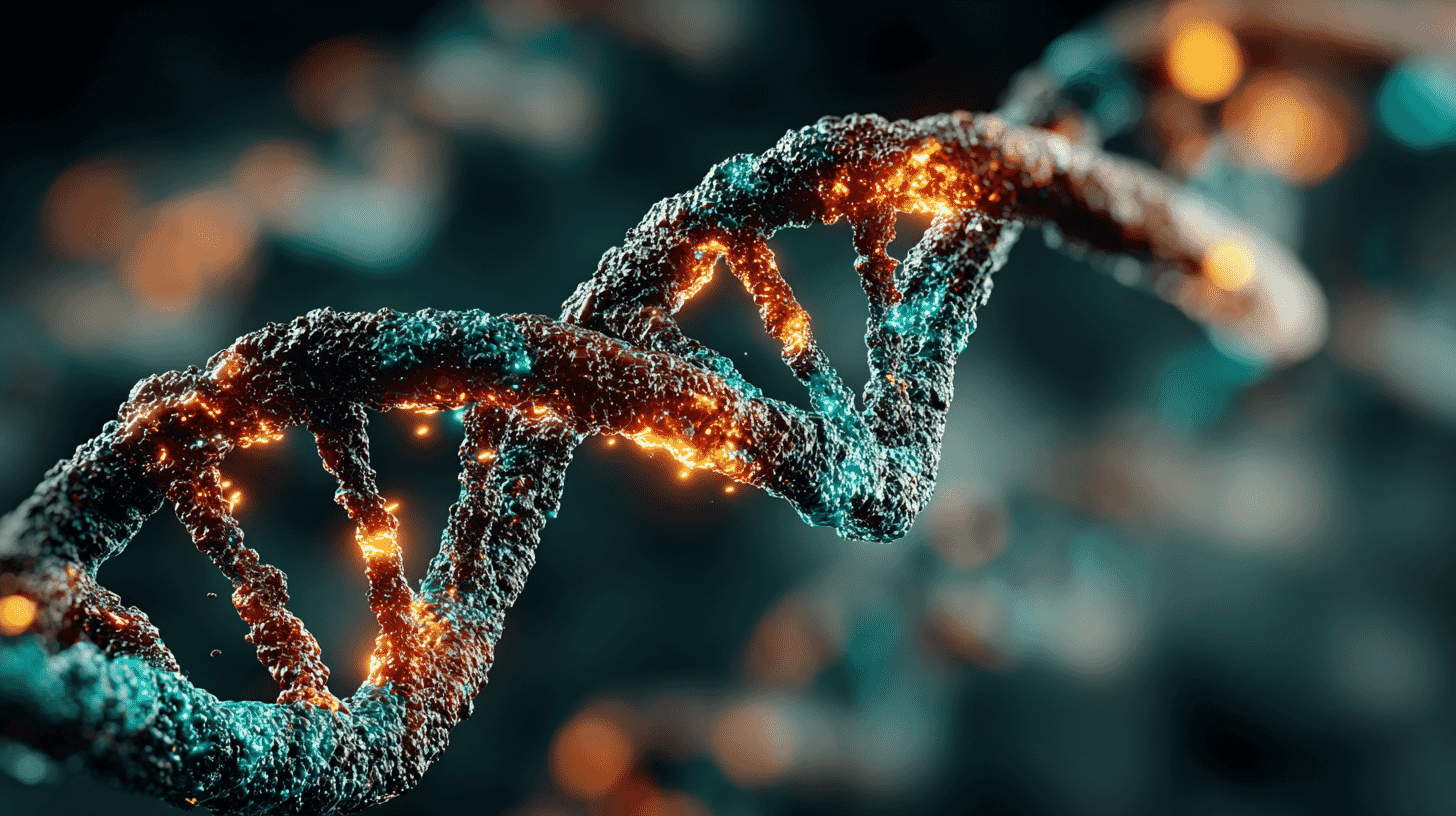
🧬 What if AI could read DNA like a language, and rewrite it to save the planet?
Every year, over 8 million tons of plastic enter our oceans. What if a generative AI, trained on millions of years of evolution, could make plastic-eating bacteria 10 times more powerful?
A Japanese research team just made that real. Here's how OrthologTransformer is changing the future of genomics, and the planet.
Teaching AI to Read the Language of Life
When you use ChatGPT, it understands language by learning patterns across billions of words. OrthologTransformer does something remarkably similar, except its language is DNA.
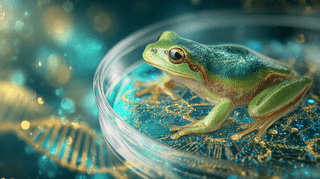
DNA is essentially a four-letter code: A, T, G, and C. These letters are arranged into triplets called "codons," each instructing a cell to build a specific amino acid, the building blocks of proteins. Every living organism has its own "dialect" of this code, preferring certain codons over others. This means a gene that works perfectly in one species often produces very little protein when transplanted into another.
Traditional genetic engineering gets around this through a technique called "codon optimization," which swaps out codons to match what the host organism prefers, like translating a document word-for-word into another language. It works, but it misses the bigger picture: the context, the rhythm, and the subtle biological nuances that make a gene truly functional.
Learning from 3.8 Billion Years of Evolution
Researchers from Kitasato University, Keio University, and Shinshu University, supported by JST (Japan Science and Technology Agency), developed a fundamentally different approach.
Their model, OrthologTransformer, learns from "orthologs", genes that different species inherited from a common ancestor. Think of orthologs as the genetic equivalent of how a human hand and a bird's wing are structurally related despite millions of years of separate evolution. They perform similar functions, but evolution has tuned them for each species' specific needs.
The AI trained on a massive database of these ortholog pairs, effectively learning the evolutionary playbook for how genes adapt when they move between species. Rather than just substituting synonymous codons, OrthologTransformer can propose changes at a deeper level, including subtle mutations that preserve protein function while better fitting the new host organism's biological machinery.
Plastic-Eating Bacteria, 10x More Powerful
To put OrthologTransformer to the test, the research team turned to one of today's most exciting environmental biotechnology tools: PETase.
PETase is an enzyme first discovered in Japan in 2016 in a bacterium called Ideonella sakaiensis. It can break down PET plastic, the material used in plastic bottles, into harmless components. The discovery made headlines globally and sparked a wave of research into biological plastic degradation.
The challenge? Getting enough PETase into a practical production system. The researchers used OrthologTransformer to redesign the PETase gene for Bacillus subtilis, a bacterium widely used in industrial enzyme production, similar to the bacteria used in fermented foods like natto (Japanese fermented soybeans).
The result was striking: bacteria equipped with the AI-redesigned gene produced up to 10 times more degradation products compared to those using conventionally optimized genes. This was validated across 45 bacterial species and 450 cross-species gene conversion combinations, a large-scale, rigorous benchmark.
The findings were published on March 3, 2026, in Nature Communications, one of the world's most prestigious scientific journals.
Japan's Unique Angle in the Global AI + Genomics Race
The broader context here is important. The application of large language model technology to biology is one of the hottest areas in science right now.
Google DeepMind's AlphaFold, which predicts the 3D structure of proteins from their amino acid sequences, won the 2024 Nobel Prize in Chemistry and is already being used to accelerate drug discovery. In the United States, models like Evo and Evo 2 can generate entire genomic sequences from scratch, trained on 9.3 trillion base pairs of DNA from organisms across all of life's domains.
What sets OrthologTransformer apart is its focus: rather than predicting or generating sequences statistically, it leverages the biological relationship between ortholog genes, encoded through hundreds of millions of years of natural selection, to make targeted, functionally-aware redesigns. It's less "generate something new" and more "learn how nature already solved this problem, then apply that wisdom."
A Weapon Against the Plastic Crisis
The scale of plastic pollution is staggering. Roughly 400 million tons of plastic are produced globally each year. More than 8 million tons end up in the ocean annually, breaking down into microplastics that enter the food chain, have been found in human blood, and have been detected in remote Arctic ice.
Biological solutions like enhanced PETase represent a promising complementary strategy alongside mechanical recycling and policy measures. The ability to efficiently produce large quantities of these enzymes, now made dramatically more feasible by AI-driven gene design, brings us closer to a future where plastic-contaminated environments can be biologically remediated.
Beyond plastics, the researchers see their technology applying to pharmaceutical manufacturing, agricultural enzyme production, synthetic biology, and eventually, as the model is extended to eukaryotes (organisms including plants and animals), mRNA-based medicine design.
Japan's Legacy in Plastic-Degrading Science
This breakthrough didn't emerge in a vacuum. Japan has been at the forefront of plastic-degrading bacteria research ever since Japanese researchers discovered Ideonella sakaiensis in 2016. The work of JST's CREST program has continued to channel investment into this space.
Now, with AI joining the toolkit, what was once a painstaking trial-and-error process of gene optimization can be done with speed and precision that was previously unimaginable.
What happens when you teach an AI to speak the language of life, and ask it to help clean up our mess?
We're starting to find out.
How is your country approaching the plastic pollution problem? Do you think biotechnology and biological solutions can make a real difference? Share your thoughts in the comments!




Global Discussion
15 comments