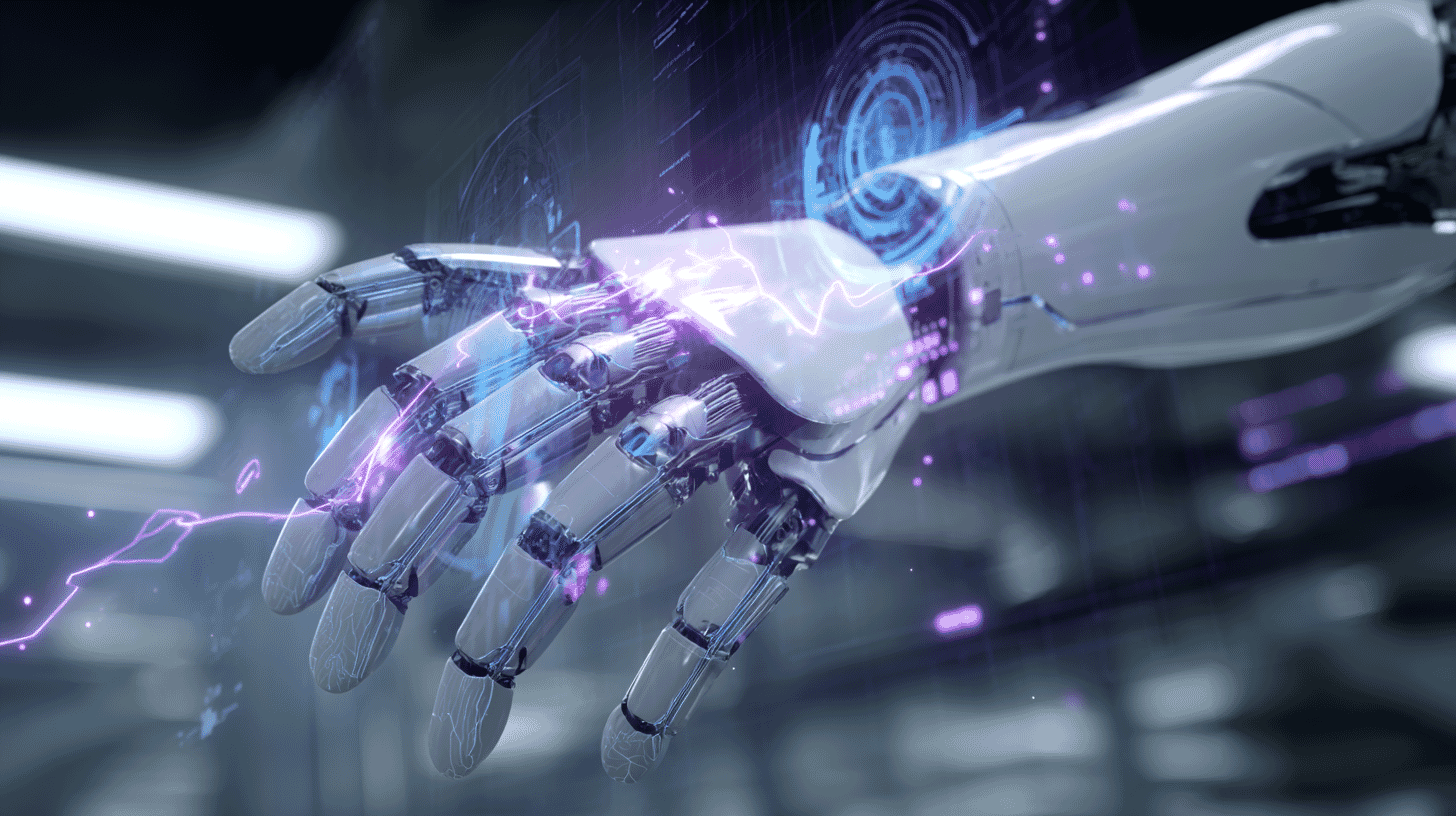
🎮 What if you could truly feel objects in virtual reality?
Japanese startup Diver-X has acquired the business license for the force feedback device "EXOS." Moving beyond simple vibration-based haptics to actual force feedback technology, this development has the potential to revolutionize not just VR and the metaverse, but also robot teleoperation and Physical AI applications. Here's a report on the cutting edge of Japanese haptics technology.
Who is Diver-X?
Diver-X Inc. is an XR interface device startup based in Chiyoda, Tokyo, founded in March 2021. CEO Yamato Sakoda started the company right after graduating high school. He's a remarkable talent who was selected for the Masayoshi Son Foundation scholarship program and recognized as a Super Creator by Japan's Ministry of Economy, Trade and Industry's Mitou IT Human Resource Development Program.
The company's flagship product, "ContactGlove," is a glove-type VR controller equipped with haptic feedback functionality. It won the Innovation Award in the Virtual Reality category at CES 2023, the world's largest consumer electronics trade show, demonstrating its internationally recognized technical excellence.
In June 2024, Diver-X raised approximately 200 million yen from investors including Toyota Boshoku and PKSHA Capital, accelerating its business expansion.
What is EXOS?
The "EXOS" series is a force feedback device originally developed by exiii Inc. (pronounced "ikushi"). exiii was a startup known for winning domestic and international competitions for developing low-cost myoelectric prosthetic hands using 3D printers. The company later focused on haptic reproduction technology in the VR/AR space, bringing EXOS to market.
What makes EXOS distinctive is its use of an exoskeleton mechanism combined with motors to reproduce actual "force" rather than relying on vibration motors like typical VR haptic devices.
Conventional haptic feedback uses vibration to convey the sensation of "touching something," but EXOS applies actual force to your hands, enabling you to experience richer sensations like "hardness," "weight," and "elasticity." For example, you can feel the resistance of gripping a car steering wheel or the weight of lifting heavy luggage in VR space.
After exiii's dissolution, EXOS's intellectual property was inherited by Crosstech Management Co.
Why Did Diver-X Acquire the License?
Through developing ContactGlove, Diver-X had advanced the social implementation of haptic feedback technology. However, they encountered a limitation: tactile feedback affecting the skin surface alone cannot recreate the real-world sensations of "resistance" and "weight."
When humans grasp or lift objects, the sensation we feel comprises both tactile feedback (felt on the skin's surface) and force feedback (acting on muscles and tendons). Diver-X concluded that both technologies are essential for true immersion, leading to their acquisition of the EXOS business license on December 1, 2025.
Through this license acquisition, Diver-X has obtained rights to the following products and technologies:
- Complete intellectual property portfolio
- EXOS Wrist (device providing force feedback to wrist movements)
- Five-finger haptic glove (glove-type device replicating fingertip sensations)
- Hand Unit (base unit for robot hands)
Laying the Foundation for the Physical AI Era
What's particularly noteworthy about this business license acquisition is Diver-X's explicit intention to expand beyond VR and metaverse applications into robot teleoperation and Physical AI domains.
"Physical AI" is a concept promoted by NVIDIA CEO Jensen Huang at CES 2025, referring to AI capable of perceiving, understanding, and acting in the physical world. While generative AI creates text and images, Physical AI interacts with the physical world through "bodies" like robots and autonomous vehicles.
At the 2025 International Robot Exhibition, major Japanese industrial robot manufacturers like FANUC and Yaskawa also announced their commitment to Physical AI, marking a significant turning point for the entire industry.
Haptic technology plays a crucial role in Physical AI development. For robots to perform delicate tasks like humans, they need feedback from touch, not just vision and hearing. Additionally, when collecting training data for humanoid robots, having haptic feedback during human operator teleoperation enables the acquisition of more natural and precise motion data.
Words of Encouragement from exiii's Founder
Hiroshi Yamaura, former CEO of exiii and current CEO of Curious Robotics Inc., commented on this business succession:
"As trends like Physical AI and humanoids are truly taking off, I believe the elemental technologies cultivated in the XR field are extremely closely connected to these developments. After about five years, I'm very pleased to see our accumulated efforts being inherited in Japan in this way and connecting to the next context."
These words suggest that the vision of VR haptic technology merging with robotics and AI fields is shared among technologists.
The Potential of Japanese Haptics Technology
In the global haptics market, various companies like America's HaptX and bHaptics have established their presence. However, Japan holds world-class achievements in industrial robotics and possesses the advantage of abundant motion data obtained from manufacturing sites.
By applying haptic technology cultivated in VR/XR fields to robotics and Physical AI applications, Japanese startups like Diver-X are expected to leverage Japan's unique strengths in technology development.
The challenge undertaken by Diver-X, led by a young CEO born in 2002, symbolizes the future of Japanese manufacturing.
What About Your Country?
In Japan, haptic technology that began with enhancing VR and metaverse immersion is expanding into industrial applications like robot teleoperation and AI learning. How advanced is haptic technology and VR device development in your country? What expectations or concerns do you have about robots and AI entering daily life? Please share your thoughts in the comments!
References
Reactions in Japan
Great news that EXOS technology is being inherited by Diver-X. Glad exiii's tech won't go to waste. Excited to see what products emerge from integrating with ContactGlove
Haptic devices that return actual 'force' not just vibration... imagine how real hugs in VRChat could feel! Can't wait to try it!
Interesting that they mention Physical AI applications. It's natural for VR haptic tech to be used in robot teleoperation and AI training. Hope Japanese companies can make their mark in this field
If haptic feedback evolves this much, game design will fundamentally change. The feel of sword strikes, magic recoil... excited about new forms of expression emerging
Looking forward to manufacturing applications. Being able to touch CAD data would dramatically improve design review efficiency. Finding problems before making mockups is huge
Is a future where we can do handshake events with fans during streams getting closer...? With haptics, virtual meetings might feel like really 'meeting.' Tech progress is amazing
A CEO born in 2002 leading a CES award-winning company. Japan's startup ecosystem is changing. Physical AI market feels like it's going to be huge
Honestly still too expensive for regular users. The tech is interesting but mass adoption seems years away. Hope they release a consumer-friendly low-cost version
Could be useful for surgical training. With haptics, you could recreate tissue firmness and resistance. I sense the potential to transform medical education
Thinking back to old controllers with vibration function, haptic tech has come so far... quite moving. Technology really advances fast
Yamaura-san's comment is inspiring. As a researcher, I relate to the vision of XR tech connecting to Physical AI. Happy to see this kind of tech succession happening in Japan
If care robots have haptic teleoperation, we might be able to hold our parents' hands from far away. This is tech needed for an aging society
Wonder how competitive VR games with force feedback would work. Would the force strength cause physical fatigue? Seems like a new genre could emerge
SAO full dive might be impossible, but half dive seems achievable now. That's where Diver-X's name comes from right? It's a dream
Japan is strong in hardware but tends to lag in software. Haptic devices are world-class in hardware, but platform strategy will likely be a challenge
Being able to do dangerous work remotely through teleoperation is a good thing. With haptics, subtle force adjustments can be transmitted, improving work precision
In the US, HaptX and Meta Reality Labs are working on haptic tech, but I didn't know Japanese startups were competitive in this field. EXOS's exoskeleton approach is interesting
In Korea, bHaptics is famous, but force feedback isn't widely adopted yet. If this tech is introduced to VR games, the gaming experience could fundamentally change
In German manufacturing, VR design reviews are increasing. With haptics, you can do digitally what you'd do touching actual parts. This is the next step of Industry 4.0
It makes sense for a CES 2023 award-winning startup to enter Physical AI. Demand for robot teleoperation is growing in the UK too, so I'm watching this tech
In France, interest in telemedicine is high. With haptic robots, remote doctors supporting surgery isn't just a dream. The tech progress is wonderful
In China, humanoid robot development is advancing rapidly. Haptic tech is essential for human-robot interaction. If Japan and China could collaborate, commercialization would be faster
VR/AR development is active in India's IT industry, but we often rely on Japanese or American hardware. Would be great if this tech becomes affordable
In Spain, VR is being used more in tourism. With haptics, you could experience the texture of historical buildings. Could also help preserve cultural heritage
Australia has vast territory so demand for remote operation tech is high. If mining and dangerous site work can be done remotely, worker safety would greatly improve
Sweden has a strong gaming industry, so we always watch new haptic device tech. Force feedback would dramatically increase game immersion
Taiwan is strong in semiconductor manufacturing, but Japan leads in end-user products. Innovative devices like this activate tech competition, which is good
I research robotics at a Canadian university, and haptic feedback is one of the hottest research areas now. Impressive how far commercial products have come
As a Japanese American, I'm proud to see Japanese startups taking on global challenges. Silicon Valley investors are starting to pay attention to Physical AI too
Denmark is advancing robot care for elderly. With haptics, distant family members could hold elderly hands. Great that technology can convey human warmth
Switzerland has a thriving precision machinery industry, so I'm interested in high-precision haptic devices like this. Could be used for training delicate work like watchmaking
Brazil's VR market is still small, but we have a large gaming population. If prices drop, demand for such devices would increase in South America too