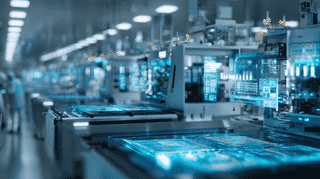
French automotive giant Valeo and Japanese test & measurement leader Anritsu have jointly developed a digital twin verification environment for next-generation SDVs. The cloud-based solution eliminates the need for physical vehicles or test tracks, enabling comprehensive virtual testing of connected car systems. Joint demo to debut at MWC 2026.
Japanese semiconductor equipment makers are expanding their global presence amid the AI chip boom. Tokyo Electron dominates coater/developers with 90%+ share, SCREEN leads wafer cleaning, and Advantest tops semiconductor testing. We analyze how Japanese firms leverage precision manufacturing to thrive in a market projected to reach $156 billion by 2027—and the challenges they face from US and European rivals.
In a survey of 312 neuroscientists, the median estimated probability that long-term memories could be decoded from a brain preserved after death was 41%. Could whole brain emulation (WBE) ever deliver digital immortality? From engrams and connectomes to the hard problem of consciousness, here is what the science says and where it stops.
A comprehensive look at SiC and GaN power semiconductor innovations reshaping the industry. From 8-inch wafer migration and vertical GaN breakthroughs to surging AI data center demand, explore Japan's role in the next-gen power revolution.
Japan's hotel industry faces a severe labor shortage, with about 60% of hotels reporting a lack of full-time staff. From AI chatbots and facial recognition check-in to cleaning robots and dynamic pricing, Japanese hotels are turning to technology as a lifeline. Explore real-world cases including the famous Henn na Hotel, which runs 144 rooms with just 7 staff, and the latest generative AI initiatives backed by Japan's tourism agency.
Fujitsu successfully piloted its LLM "Takane" with a Japanese central government agency, automatically classifying and summarizing approximately 120,000 characters of public comment data in about 10 minutes. The company aims to launch a comprehensive generative AI service for policy formulation and legislation by FY2026.
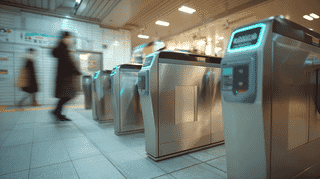
JR West launches new-type facial recognition ticket gates at Osaka and Shin-Osaka stations from March 2026. By retrofitting existing IC card gates with dual cameras, the system combines face authentication with IC card functionality — a practical shift from futuristic arch-style gates to scalable standard designs, paving the way for nationwide expansion.
SoftBank subsidiary SAIMEMORY partners with Intel to develop ZAM (Z-Angle Memory), a next-generation memory technology targeting 2-3x the capacity of HBM at half the power consumption. Discover how this revolutionary vertical stacking architecture aims to disrupt the Korean-dominated AI memory market and revive Japan's semiconductor legacy.
UTokyo Matsuo Lab spinoff Akari raises ¥5 billion ($33M) from Mitsubishi Electric, reaching ¥100 billion+ valuation. Learn how this 5-year-old AI startup achieved profitability from day one, partnered with 1,000+ companies, and is building the "next-generation industrial OS" for Japan's manufacturing sector.
Hitachi's Physical AI strategy targets a roughly $125 billion market by 2030. Learn how Japan's manufacturing giant is using AI to preserve skilled workers' tacit knowledge and address labor shortages in social infrastructure.
Generative AI doubles computing demand every 5.5 months. Far from a 'bubble,' this is a structural transformation of the semiconductor industry. Explore NVIDIA's dominance, Japan's strengths in equipment and materials, and how Rapidus and TSMC Kumamoto are shaping the future of Japanese semiconductors.
Explore Fujitsu's groundbreaking explainable AI "Kozuchi XAI" for solar flare impact prediction. Learn how this collaborative research with Nagoya University and JAXA aims to protect astronauts and critical infrastructure from space weather hazards.
Ruby creator Yukihiro Matsumoto (Matz) warns against the "juniors are unnecessary" narrative in the AI era. If training opportunities for young engineers disappear, technical knowledge transfer will cease, leaving the IT industry a "scorched earth." Exploring Japan's IT talent challenges and global trends.
Japanese VR startup Diver-X has acquired the business license for the force feedback device EXOS. Combined with its ContactGlove haptics, the aim reaches beyond VR and the metaverse into robot teleoperation and Physical AI. A look at the frontier of Japanese haptics.
SoftBank accelerates its net-zero journey with AI-powered base station sleep control saving 5 million kWh annually and hybrid solar-wind self-powered stations. Learn how Japan's telecom giant is revolutionizing green infrastructure.
Japanese researchers from RIKEN, Nippon Medical School, and Tohoku University developed a breakthrough AI method for cancer prognosis prediction. By incorporating medical knowledge through "intermediate reasoning scores," the system overcomes the dual challenges of institutional and specimen variations, achieving consistent predictions across different hospitals.
Japan unveils groundbreaking automated rare metal recovery system developed over 30 years by AIST's Dr. Tatsuya Oki. Combining AI detection with air-based sorting technology, this world-first facility in Osaka began testing in September 2025. The system automatically extracts up to 10 types of rare metals from six categories of small electronics including smartphones and tablets, targeting commercial operation by 2028. Learn how this innovation could transform Japan's resource security and reduce dependence on Chinese imports.
Sumitomo Bakelite acquires Kyocera's semiconductor chemical business for ¥30 billion, filling a gap in materials for AI data center memory. The world's leading encapsulant maker adds epoxy molding compounds and bonding pastes in its largest deal to date.
Researchers at the University of Tsukuba have developed an AI system that automatically detects whip sounds in horse racing. Using 192kHz high-fidelity audio and deep learning, the technology achieves 70% accuracy with potential for real-time detection, advancing race fairness and animal welfare.
Even TSMC's record 9 trillion yen investment can't meet AI chip demand. Amid supply shortages, Japan's Rapidus challenges 2nm mass production. We analyze Japan's semiconductor comeback potential through short TAT strategy and economic security perspectives.