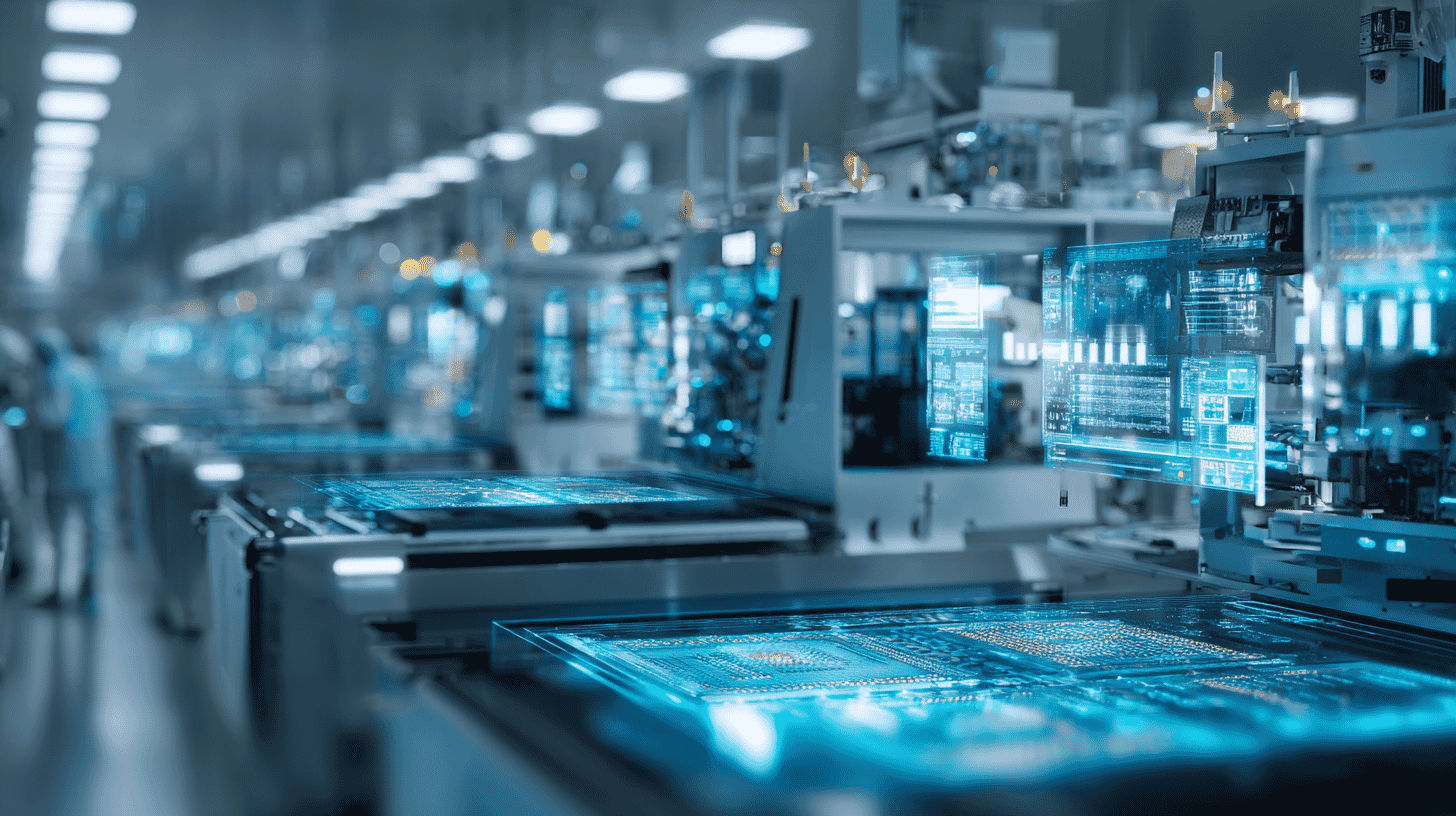
As demand for AI semiconductors explodes globally, even TSMC, the world's largest foundry, can't keep up with production. With demand reportedly three times current capacity, could this be a once-in-a-generation opportunity for Japan's Rapidus? Here is the front line of the global race for cutting-edge 2nm chips.
TSMC's Production Capacity Hits Its Limits
The semiconductor giant TSMC faces unprecedented supply pressure. In its January 15, 2026 results, it laid out record capital expenditure of $52 billion to $56 billion for the year, roughly 30% above the $40.9 billion spent in 2025. Even so, it cannot keep pace with surging demand for AI chips.
[Update] On July 16, 2026, TSMC raised its 2026 capital expenditure plan again, to $60 billion to $64 billion. It also announced an additional $100 billion for Arizona, bringing total investment in the state to $265 billion, and lifted its full-year 2026 revenue growth outlook to above 40%. (As of August 2026)
TSMC CEO C.C. Wei has acknowledged that production capacity remains "very tight." In an unusual move, NVIDIA's Jensen Huang personally visited Taiwan to request increased wafer supply. Industry estimates suggest AI chip demand has reached roughly three times current production capacity.
Why Expansion Can't Keep Up
Manufacturing AI semiconductors requires cutting-edge EUV lithography equipment and advanced packaging technology like CoWoS. However, deploying this equipment takes considerable time, production plans cannot translate instantly into increased output.
Furthermore, while TSMC is converting mature process facilities to advanced process and packaging operations, it still cannot meet demand. Although 2nm mass production began in late 2025, orders from major customers like NVIDIA, Apple, and AMD continue to flood in, making it extremely difficult for new customers to secure production slots.
A Business Opportunity for Rapidus
Amid this supply shortage, Japan's Rapidus is attracting significant attention. At its manufacturing facility "IIM" under construction in Chitose, Hokkaido, the pilot line began operations in April 2025. By July, the company successfully confirmed operation of 2nm GAA transistors.
Jim Keller, the legendary semiconductor engineer and Tenstorrent CEO, evaluated Rapidus's prototype data as "very good." Tenstorrent is one of the customers working with Rapidus.
Rapidus's Differentiation Strategy: Short TAT
Rapidus's key differentiator is "Short TAT (Turn Around Time)." While traditional foundries process hundreds of wafers in batches, Rapidus employs single-wafer processing. This approach promises to dramatically reduce cycle time from prototyping to mass production.
In the AI market, speed has become the competitive axis. As the industry shifts from general-purpose to application-specific chips, Rapidus's production methodology could deliver value distinct from TSMC's offering.
Challenges and Future Outlook
Rapidus targets 2nm mass production in the latter half of fiscal 2027, approximately two years behind TSMC. However, if TSMC cannot resolve its supply shortage during this period, Rapidus could have a prime opportunity for customer acquisition. The implementation plan filed with the Ministry of Economy, Trade and Industry targets positive operating cash flow around fiscal 2029 and a stock listing around fiscal 2031.
[Update] In February 2026, Rapidus raised roughly ¥267.6 billion through a third-party share allocation to the government's Information-technology Promotion Agency and 32 private companies. On April 11, 2026, NEDO added about ¥631.5 billion for fiscal 2026, taking cumulative government R&D support to ¥2.354 trillion. Including equity, total government backing is on the order of ¥2.9 trillion. (As of August 2026)
Nevertheless, significant challenges remain: improving yield rates, controlling manufacturing costs, and securing talent. Additionally, TSMC, Samsung, and Intel are all accelerating expansion investments. Depending on when supply shortages are resolved, Rapidus's advantages could diminish.
Significance for Japan's Economic Security
Rapidus's significance extends beyond mere business competitiveness. For Japan, which has depended on overseas manufacturing for cutting-edge semiconductors, having domestic production capability is crucial from an economic security perspective. With geopolitical risks intensifying, supply chain diversification has become a global trend.
Whether that opportunity can be seized depends on technological development and customer acquisition over the next two years.
In Japan, discussions continue with mixed expectations and concerns about Rapidus. How does your country view the AI semiconductor supply situation and the trend toward reshoring semiconductor manufacturing?









Global Discussion
15 comments