On June 2, JR East expanded its UK vending business from stations to airports, acquiring around 800 airport machines for a fleet of 1,800. Here's why its touch-screen vending stalled in Japan—and why Britain may be the better bet.
What is NTT, one of Japan's largest telecom conglomerates, really building behind a decade of re-consolidation and its coming split of Docomo? We lay out the facts, then predict the 'final form' that emerges and the backbone it plans to earn from, comparing it with AT&T's failed media bet, SoftBank's reinvention, and India's Reliance playbook to find the real key to whether it works.
Light travels faster through air than glass. By hollowing out the core, OKI, Lightera and Keio University demonstrated a world-first wideband single-fiber bidirectional link. Commercialized, it could cut network power by up to 90 percent. We unpack the race, where Microsoft is already in via its Lumenisity buy, as AI devours electricity.
On May 27, Fujitsu announced partnerships with two US AI labs at once, Anthropic and OpenAI. We unpack what this dual strategy means versus NEC's single bet, the Forward Deployed Engineer model, and how Japanese IT giants differ from Microsoft-OpenAI and SoftBank.
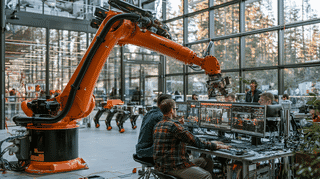
Kawasaki Heavy Industries, maker of jets, bullet trains and motorcycles, has opened a physical AI development hub in Silicon Valley, teaming up with NVIDIA, Analog Devices, Microsoft and Fujitsu. We unpack why a 130-year-old industrial giant is betting on AI that acts in the real world, and where Japan stands in the US-China robotics race.
OpenAI is moving to offer its newest cyber-focused AI model, GPT-5.5 Cyber, to the Japanese government and industry. Former NSA Director Paul Nakasone, now an OpenAI board member, flew to Tokyo to pitch critical-infrastructure cooperation. We unpack the contrast with Anthropic's tightly controlled Claude Mythos, the China-threat framing, and what it means that OpenAI wants Japan as its first international partner.
Two key Capcom executives explained their AI strategy to 4Gamer: 3,000 hours of QA collapsed to 72 hours by AI, 30,000+ hours of monthly autonomous playtesting, and a three-layer architecture combining Google's Gemini with Capcom's own art-director models. As the DLSS 5 backlash and ResetEra debates continue, here's why Capcom insists AI is for releasing creator potential, not making art, and why its no-AI-assets pledge predates the Nvidia row rather than answering it.
Fujitsu's new Kozuchi Physical OS isn't trying to build a smarter robot brain. It's trying to make the whole physical space intelligent. Here's how its edge-plus-sovereign-cloud design differs from NVIDIA Cosmos and Google DeepMind's Gemini Robotics — and how it fits into Japan's $126B Physical AI ambition.
Toshiba reported record net profit of 1.9673 trillion yen (about $12.5 billion) for fiscal 2025, a sevenfold jump driven by gains from selling its stake in Kioxia and a structural surge in transmission and HDD demand from AI data centers. Nearly two years after the JIP-led privatization, what has Japan's biggest private-equity restructuring actually changed? We compare it with Blackstone's Hilton success and the cautionary tale of Toys R Us.
Anthropic's Head of Global Affairs Michael Sellitto arrived in Tokyo May 15 and confirmed the company is weighing participation in the cyber defense corporate alliance proposed by Japan's ruling LDP. Modeled on US Project Glasswing, the framework will test Japan's distinctive 'middle path': an AI Promotion Law with no penalties, sitting between the EU AI Act's hard regulation and the deregulatory turn under the Trump administration.
Kioxia forecast a 48-fold jump in Q1 net profit to 869 billion yen ($5.5 billion), making the Japanese NAND maker Japan's single-largest AI beneficiary on a quarterly basis after Toyota. We unpack the US ADS listing plan, the supercycle reshaping NAND prices, the HBM gap with Samsung and SK Hynix, and what it all means for Japan's broader semiconductor revival.
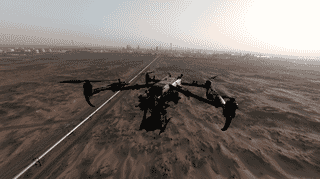
Terra Drone has solo-won a contract worth 10.15 million Saudi riyals, about 2.7 million dollars, for pipeline security surveillance in eastern Saudi Arabia. Here is how Japan's industrial drone champion is moving from inspection into AI-driven security patrols, and how it is threading between Skydio's NDAA-compliant U.S. push and DJI's exclusion from new U.S. approvals.
PM Sanae Takaichi pledged to effectively double research funding and build a 'new technological nation' targeting AI, semiconductors and quantum, and the Japan Growth Strategy carrying those measures was adopted by cabinet on July 21, 2026. We look at the 17 strategic fields and 62 priority technologies against the reality of Japan's 3.44% R&D-to-GDP ratio and its falling PhD numbers.
SoftBank Group has posted a record 5 trillion yen ($32 billion) net profit for the fiscal year ended March 2026, becoming the first Japanese company to ever cross the 5 trillion yen line. We unpack the 6.7 trillion yen OpenAI windfall, the Vision Fund comeback, the role of Arm as collateral, and how the figure stacks up against US Big Tech.
Japan's largest megabank MUFG partnered with Google on May 7, 2026, to build 'agentic banking' — AI agents that autonomously select products, choose the best payment method, and execute transactions. Unlike JPMorgan's employee-facing LLM Suite or BNP Paribas's sovereignty approach, MUFG is betting on consumer-facing autonomous finance.
At a Fireblocks event in Tokyo, SMBC Group CDIO Kazuho Isowa and Mitsui & Co.'s Shinsuke Waka outlined Japan's on-chain finance strategy. January 2028 will bring simultaneous tax and financial-law reforms. ZipangCoin is going cross-border on public chains. And 95% of JPYC trades are now executed by AI. We compare Japan's cooperative model with JPMorgan's $5 billion-a-day Kinexys.
Japan's next-gen supercomputer Fugaku NEXT bets against the cooling consensus: warming water above 30°C to cool AI servers and cutting cooling power by 20%. It may also adopt 'ZAM,' a new memory developed by SoftBank and Intel that stands DRAM chips on edge with magnetic-field coupling. Why Japan is choosing efficiency over the gigawatt-scale arms race that defines US Frontier and El Capitan.
On May 7, 2026, the Nikkei 225 closed 3,320 yen higher at 62,833, the largest single-day point gain in its history, surpassing the 3,217 yen record of August 6, 2024. Hopes of a U.S.-Iran ceasefire and an AI semiconductor rally drove it. Yet the 5.58% gain does not crack the all-time top 20, a sign that a higher index level has changed what a record means. Inside the 10.8 trillion yen session, the link to Korea's KOSPI passing 7,000, and how the index reached 70,000 by June.
On May 1, Japan's METI met infrastructure operators from the power and gas sectors, and Economy Minister Akazawa asked electricity companies to run emergency system inspections and report within a month. The order covers 24 critical-infrastructure operators in the power sector. The trigger was Anthropic's Claude Mythos Preview, announced April 7, which surfaced a 27-year-old bug chain in OpenBSD's TCP SACK code among others. The UK's AISI reached a more measured verdict. How Japan's penalty-free approach compares with CISA's OT principles and the EU's NIS2.
GPU-to-GPU optical interconnects were forecast to arrive around 2033. NVIDIA just pulled them in by five years, putting co-packaged optics into the NVLink switch of its 2028 Feynman generation, and locking in supply with $2 billion investments in each of Lumentum and Coherent. Furukawa Electric is spending 38 billion yen to more than quintuple DFB laser chip capacity; Sumitomo Electric supplies core components for NVIDIA's Quantum-X Photonics switches but was left out of the funding round. Where Japan's optical suppliers stand, and how NTT's IOWN runs on a different clock.