
🎮 "We don't want to be the company that broadcasts 'we use AI.'" That's how Capcom's AI lead opened his message to a global audience. While Western studios get torched on ResetEra for sneaking generative art into their games, the Osaka publisher behind Monster Hunter and Resident Evil is taking a deliberately different bet: keep humans on the art, hand the boring stuff to AI agents. Here's what they actually built, and why it matters now.
A Different Pitch in a Year of AI Backlash
If you've been on r/gaming or ResetEra for the last twelve months, the phrase "this game uses generative AI" has come to mean one thing: trouble. Crimson Desert's marketing materials, Activision's loading screens, Nvidia's DLSS 5 demo that altered the appearance of playable character Grace Ashcroft in Resident Evil Requiem: every one of them sparked thread after thread of users vowing not to buy.
Capcom is walking into that fire on purpose. On May 21, Japanese gaming outlet 4Gamer published a long interview with two of the company's AI leads: Shinichi Inoue, VP of Game Development Platform & AI Solutions, and Kazuki Abe, the technical director running the actual builds. The subject was what Capcom announced at Google Cloud Next 2026, held in Las Vegas from 22 to 24 April. The headline message is uncomfortably blunt for the genre: AI is everywhere inside Capcom's pipeline, but Capcom doesn't want you to think about it as an art tool.
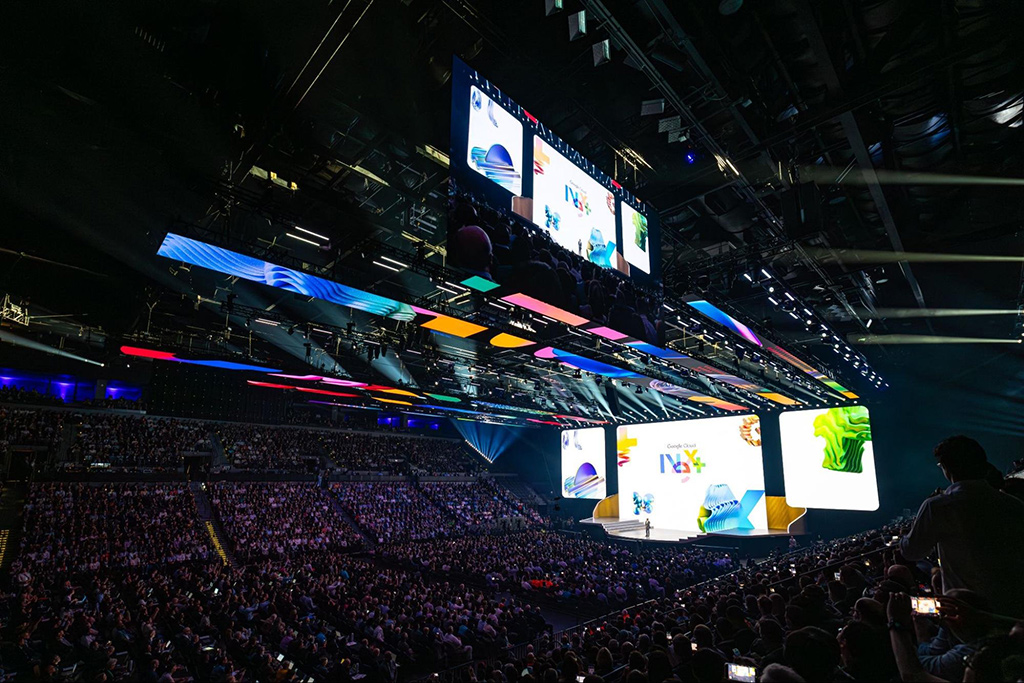
Source: 4Gamer / Google Cloud
"AI is not for creating art," Inoue told the reporter near the end of the interview. The policy itself was already on record. Asked about generative AI at a retail investor briefing on February 16, 2026, Capcom said it does not implement AI-generated materials in game content; the Q&A summary went public on March 23. Worth noting, since much of the English coverage got this backwards: the briefing predates Nvidia's DLSS 5 reveal on March 16, so it was not damage control for that row. The May interview is the first time Capcom has shown the world what it is doing with AI instead.
Why Capcom Is Talking About This At All
Some context for readers outside Japan: Capcom isn't dabbling here. The company is at the absolute peak of its IP cycle. Resident Evil Requiem launched on February 27, 2026 and passed six million units within three weeks, the fastest in series history; Capcom's May earnings materials put it at 6.9 million. DLSS 5, the technology at the centre of the Grace Ashcroft row, was announced at GTC on March 16 and is not out yet, with Requiem on the supported-titles list for an autumn 2026 rollout. Monster Hunter Wilds, released in February 2025, set a company first-month sales record and crossed 11 million units by year-end. Pragmata, Capcom's first new IP in years, sold a million copies in two days and two million in sixteen. Whatever Capcom says about AI right now will set the tone for how a generation of Japanese publishers approach the technology.
The 4Gamer interview was framed around a specific problem, not a vision deck. Inoue laid it out plainly: AAA games have become too big to make profitably, and the bottleneck isn't really the creative work. It's the checking. As he put it: a fix that used to require verifying ten places now requires verifying a thousand. "The routine work attached to creative work increases exponentially," he said, "and that's complicating the development process more than the size of the content itself."
That's the gap Capcom is filling with AI. Not models, not concept art, not character dialogue. The verification.
5,000 Hours to 72 Hours
The numbers Capcom shared at Google Cloud Next are the kind that stop conversations in QA Slack channels everywhere.
For checking visual bugs across a single game's open world, a human team would need 3,000 to 5,000 hours of playtime. The AI does it in about 72 hours. That's three days versus seven months.
Verifying that thousands of armor-and-weapon combinations render correctly, without clipping, glitching, or breaking the silhouette, is a job estimated at 5,280 human hours. The same agent finishes it in 72 hours.
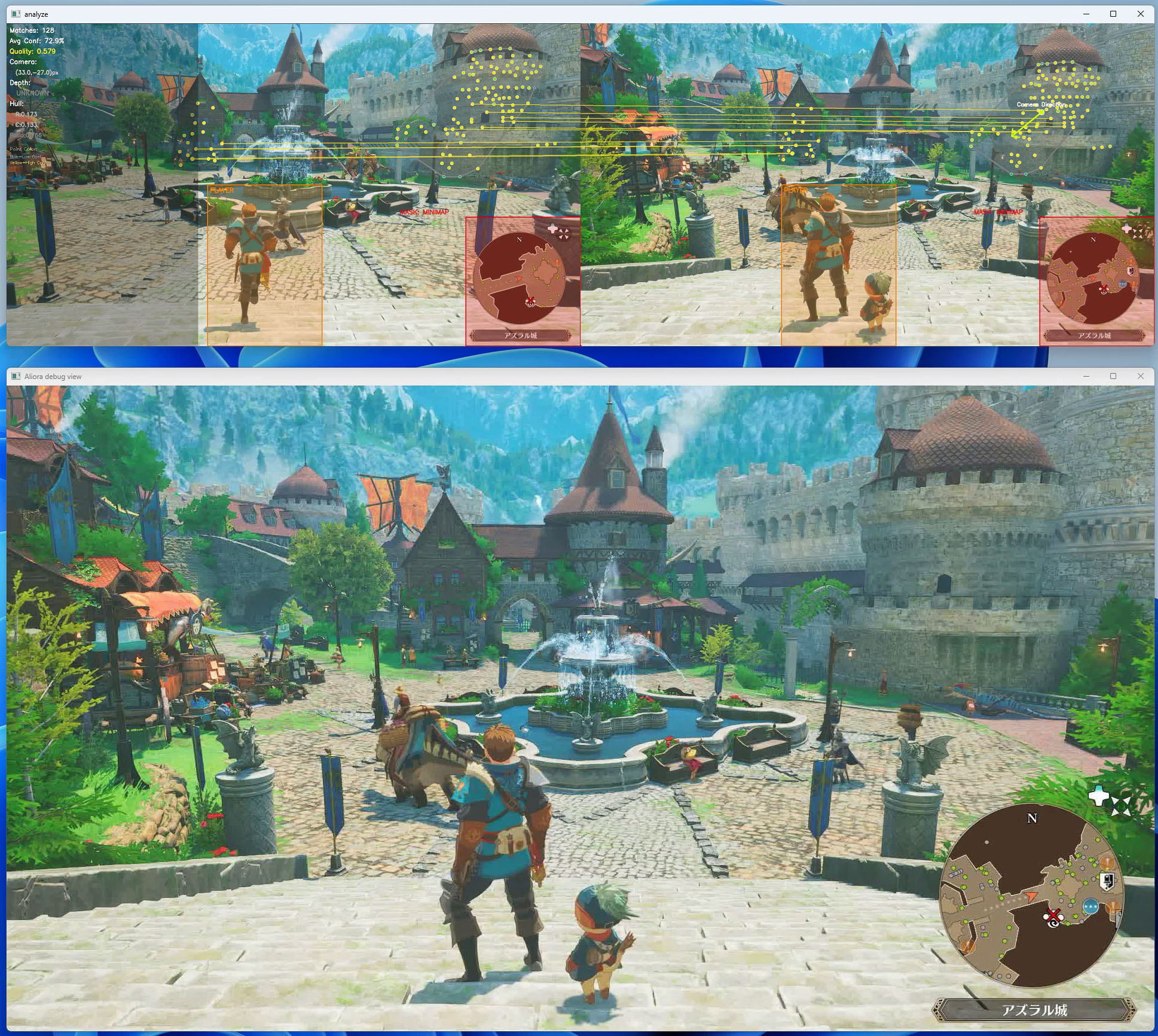
Source: 4Gamer / Google Cloud
Aggregate that across all Capcom games in active development, and this system reportedly "conducts 30,000+ hours of autonomous playtesting per month" on Capcom's games. The only game to be named in Google's coverage of Capcom's AI testing tools is Monster Hunter Stories 3: Twisted Reflection, which launched on 13 March 2026. The system is in production across six to eight titles, Inoue said in the 4Gamer piece, though Capcom hasn't named the rest.
If you're a Monster Hunter fan, that means the bug hunt on your last weapon-charm combination was almost certainly done by an AI agent overnight while the human QA team slept.
What's Under the Hood
The system, built jointly with Google Cloud, has three layers. The brain is Google's Gemini, sitting on Google Cloud. The middle is a swarm of coordinating agents that translate decisions into tasks. The "hands and feet", to use Inoue's phrase, are parallel-processing workers that actually run the playtests.
Out of that architecture, Capcom has created a suite of four different types of AI agent: Visual agents, which "look at the screen like a human" to detect technical issues; Predictive agents, which predict where the game is "likely to break next" and send swarms of "test bots" to those areas; Data inefficiency agents, which "identify inefficiencies within massive datasets to optimize game performance"; Institutional knowledge agents, which lets developers refer to past data on how "veteran engineers solved similar problems" in the past.
The visual agent is the most distinctive piece. A normal automated test can confirm "the character did not fall through the floor." It cannot tell you whether a dark room is supposed to be that dark. As Capcom's Google Cloud blog post explains, the visual agent uses Gemini Vision to accurately determine whether darkness in a horror game is an intentional artistic effect or a technical display defect. That distinction matters because Capcom makes the genre (Resident Evil, Devil May Cry, even atmospheric corners of Monster Hunter) where "looks broken on purpose" is half the design.
Abe described the second technical layer too: Capcom doesn't just feed Gemini a generic prompt and hope. The company is training its own custom models, internally nicknamed the "art director model", that capture the specific aesthetic intent of a project's lead artist. These house-trained models cross-check Gemini's general visual reasoning. When a director changes their mind mid-production, both models automatically retrain on the new direction. The whole point is that AI gets out of the way of the human creative call, not the other way around.
The Philosophy Sentence That Will Get Quoted
The line from the interview that's already being shared on Japanese gaming Twitter is Inoue's framing of why the line between "use AI" and "don't use AI" runs exactly where it does at Capcom:
The human creators have something called kansei, usually translated as sensibility, or aesthetic intuition. AI, even the most powerful frontier model, doesn't have it yet. So put humans on the work that needs kansei, and put AI on everything else.
What counts as "everything else" at Capcom is broader than it first sounds. It's not just bug-hunting. It's also internal communication: translating a director's intent across a 500-person multilingual team, making sure the QA tester in Vancouver understands what the lead designer in Osaka meant by "this fight should feel claustrophobic." That, Inoue says, is the real prize. "We want to return to the state where everyone working on the game shared the same context, the way small teams used to," he said. "AI is a medium for that shared context."
Compare that with where Western publishers have ended up. Nvidia's press release explained that Capcom, Ubisoft, and Bethesda all support DLSS 5, the technology that altered Grace Ashcroft's face. But Insider Gaming spoke to Capcom developers, who found the renderings of Grace shocking. They were not told about the Nvidia demo in advance, and are wondering if the publisher's stance on generative AI tools has changed. The 4Gamer interview is, partly, Capcom's answer to its own developers: no, the stance hasn't changed.
How This Is Landing Overseas
Reactions on ResetEra and r/gaming to Capcom's announcement have been split, but in a more nuanced way than the typical "AI bad" thread. Several threads circulated after the announcement with the framing that this is essentially expensive QA automation, closer to what NetEase's research lab is doing with its Titan agent, or what Wemade Play built on Anthropic's Claude for payment testing, than to the generative-asset use that drives the harshest backlash.
On the ResetEra thread following Capcom's first AI announcement, one developer-perspective post argued that this is the way the AAA industry is going, as uncomfortable as it is to admit. There'll be more and more admittances like this from the big studios. The harder edge came from posters convinced this is the first step on a slippery slope: "efficiency tools today, asset generation tomorrow" is the historical pattern, and Capcom's promise will eventually break.
That fear isn't paranoid. In January 2026, the organisers of the Game Developers Conference released their annual state of the games industry report, showing how far AI adoption had spread across development teams. The harder Capcom commits publicly to not using AI for assets, the more its restraint becomes a competitive position rather than just an engineering choice.
What's likely to defuse some of the backlash, though not all of it, is the choice to be the company that publishes the playbook rather than getting caught quietly using AI assets. There's a difference between Activision discovering it shipped AI loading screens and Capcom holding a press session in Las Vegas to explain exactly what their AI does and doesn't touch. The Japanese press, particularly the long-form 4Gamer interview, has framed this as Capcom drawing a line in the sand. Whether overseas players read it that way will become clear by the time the next Monster Hunter expansion and the releases behind it ship.
What This Means for Monster Hunter and Resident Evil
The practical answer: probably nothing you'll consciously notice.
If Capcom's promise holds, every texture, animation, voice line, and concept sketch in upcoming Monster Hunter and Resident Evil entries will still come from human artists. What changes is upstream: months-long QA passes happen overnight while the team sleeps, so the human artists' work ships faster and with fewer bugs. AI ends up enforcing consistency rather than fighting it, and the director's vision survives the scale of modern AAA production. That's the bet, anyway.
The deeper bet is harder to measure. Is "we use AI but never for art" a stable position across a five-year product cycle, or a 2026 marketing posture? Other publishers have drawn that line and crossed it. The next few major Capcom releases will answer it.
What's your country's gaming community talking about? Are players in your part of the world drawing the same line Capcom is drawing, AI for testing fine and AI for art not fine, or has the conversation moved past that? Have you noticed a specific publisher you trust more or less on this issue?
References
- https://www.4gamer.net/games/991/G999101/20260519017/
- https://www.googlecloudpresscorner.com/2026-04-22-How-Capcom-Is-Leading-the-Way-for-Enterprise-Agentic-AI
- https://thisweekinvideogames.com/news/capcoms-google-cloud-ai-toolset-includes-automated-agents-performing-30000-hours-of-playtesting-a-month/
- https://www.notebookcheck.net/Capcom-devs-shocked-by-Nvidia-DLSS-5-Resident-Evil-Requiem-demo-sharing-concerns-over-AI-tool.1253539.0.html
- https://www.resetera.com/threads/capcom-to-use-generative-ai-to-improve-efficiency-and-productivity-of-game-development-not-for-game-assets.1470286/
- https://gamehaunt.com/capcom-clarifies-position-on-generative-ai-in-future-game-development-2/







Global Discussion
4 comments