🎮 In April, SNK confirmed a new Metal Slug game was in development. The question fans actually had was bigger: is this a one-time anniversary fireworks show, or is somebody finally rebuilding the franchise for real? Three of the people inside SNK just gave the answer.
In an interview published by Japanese gaming site 4Gamer on May 29 (recorded May 8), three staff working on the Metal Slug 30th Anniversary Project sat down to talk about where the series is headed. They didn't reveal the new game's title, its art style, or a release window. But they did say something that matters more to a long-suffering fanbase than any trailer: the 30th anniversary is a starting line, not a finish line.
Who's talking, and why this one is worth reading
If you've followed Metal Slug coverage at all this year, you already know the headline beats from April: the 30th anniversary project, the retrospective video, the arcade cabinet flickering to life with the words "Mission Reboot," and the confirmation that a new game exists. That was the announcement. This is the part where the people responsible explain what they actually mean by it.
The three interviewees were chief producer Naoto Abe, console and PC developer Kunihiro Ono, and brand manager Seung-ju Song. Their résumés are worth a second, because they tell you how this conversation is weighted. Abe joined SNK back in 1989 and worked as a pixel artist on NEOGEO classics like King of the Monsters and Burning Fight, meaning he was physically in the building when the original Metal Slug was being made. Ono came aboard in 2005, during the SNK Playmore era, and now manages the pixel-art assets that every spin-off and piece of merchandise has to be checked against. Song is the newcomer, a Korean who joined SNK in 2024 to manage its IP. Past, present, and future of the company, sitting at one table.
For overseas readers who are new to all this: Metal Slug debuted on April 19, 1996, on SNK's NEOGEO arcade hardware. It's a "run-and-gun": you sprint left to right, gun blazing, rescuing scruffy POWs and blowing up tanks belonging to the villainous Rebel Army and its mustachioed commander, General Morden. It was created by a studio called Nazca, which merged into SNK as the first game wrapped. And here's the thing that makes the franchise's silence so painful: the last numbered mainline entry was Metal Slug 7 on the Nintendo DS in 2008, and even counting its 2009 upgrade Metal Slug XX, that is 17 years without a new mainline game. Everything since has been spin-offs and ports.
"Not a one-year party"
Song was blunt about the strategic intent. SNK is sitting on a long list of dormant IPs, and the company has been working to bring them back as games, Metal Slug among them. According to 4Gamer, Song framed the anniversary's "MISSION REBOOT!" slogan as a deliberate signal: the goal is to invest harder, think long-term, and turn Metal Slug into a stronger, more widely loved brand. Asked directly whether this is just an anniversary-year stunt, he said the opposite: the plan is for things to keep going.
He also pushed back gently on the idea that Metal Slug ever fully went away. The series has been running in real time the whole while, he noted, pointing to the mobile tower-defense game Metal Slug Attack, the mobile spin-off Metal Slug: Awakening, and the turn-based strategy game Metal Slug Tactics, plus a steady stream of merchandise. The reboot, in his telling, isn't resurrection. It's escalation.
There's a clear commercial ambition underneath. Song's stated goal is to make Metal Slug SNK's number-one brand, not by beating its stablemates, he was careful to say, but by making sure that when anyone talks about SNK, Metal Slug comes up in the same breath as The King of Fighters and Fatal Fury. Abe's goal was simpler and broader: make Metal Slug a name everyone knows. Ono wanted it to be playable anywhere, by every age group, and joked that the new game should come to arcades too.
What we actually learned about the new game
Here's where fans should manage expectations, because the team was honest about how little they can say. When 4Gamer pressed on specifics, Abe said he wants to put Metal Slug back out into the world in a clear, definite form, but couldn't yet describe what shape that takes. Asked the question everyone wants answered, whether it is staying 2D pixel art or going 3D, Ono apologized and declined to confirm either way.
What did slip out is genuinely useful, though. According to 4Gamer, Ono said the new game is being developed for home consoles and PC. That single detail rules out the most cynical fear, that the "new game" would turn out to be another mobile gacha title, and points toward a proper console release. Both new and longtime fans are the target, the team stressed, and they want everyone satisfied.
Song also slipped in a piece of concrete near-term news: a mobile spin-off called Metal Slug Rush, developed by RingGames under license rather than by SNK itself, is launching soon as part of the anniversary lineup. So the spin-off engine keeps humming while the mainline game cooks.
[Update] Metal Slug Rush went live on iOS and Android in early July 2026, after the interview ran. RingGames developed it and REVIVECONTENTS published it, and rather than side-scrolling it plays as a survival roguelike built around endless enemy waves.
The development stories are the real treasure
The most quietly remarkable part of the interview has nothing to do with the future. It's Abe, who was there in 1996, walking through how the original game was built, and dropping details that even devoted fans may not have heard.
The biggest one: Metal Slug was originally designed with the tank as the player character. The plan changed mid-development to put human soldiers in the lead, which is why the iconic tank ended up as a vehicle you climb into at certain points rather than the hero itself. A related leftover: in early builds, the blue-uniformed Morden soldiers were friendly: rescue one and he'd hop into your Slug. That idea survives today in Metal Slug Attack, where blue-clad soldiers appear as allied regular-army troops.
Abe's favorite way to describe the game is "a moving diorama." He grew up in an era of model kits, where hobbyists arranged tanks, planes, and tiny figures into scenes that told a story, and he says Metal Slug carries the same spirit. Every box in the background, every soldier warming his hands at a campfire, is placed on purpose.
The craft details are wild. Ono pointed out that the famously lush snail stage in Metal Slug 3, shifting from ochre to red and packed with rocks and slime mold, uses a palette of just eight colors. The series' artists, Abe explained, got their density not from more colors but from masterful intermediate shades, which is how they nailed that specific look of stained, slightly grimy metal. Animation was equally obsessive: Ono noted that the zombie-death sequence alone runs 30 to 40 frames. Abe, who came from the fighting-game side, said Metal Slug used something close to full animation, where fighters mostly animate the start and end of a move.
And it was all done under brutal hardware limits. NEOGEO famously launched under the "100 Mega Shock" banner and later advertised itself as "330 Mega Pro-Gear Spec" (actual cartridge sizes kept climbing past that), but porting to NEOGEO CD meant cutting frames to fit. Abe shared a trade secret from the fighting-game teams: when an animation had to be trimmed, they'd reuse an in-between crouch pose to bridge the gap, so it still read as movement. He also revealed that SNK's teams, Fatal Fury, Samurai Shodown, KOF, and Metal Slug, worked on separate floors with little technical cross-pollination. The Metal Slug team, he said, never had to borrow help, because nobody else at the company could draw those pixels.
A franchise the world never let go
One exchange will resonate with readers far from Japan. Asked whether fan reaction differed by region, Song said the response was strong everywhere, but South American fans were especially ecstatic. Abe credited that to SNK's old sales push in the region, helped along by NEOGEO cartridges that shipped with multiple languages. Seeds planted three decades ago, still bearing fruit.
That's the part SNK now has to honor. Some anniversary merchandise, apparel from the brand Kumagumi, a Bitmap Books art book and vinyl records, has been overseas-only so far, tied up in distribution and licensing. The team said they want to widen Metal Slug's reach and get those items to fans in Japan and beyond, working with more partners to make it happen.
The 4Gamer interview goes much deeper into the art and history than we can fit here, including more of Abe's memories of seeing the pixel work for the first time. If you have any affection for the series, the original is well worth reading in full, and it's linked below.
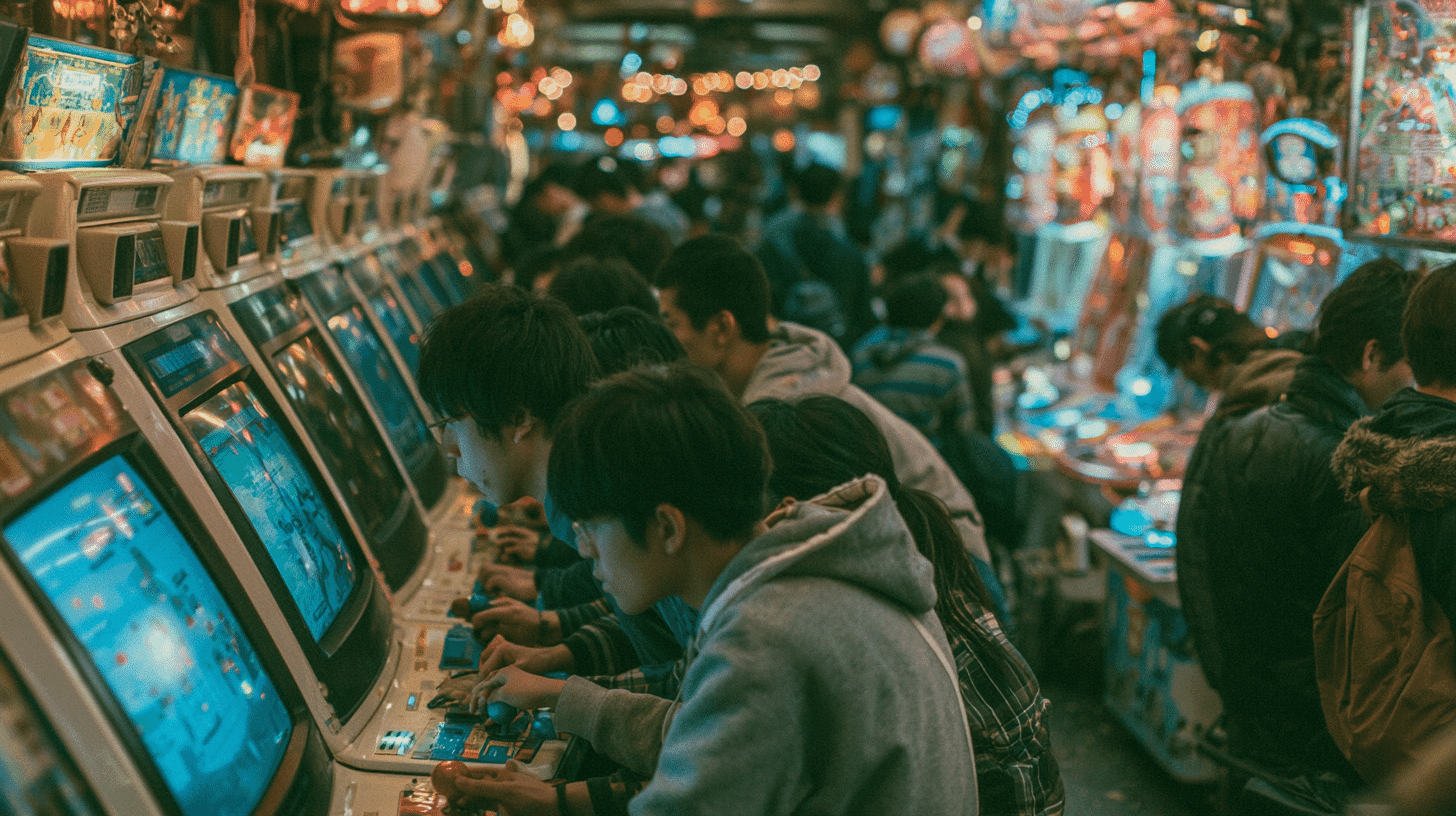
Metal Slug taught a global generation that a 2D game could move like a living thing. In Japan it's a treasured slice of arcade history; in Buenos Aires, Lima, and Jakarta it's the game you fed coins into at the corner store. So we'll ask: what was your local arcade's Metal Slug, the one game that swallowed your pocket money and stuck with you for life?






Global Discussion
4 comments