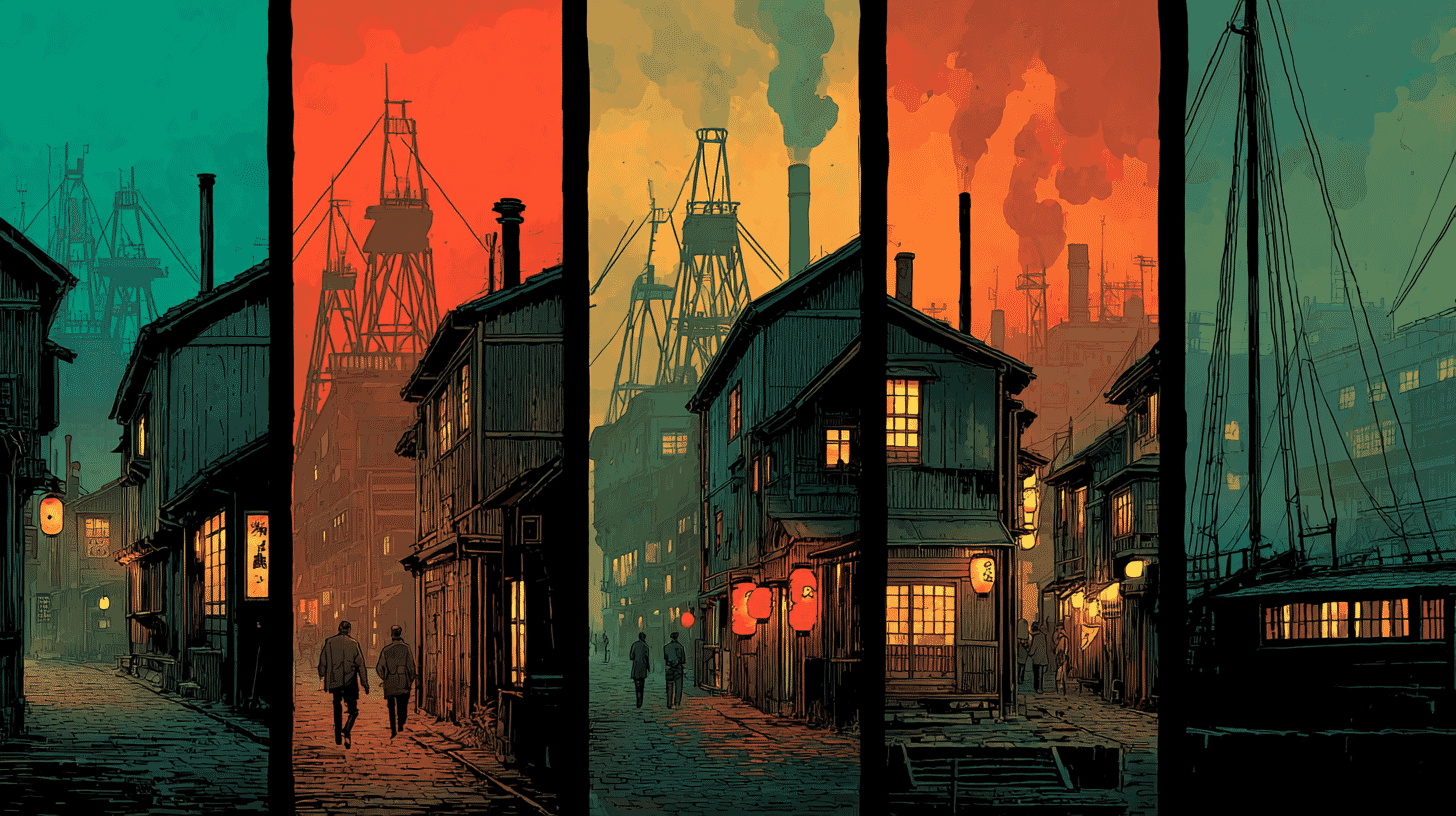
Ryu Ga Gotoku Studio is launching a major new IP without "Like a Dragon" or "Yakuza" in the title. It's called STRANGER THAN HEAVEN, it ships on January 15, 2027, and it stretches across 50 years and five cities of 20th-century Japan. The protagonist is Makoto Daito, a half-Japanese, half-American outsider, and the supporting cast pulls together actor Yu Shirota, Dean Fujioka, Snoop Dogg, Ado, and Official Hige Dandism's Satoshi Fujihara into one of the most internationally stacked rosters RGG has ever assembled.
What Was Just Announced
On May 7, 2026, SEGA and RGG Studio aired Xbox Presents: A Special Look at STRANGER THAN HEAVEN, the first 30-minute deep dive into the long-teased project. The headline facts:
- Release date: January 15, 2027 (pre-orders open)
- Platforms: PlayStation 5, Xbox Series X|S, PC (Steam / Microsoft Store)
- Xbox Game Pass: Day-one availability
- Price: From 8,990 yen including tax
The game first appeared at The Game Awards 2024 under the codename "Project Century," then got its real name at Summer Game Fest 2025 alongside a moody, jazz-soaked 1943 trailer. Western media compared it to L.A. Noire meets Yakuza. The May broadcast filled in the rest; the hard release date arrived a month later, at Summer Game Fest 2026 on June 6.
Five Eras, Five Cities
The story unfolds across five distinct time periods and locations, each rooted in real Japanese geography:
- 1915: Kokura, Fukuoka: A port city; the story begins here
- 1929: Kure, Hiroshima: A naval shipbuilding town
- 1943: Minami, Osaka: Wartime entertainment district
- 1951: Atami, Shizuoka: A hot-spring resort during postwar reconstruction
- 1965: Kamurocho, Shinjuku, Tokyo: The legendary setting of the Yakuza / Like a Dragon series
That last one is the giveaway. Kamurocho is the spiritual home of the Yakuza franchise, and the moment it appears in a 1965 timeline alongside an in-game reference to the Tojo Clan, the criminal organization at the heart of the entire mainline series, the picture becomes clear. STRANGER THAN HEAVEN is, among other things, an origin story for the world Like a Dragon fans have lived in for two decades.
Meet Makoto Daito
The protagonist is Makoto Daito, born in 1915 San Francisco to an American father and a Japanese mother. Both parents die when he's young. He faces racism for his Asian heritage, sneaks aboard a suspicious boat headed for Japan, and that's where the 50-year saga begins.
On that boat he meets two figures who will define his life:
- Yu Shinjo (played by Dean Fujioka): also of mixed heritage, destined to become Makoto's "oldest friend and biggest rival"
- Orpheus (played by Snoop Dogg): a "cutthroat and charismatic smuggler" who runs the boat, almost throws both boys overboard, then takes them under his wing
Makoto himself is voiced and modeled after Yu Shirota, a Japanese-Spanish actor whose own mixed background mirrors the character's. It's the kind of casting choice you usually only see in prestige film projects.
A New Combat System: Two Sides of the Body, Independently Controlled
The most mechanically novel thing about STRANGER THAN HEAVEN is its combat. On an Xbox controller, RB/RT controls the right side of your body, LB/LT controls the left. Attack and defense are split across each half independently.
That means you can punch with your right hand while blocking with your left, catch an incoming strike one-handed and counter immediately with the other side, or pick up a knife in one hand and a hammer in the other. Weapon variety is significant, from kitchen knives to hammers to swords, with upgrade systems for each.
It's a clean break from the Yakuza series' Heat Actions and the Like a Dragon turn-based RPG combat. PC Gamer called it the standout reveal of the 30-minute presentation. Whether the system holds up under sustained play is the obvious question, but it's the most ambitious combat experiment RGG has shipped in years.
"Showbiz" Is the New Side Hustle
If you've played a Yakuza game, you know the side activities are half the appeal. STRANGER THAN HEAVEN puts a major new mode at the center: Showbiz.
Makoto has a gift: he can memorize and reproduce any sound he hears, and the game lets him build a music empire on top of it. You scout singers and musicians from rumors you pick up on the street, compose original songs together, design stage productions, run shows, and grow an entertainment business across the decades.
Real-world musicians are written into the game as in-fiction performers Makoto recruits: Satoshi Fujihara (vocalist of the Japanese band Official Hige Dandism) and American singer-songwriter Tori Kelly are both confirmed playable characters in the showbiz storyline.
The Theme Song: Snoop, Ado, Tori Kelly, Fujiwara
The original theme song features Snoop Dogg, Satoshi Fujihara, Ado, and Tori Kelly, a Japanese-American crossover lineup that is a first for the series. RGG has leaned on Japanese artists for theme songs before (Shōnan no Kaze, Masushiyama Daishirō, etc.), but bringing a US hip-hop legend like Snoop Dogg into the title track is a different scale of ambition.
Bringing Bunta Sugawara Back to the Screen
The most affecting announcement, especially for Japanese cinema fans, is the appearance of Bunta Sugawara, the late star of Toei's Battles Without Honor and Humanity (Jingi Naki Tatakai), the iconic 1970s yakuza film series that defined the genre. Sugawara passed away in 2014.
SEGA secured formal consent from his family. Toei provided archival footage and photographs from his prime. RGG built his CG character design from those materials. The voice is performed by Takashi Ukaji, an actor who was personally close to Sugawara during his lifetime.
This isn't AI-generated likeness laundering. It's a fully consented, archive-based digital reconstruction with the deceased actor's family, his original studio, and a successor he respected all involved. RGG applied the same method again in June, when it announced that 2Pac, who died in 1996, would appear in the game, designed from period photos and footage in close cooperation with Amaru Entertainment. That same announcement added Takaya Kuroda (the voice of Kazuma Kiryu), Yasukaze Motomiya, and comedian Kohei Tsuji. For Japanese cinema fans, seeing Sugawara return, even digitally, in a 1965 yakuza setting carries real weight.
How the International Community Is Reacting
The English-language gaming press has been broadly enthusiastic. Polygon and PC Gamer led with "L.A. Noire meets Yakuza." GameSpot framed it as "a Yakuza prequel with a star-studded cast." The Tojo Clan tease in particular is being treated as quasi-confirmation of long-running fan theories.
On ResetEra and r/yakuzagames, fans had been speculating for over a year that a story ending in 1965 Kamurocho had to be about the founding of the Tojo Clan itself. The official appearance of the Tojo name in the broadcast collapsed that speculation into near-certainty.
The skeptical voices, where they exist, come from fans who felt 2024's Like a Dragon: Infinite Wealth was bloated and want something tighter and grittier, closer to the Judgment spinoff series. Whether the 50-year scope of STRANGER THAN HEAVEN delivers that or doubles down on bloat is the live question.
Why Now?
Studio head Masayoshi Yokoyama has spent the last two years signaling that the mainline Like a Dragon numbered series is approaching a natural endpoint. Meanwhile RGG has kept the lights on with remakes (Yakuza Kiwami 3, Kiwami 3 / Dark Ties) and crossovers. What the studio needed was a new flagship IP: one that could open the door to new players without abandoning the audience that built the franchise.
STRANGER THAN HEAVEN threads that needle. It launches without "Like a Dragon" branding (no required prior knowledge), but it ends in 1965 Kamurocho with the Tojo Clan being founded (a love letter to existing fans). Sega Sammy's June 2025 investor briefing had already pointed to a release after April 2026, and a January 2027 date fits cleanly.
What's It Like Where You Are?
How well-known is the Yakuza / Like a Dragon series in your country? Have your friends played any of the entries, or is it still a niche import title? And what's your take on a Japanese studio building a 50-year story running from pre-war to postwar Japan: does that history land for an international audience? Let us know in the comments.
References
- STRANGER THAN HEAVEN to Launch Winter 2026, with Dual-Side Combat and Tojo Clan Tease - AUTOMATON
- Stranger Than Heaven Is A Yakuza Prequel With A Star-Studded Cast - GameSpot
- Xbox Presents: A Special Look at Stranger Than Heaven – Everything We Learned - Xbox Wire
- Stranger Than Heaven sure looks like a Yakuza series prequel - PC Gamer
- SEGA Official Site





Global Discussion
14 comments