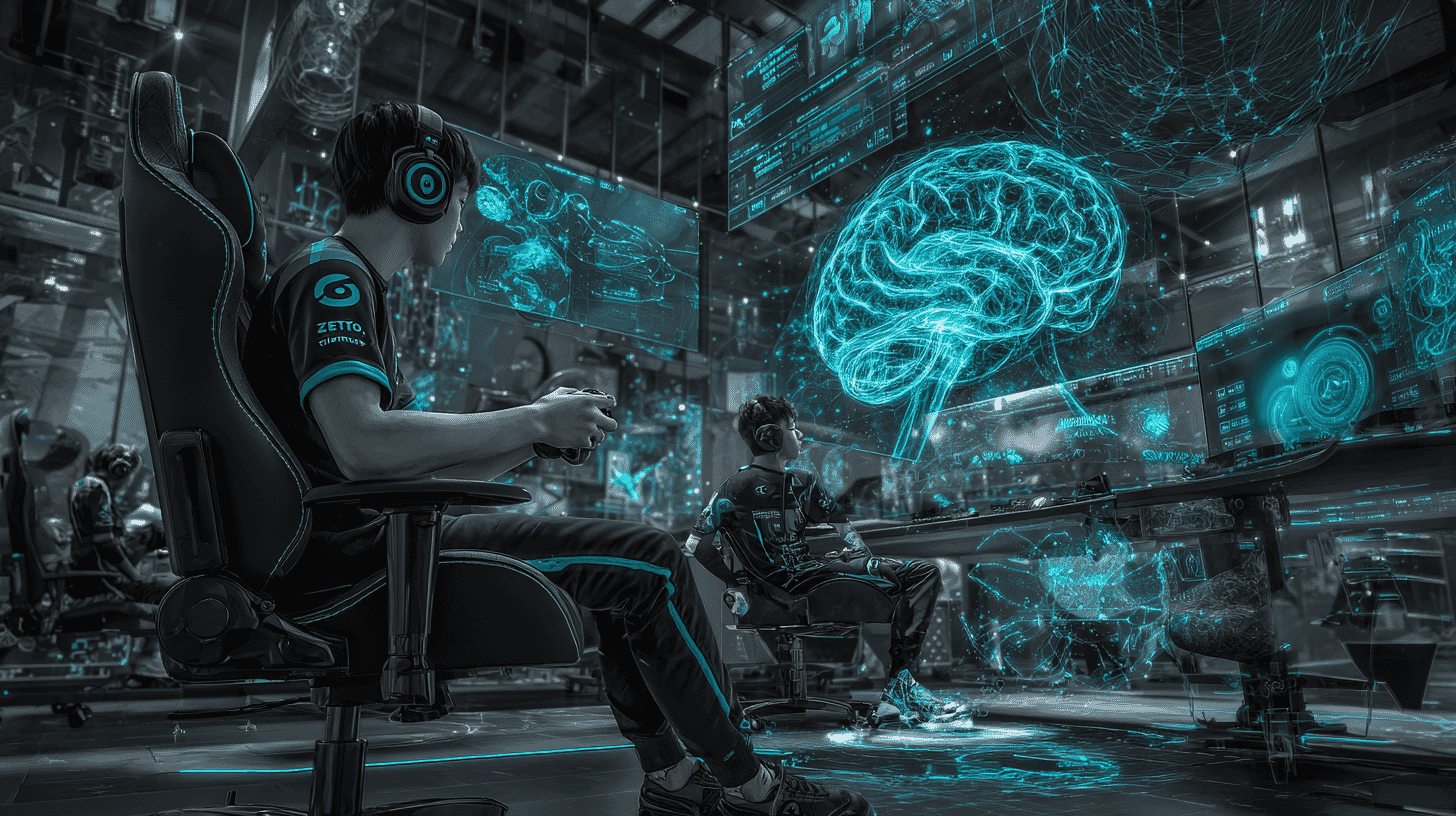
Can science extend the career of a professional esports player? ZETA DIVISION, one of Japan's flagship esports organizations, has teamed up with a neuroscience lab at the University of Tokyo to test and push the limits of reflexes, cognition and motor control. A legend of the fighting game scene is among the first participants.
The "Age 25 Wall" in Professional Esports
In the world of professional esports, careers are shockingly short. Research shows that peak performance typically occurs around age 21, with the average retirement age sitting at roughly 25. Only about one in five professional esports careers lasts longer than two years, far shorter than most traditional sports.
The reasons are complex. Top-level competition demands reaction times under 150–200 milliseconds (the average person reacts in about 250ms), the ability to process massive amounts of visual information instantly, and sustained concentration over hours of high-pressure play. As players age, these abilities are widely believed to decline. Add in the physical toll of repetitive motions, the psychological burden of constant competition, and the ever-present threat of burnout, and it's easy to see why so many players hang up their controllers in their mid-twenties.
This isn't just an abstract problem. In October 2025, ZETA DIVISION experienced it firsthand when Kakeru, their Street Fighter 6 player who had just won Capcom Cup 11, the world championship, was forced to retire at age 28 due to neurological issues. He had collapsed during a match at the Esports World Cup in Saudi Arabia and never returned to competition. The loss of a world champion in his prime was a stark reminder of how fragile esports careers can be.
ZETA DIVISION × University of Tokyo: A Pioneering Partnership
Against this backdrop, ZETA DIVISION announced on March 13, 2026, a joint research collaboration with the Nakazawa Laboratory at the University of Tokyo's Graduate School of Arts and Sciences. The research officially begins on April 1, 2026.
ZETA DIVISION, operated by GANYMEDE Inc., is one of Japan's most prominent esports organizations. Originally founded as "JUPITER" in January 2018, it rebranded as ZETA DIVISION in July 2021 and now boasts over 70 players across divisions including VALORANT, Street Fighter, Apex Legends, and more.
The Nakazawa Laboratory is a cutting-edge research center that bridges neuroscience, motor control, sports science, and neurorehabilitation. Led by Professor Kimitaka Nakazawa, the lab studies how the brain and body interact during movement, using advanced measurement techniques including electromyography (EMG), transcranial magnetic stimulation (TMS), and motion capture systems.
The research will focus on four pillars:
- Performance analysis based on neural and motor function data, quantifying players' reaction speeds, cognitive processing, and motor precision
- Visualizing performance consistency, identifying what separates good days from bad days at the neurological level
- Scientific optimization of conditioning and training, replacing guesswork with evidence-based practice methods
- Building long-term management models, creating comprehensive frameworks for sustaining player health across physical, psychological, and neurological dimensions
What makes this particularly exciting is its scope beyond esports. The Nakazawa Lab already conducts research on rehabilitation for people with disabilities and fitness maintenance for the elderly. Data gathered from elite esports players, who operate at the extreme edge of human cognitive and motor performance, could generate insights applicable to sports science and medicine broadly.
A 40-Year-Old Legend Steps Into the Lab
The first two players to participate are Street Fighter division members Momochi and Higuchi. Players from other divisions are expected to join as the research progresses.
Momochi (real name Yusuke Momochi, born 1986) is a living legend in fighting games. Now 40 years old, he has won all three of the genre's major world championships: Capcom Cup 2014, EVO 2015, and EVO Japan. He has competed professionally for over two decades, a near-impossible feat in a scene where most players peak in their early twenties. His participation in this study is deeply symbolic: here is a player who has already defied the conventional wisdom about competitive aging, now lending his body and mind to science so others might do the same.
Higuchi represents the next generation, a young player known for blistering reaction speed and precision inputs, with a national championship title already under his belt. Having both a veteran and a rising star provides researchers with invaluable comparative data across different career stages.
"Esports is an intellectually and physically demanding competition," said Daniel Cao, Global CSO at GANYMEDE, the company that runs ZETA DIVISION. "The key theme is how to make competitive performance and player careers sustainable. This research is a challenge to evolve esports from a mere 'culture' into a 'scientific competitive domain.'"
What Pro Players' Bodies Actually Go Through
For those unfamiliar with competitive gaming, the physical demands might seem surprising. But the numbers tell a compelling story.
Elite esports players compete with reaction times under 150–200 milliseconds while making split-second strategic decisions under extreme pressure. In games like VALORANT or Street Fighter 6, inputs must be precise to within sub-millisecond tolerances. Players maintain this level of performance during practice sessions that often exceed 8–10 hours daily.
The neurological load this creates is enormous. Unlike traditional sports where physical fatigue is the primary limiter, esports athletes face a unique combination of cognitive exhaustion, fine motor strain, and psychological pressure. Kakeru's retirement, going from world champion to neurological breakdown in just five months, illustrates the extreme stakes involved.
How the World Is Approaching Esports Health
The issue of player health and career sustainability is gaining global attention.
In the United States, the University of North Carolina School of Medicine established the Carolina Esports Center for Performance Health, and in September 2025, launched an Esports Health & Wellness Certification Program in partnership with NASEF (National Academic Scholastic Esports Federation). UNC Greensboro has also conducted the TEAMS (Esports Athlete Mental Well-being Study), surveying over 1,000 esports athletes on everything from mental health to substance abuse.
In South Korea, the LoL Champions Korea league has introduced sports psychologists and physical trainers for players. European organizations have begun partnering with sports medicine clinics.
However, most existing initiatives focus on prevention, reducing injuries, managing mental health, avoiding burnout. What sets the ZETA DIVISION–University of Tokyo partnership apart is its ambition to expand the limits of human performance, not just protect against decline. The goal isn't merely to keep players healthy; it's to scientifically determine whether the cognitive and motor abilities required for elite competition can be maintained, or even enhanced, over longer periods than previously thought possible.
Protecting the Future of 15-Year-Old Prodigies
The timing of this announcement is particularly poignant. The Street Fighter 6 world championship "Capcom Cup 12" is currently being held at the Ryogoku Kokugikan arena in Tokyo (March 11–14, 2026), featuring teenagers competing at the highest level, including 15-year-old Blaz (last year's runner-up) and 15-year-old Hinao (a first-time qualifier).
These young players are entering the competitive scene earlier than ever. Without proper scientific support, they face the same brutal career trajectory as their predecessors, a few years of glory followed by physical or mental breakdown and early retirement.
Professor Nakazawa commented: "Esports is an extremely attractive research subject for us. We expect the outcomes to contribute to the well-being of diverse populations, including the elderly and people with disabilities, not just the esports field."
Daniel Cao, GANYMEDE's Chief Strategy Officer, added: "Our aim is to scientifically maximize player potential and present new competitive standards from Japan to the world."
Japan's pioneering approach of combining esports with cutting-edge neuroscience could reshape how the global industry thinks about player careers. If the research succeeds, the question of "how long can a pro gamer compete?" might have a very different answer in the years to come.
What about in your country? How are esports player health and career longevity being addressed? What do you think is needed to help competitive gamers have longer, sustainable careers?









Global Discussion
15 comments