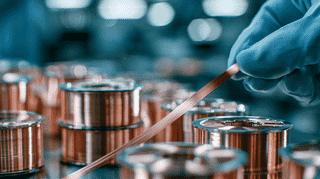
A single fusion reactor needs about 10,000 km of high-temperature superconductor tape, and five years ago almost no one could make that much. Now four Italian physicists at startup Suprema are building Europe's largest tape plant to break in. But the companies that already dominate this wire are mostly Japanese: two of the four global fusion-grade producers are based in Japan. Inside the race over the thin ribbon fusion runs on.
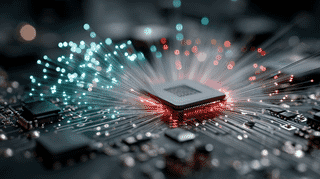
GPU-to-GPU optical interconnects were forecast to arrive around 2033. NVIDIA just pulled them in by five years, putting co-packaged optics into the NVLink switch of its 2028 Feynman generation, and locking in supply with $2 billion investments in each of Lumentum and Coherent. Furukawa Electric is spending 38 billion yen to more than quintuple DFB laser chip capacity; Sumitomo Electric supplies core components for NVIDIA's Quantum-X Photonics switches but was left out of the funding round. Where Japan's optical suppliers stand, and how NTT's IOWN runs on a different clock.
Chinese G.657.A2 optical fiber went from 32 yuan to 240 yuan per fiber-kilometer in a year, a 650% jump. The visible driver is AI data centers; the hidden one is disposable fiber-optic drones on the Ukraine front. China holds 60% of preform capacity, Japan leads on 13,824-core cables, and the US holds the hyperscaler demand.
Japanese fusion startup Helical Fusion announces the construction site for its demonstration device 'Helix HARUKA' Phase 1, while completing critical coil case components with precision manufacturer Ryoki Tool. Explore how Japan's unique helical stellarator approach and the HTS superconductor boom are reshaping the global fusion race.
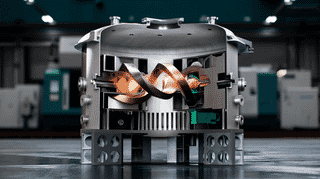
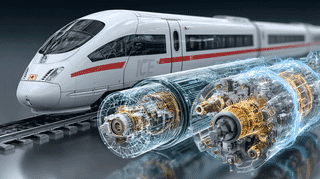
Fusion power, maglev trains, and hydrogen aircraft are driving a resurgence in Japan's high-temperature superconductor (HTS) technology. Fujikura is investing $750M+ to boost wire production up to 8x, Toshiba partners with Airbus on superconducting motors, and Toyota integrates HTS into hydrogen cars. As competition with U.S. giant CFS intensifies, Japan's deep HTS supply chain emerges as a critical global asset.
Fujikura dominates the global market for high-temperature superconducting wire essential to fusion reactors. Combined with Japan's domestic AI-powered autonomous driving, artificial photosynthesis breakthroughs, and the government's Physical AI strategy, these technologies are putting Japan back on the global innovation map.