What if the answer to the world's energy crisis is not another solar farm or wind turbine, but a miniature star? A Japanese startup has taken a real step toward fusion power, using a spiral-shaped approach fundamentally different from the one the rest of the world is betting on. The construction site is locked down, and key hardware is already built.
Helical Fusion Reveals Where It Will Build Its Demonstration Device
On March 13, 2026, Japanese fusion startup Helical Fusion (headquartered in Tokyo, CEO: Takaya Taguchi) announced the construction site for Phase 1 of its final demonstration device, "Helix HARUKA." The location: a dedicated workspace on the campus of the National Institute for Fusion Science (NIFS) in Toki, Gifu Prefecture, roughly in the centre of Japan.
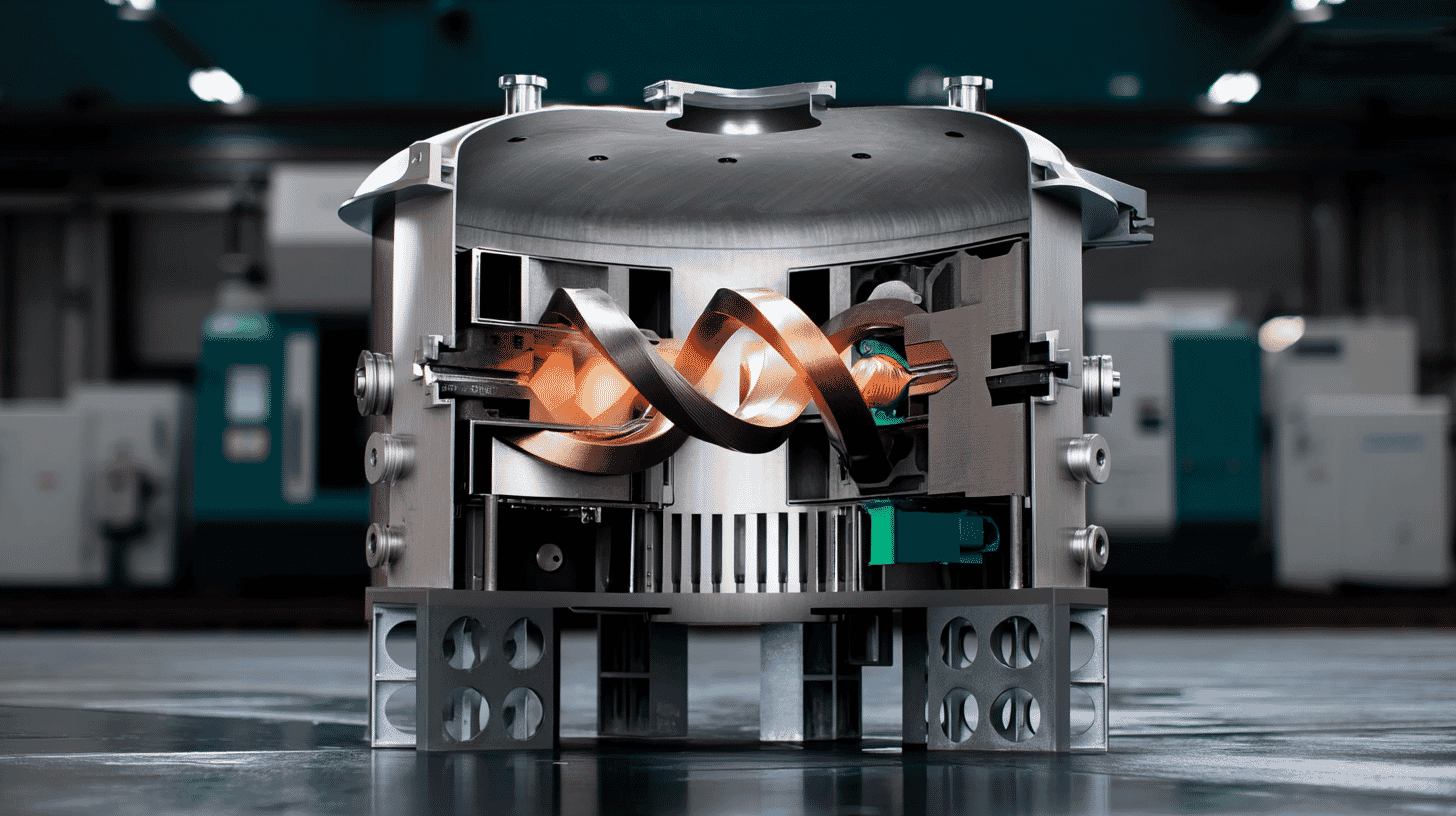
This marks the shift from research to physical construction. Helix HARUKA itself runs in two phases. Phase 1 covers assembling a three-dimensional helical high-temperature superconducting (HTS) magnet and running current through it, with the current-flow test targeted for 2027. Phase 2 integrates additional systems such as the blanket and divertor for a full system demonstration. Beyond that sits the company's first power-generating unit, "Helix KANATA," aiming for practical power generation during the 2030s.
Why NIFS? The institute operates the Large Helical Device (LHD), one of the world's most important fusion research facilities. Through LHD, researchers have sustained plasma for 3,268 seconds (about 54 minutes) and achieved temperatures exceeding 100 million degrees Celsius. Helical Fusion itself was spun out of NIFS in 2021, making this location a natural fit, it allows the team to keep the design-build-test-improve cycle as tight as possible.
Critical Components Built with Japanese Precision Manufacturing
Just days after the site announcement, Helical Fusion revealed another milestone on March 17, 2026. In partnership with Ryoki Tool (Hishikigata Kinzoku Kogyo), a precision metalworking firm based in Ichinomiya, Aichi Prefecture, the company completed manufacturing of key components for Helix HARUKA.
The finished hardware includes all 10 coil case parts that will form the structural foundation for the helical HTS magnet, plus a prototype breeding blanket component. The coil cases will be shipped to the NIFS campus for assembly. The blanket prototype was completed with support from Aichi Prefecture's "Aichi Deeptech Launchpad" program.
Why does the blanket matter so much? In a fusion power plant, the blanket is the system that converts fusion energy into usable heat for power generation. Reaching the stage of actually manufacturing a blanket enclosure is a rare milestone globally, most fusion projects haven't progressed their overall machine design far enough to attempt it.
Ryoki Tool brings decades of experience in large-scale, high-precision metal machining for aerospace applications. Fusion blanket components can be several stories tall while requiring tolerances of just a few millimeters, often using hard-to-machine stainless steel. This is exactly the kind of challenge where Japan's deep manufacturing expertise, its "monozukuri" tradition of meticulous craftsmanship, becomes a strategic advantage.
What Is a Helical Stellarator, and Why Is It Different?
To understand what makes Helical Fusion's approach special, a quick primer on fusion technology is helpful.
Nuclear fusion, the process that powers the Sun, involves forcing lightweight atomic nuclei together to form heavier ones, releasing enormous energy. To do this on Earth, fuel must be heated to around 100 million degrees Celsius, creating a state of matter called plasma. This plasma must then be contained using powerful magnetic fields so it doesn't touch any physical walls.
The dominant approach worldwide is the "tokamak," which uses a combination of external magnetic coils and an electrical current running through the plasma itself. ITER (the massive international project in France) and Commonwealth Fusion Systems (CFS, based in the U.S.) both use this design.
Helical Fusion takes a different path: the "helical stellarator." Instead of relying on plasma current, it uses twisted, spiral-shaped coils to create all the necessary magnetic fields externally. Japan has been developing this approach for roughly 70 years, making it a distinctly Japanese technology.
The key advantage? Steady-state operation. Tokamaks face a fundamental challenge: maintaining the internal plasma current continuously is difficult, and if it suddenly collapses, a phenomenon called "disruption", the reactor shuts down violently. This makes running a tokamak 24/7 as a power plant technically tricky. The helical approach sidesteps this entirely, since the magnetic field is generated purely by external coils.
The trade-off is that helical coils are extremely difficult to manufacture. The complex 3D spiral shape demands extraordinary precision, and that has been the wall for decades. Helical Fusion has been working through it: in October 2025 it demonstrated a proprietary flexible HTS cable, and on February 5, 2026 it announced a custom coil-winding machine developed with Sugino Machine (Namerikawa, Toyama Prefecture). The company calls it the only machine of its kind in the world, and plans to move it to the Helix HARUKA site around mid-2026.
Helical Fusion frames its mission around what it calls the "three requirements for a commercial fusion reactor": continuous operation (24/7/365 reliability), net electricity (producing more power than consumed), and maintainability (components can be serviced). The company argues that the helical stellarator is uniquely positioned to meet all three.
The HTS Superconductor Boom and Fujikura's Expansion
Helical Fusion's progress is happening against the backdrop of a global high-temperature superconductor boom.
Superconducting magnets are essential for confining plasma in fusion reactors. Traditional low-temperature superconductors require cooling to -269°C using expensive liquid helium. High-temperature superconductors (HTS), by contrast, work at around -196°C, achievable with readily available liquid nitrogen. This enables smaller, more powerful, and cheaper magnet systems.
One of the world's leading HTS wire manufacturers is Fujikura, a Japanese company. It had already invested roughly ¥6 billion ($40 million) in fiscal 2024 to expand its Sakura plant in Chiba Prefecture, targeting three to four times its previous capacity by fiscal 2027. In February 2026 it announced a further ¥5.6 billion ($37 million), which should eventually take capacity to six to eight times current levels.
Fujikura's HTS wire is already being shipped to CFS in the U.S. (over 1,000 km of wire in total), and the company has signed a framework agreement with the UK's Industrial Fusion Solutions (UKIFS). Nikkei Crosstech, a leading Japanese technology publication, reported in March 2026 that HTS technology is experiencing a resurgence driven by fusion development, electric aviation, and maglev trains.
For Helical Fusion, Japan's strength in HTS manufacturing is a powerful tailwind. Having world-class superconductor suppliers in its own backyard gives the company a supply chain advantage that few international competitors can match.
Japan's Government Fusion Strategy: Over $650 Million in Budget
Helical Fusion's efforts align closely with Japan's national fusion policy. In June 2025, the Cabinet Office's "Fusion Energy Innovation Strategy" was significantly revised, setting a roadmap that targets power generation demonstrations in the 2030s and explicitly supporting multiple reactor designs including helical, tokamak, and laser approaches. The Takaichi government, which took office that October, has carried the policy forward.
The budget reflects this ambition: fusion energy is among 17 priority investment areas identified by the new administration, with over $650 million (100 billion yen) allocated by the government, including roughly $400 million (60 billion yen) specifically for private-sector projects. A dedicated "Fusion Energy Office" has been established within the Ministry of Economy, Trade and Industry (METI).
Helical Fusion itself has secured up to $13 million (2 billion yen) through the Ministry of Education's SBIR Phase 3 grant for its HTS magnet development, was selected for the J-Startup program, and has raised approximately $40 million (6 billion yen) in cumulative funding including grants and loans.
Where Helical Fusion Fits in the Global Race
The global fusion landscape is heating up fast. CFS aims to achieve Q>1 (producing more energy than consumed) by 2027 and has signed a 200 MW power purchase agreement with Google. China's EAST tokamak set a world record in January 2025 with 1,066 seconds of sustained plasma.
In this race, Helical Fusion positions itself not as a latecomer but as a pioneer of a fundamentally different approach. Tokamak projects may well achieve Q>1 first, that's a physics milestone. But what commercial power plants actually need is steady-state, 24/7 operation. And that's where the helical approach has a structural advantage.
The stakes are enormous. Global population is projected to grow by 1.7 billion by 2050, and the explosion of generative AI is driving unprecedented electricity demand. The fusion power plant and electricity market could reach hundreds of trillions of yen (trillions of dollars) by 2050.
Fusion energy is no longer a distant dream, it's an engineering problem being solved through iteration, collaboration, and industrial discipline. Helical Fusion's approach, combining 70 years of Japanese research heritage with precision manufacturing partnerships and a fundamentally different reactor design, represents one of the most distinctive bets in the global fusion race.
In Japan, the conversation about fusion energy is gaining real momentum. How is your country approaching the energy challenges of the coming decades? What role do you think fusion should play? Share your thoughts, we'd love to hear perspectives from around the world.
References
- https://prtimes.jp/main/html/rd/p/000000059.000089262.html
- https://prtimes.jp/main/html/rd/p/000000060.000089262.html
- https://www.helicalfusion.com/technology
- https://prtimes.jp/main/html/rd/p/000000172.000056990.html
- https://xtech.nikkei.com/atcl/nxt/column/18/03533/030400001/
- https://interestingengineering.com/energy/japan-fusion-construction-demonstration-device









Global Discussion
14 comments