Muon-catalyzed fusion needs no plasma and no 100-million-degree heat, and it is not 1989's discredited cold fusion. A Japan-led team made the first direct observation of muonic-molecule resonance states, closing a long-standing theory-experiment gap.
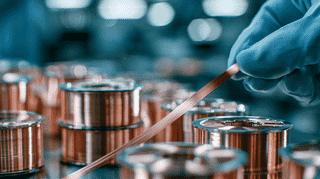
A single fusion reactor needs about 10,000 km of high-temperature superconductor tape, and five years ago almost no one could make that much. Now four Italian physicists at startup Suprema are building Europe's largest tape plant to break in. But the companies that already dominate this wire are mostly Japanese: two of the four global fusion-grade producers are based in Japan. Inside the race over the thin ribbon fusion runs on.
In spring 2026, Honda wrote off roughly $10 billion in EV development. That same season, US ITER closed out the supply of ITER's 1,000-tonne central solenoid, the UK's Pulsar Fusion ignited the first plasma inside a fusion rocket engine, and Kyoto Fusioneering pushed on with its integrated fusion fuel cycle test facility in Canada. Stack the candidates in watt-hours per kilo and the picture is brutal: nothing beats gasoline in a form you can put in a car, except one category up, where fusion sits at 7.8 million times the density. Win the bet and you unlock effectively free electricity, working climate reversal, Mars in two months, lunar helium-3, and the solar system as a shipping route. Honda's mistake alone covers nearly 40 percent of ITER's budget. Maybe it's time to stop arguing about EVs and just go build the sun.
Japan's QST and NTT achieved a world-first: real-time communication under 100 microseconds for fusion plasma control. Learn how this JT-60SA breakthrough connects to IOWN and ITER.
Japanese fusion startup Helical Fusion announces the construction site for its demonstration device 'Helix HARUKA' Phase 1, while completing critical coil case components with precision manufacturer Ryoki Tool. Explore how Japan's unique helical stellarator approach and the HTS superconductor boom are reshaping the global fusion race.
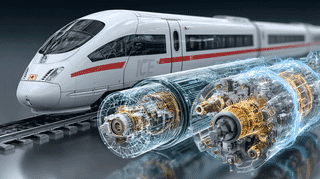
Fusion power, maglev trains, and hydrogen aircraft are driving a resurgence in Japan's high-temperature superconductor (HTS) technology. Fujikura is investing $750M+ to boost wire production up to 8x, Toshiba partners with Airbus on superconducting motors, and Toyota integrates HTS into hydrogen cars. As competition with U.S. giant CFS intensifies, Japan's deep HTS supply chain emerges as a critical global asset.
Japanese fusion startup Helical Fusion has announced that Phase 1 of its final demonstration device Helix HARUKA will be built at the National Institute for Fusion Science (NIFS). With energization tests planned for 2027, the company is betting on Japan's unique helical approach to beat global rivals including Commonwealth Fusion Systems and TAE Technologies in the race to commercial fusion power.
A field-by-field breakdown of the 17 strategic sectors PM Takaichi named in her February 20, 2026 policy speech: AI and semiconductors, fusion, content, defense and the rest, with current standing, plans and key players, plus the public-private investment roadmap released in June 2026 that runs to over 370 trillion yen through fiscal 2040.
Japan officially targets fusion power demonstration in the 2030s as part of its national strategy. With a new Cabinet Office task force, 80+ companies in the J-Fusion consortium, and decades of ITER expertise, Japan is accelerating its bid to lead the global fusion race against the US, China, and UK.
Japan's Sumitomo Corporation is pioneering a unique approach to nuclear fusion by partnering with three startups using different technologies—TAE Technologies, Tokamak Energy, and SHINE Technologies. Rather than waiting for fusion power plants, the trading giant is already monetizing derivative technologies in cancer treatment, battery storage, and industrial inspection, creating a new business model for the $23 billion fusion industry.
Japanese fusion startup Helical Fusion and veteran manufacturer Sugino Machine have jointly developed the world's only dedicated machine for producing high-temperature superconducting coils. Standing 6 meters tall and weighing 12 tons, this device is essential for building the "Helix HARUKA" demonstration reactor, bringing Japan closer to achieving the world's first commercial fusion power in the 2030s.
Fujikura dominates the global market for high-temperature superconducting wire essential to fusion reactors. Combined with Japan's domestic AI-powered autonomous driving, artificial photosynthesis breakthroughs, and the government's Physical AI strategy, these technologies are putting Japan back on the global innovation map.