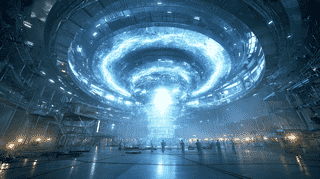
Japan officially targets fusion power demonstration in the 2030s as part of its national strategy. With a new Cabinet Office task force, 80+ companies in the J-Fusion consortium, and decades of ITER expertise, Japan is accelerating its bid to lead the global fusion race against the US, China, and UK.
A joint research team from the University of Yamanashi, Waseda University, and Shinshu University has developed a completely fluorine-free electrolyte membrane for polymer electrolyte fuel cells. Achieving over 100,000 durability cycles—1.3 times that of conventional fluorine-based membranes—this PFAS-free breakthrough could accelerate the global hydrogen economy while addressing environmental regulations.
Japan's Sumitomo Corporation is pioneering a unique approach to nuclear fusion by partnering with three startups using different technologies—TAE Technologies, Tokamak Energy, and SHINE Technologies. Rather than waiting for fusion power plants, the trading giant is already monetizing derivative technologies in cancer treatment, battery storage, and industrial inspection, creating a new business model for the $23 billion fusion industry.
The explosive growth of AI data centers is triggering a global power crisis. Tech giants like Google, Microsoft, and Amazon are making unprecedented investments in nuclear restarts and direct utility partnerships. By 2026, data center power consumption could rival Japan's entire annual electricity use. Explore how AI is reshaping the world's energy landscape, including Japan's unique "Watt-Bit Integration" strategy.
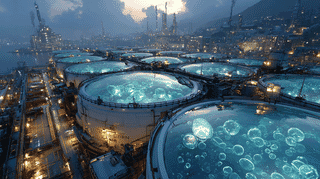
Four massive ammonia tanks—each 40 meters tall and 60 meters wide—are under construction at Japan's Hekinan Power Station. The world's first commercial-scale 20% ammonia co-firing begins in 2029, aiming to eventually replace coal entirely. Here's why it's both groundbreaking and controversial.
Mizuno and Kaneka's co-developed biodegradable artificial turf "Re Green Grass 9" has been installed at Vantelin Dome Nagoya — a world first for professional sports facilities. Using Kaneka's "Green Planet" biopolymer that decomposes even in seawater, this innovation tackles the growing microplastics crisis in sports infrastructure.
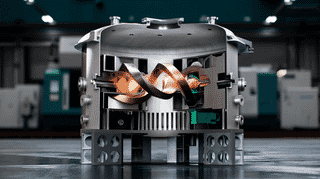
Japanese fusion startup Helical Fusion and veteran manufacturer Sugino Machine have jointly developed the world's only dedicated machine for producing high-temperature superconducting coils. Standing 6 meters tall and weighing 12 tons, this device is essential for building the "Helix HARUKA" demonstration reactor, bringing Japan closer to achieving the world's first commercial fusion power in the 2030s.
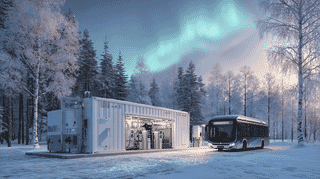
Vema Hydrogen completes the world's first Engineered Mineral Hydrogen pilot wells in Quebec. With potential costs of $0.50/kg—a 90% reduction—and candidate sites identified in Japan's Tohoku and Kyushu regions, this technology could reshape Japan's hydrogen society vision and energy independence.
Fujikura dominates the global market for high-temperature superconducting wire essential to fusion reactors. Combined with Japan's domestic AI-powered autonomous driving, artificial photosynthesis breakthroughs, and the government's Physical AI strategy, these technologies are putting Japan back on the global innovation map.
Shimizu Corporation's world-class SEP vessel "BLUE WIND" has arrived in Maizuru, Kyoto. Learn about this massive 142m construction ship with 2,500-ton crane capacity and Japan's offshore wind power development projects.
Singapore startup Flint begins mass production of biodegradable paper batteries. Made from cellulose, decomposing in 6 weeks, with no lithium or cobalt. Pilot programs with Logitech and Amazon underway, AA/AAA formats expected in 2026. Could this be the solution to battery waste?