Energy & Environmental Technology

58 Articles in this topic
Technology

Gasoline Is Just Too Damn Strong. After 167 Years, Let's All Just Bet on Fusion.

In spring 2026, Honda wrote off roughly $10 billion in EV development. That same season, US ITER closed out the supply of ITER's 1,000-tonne central solenoid, the UK's Pulsar Fusion ignited the first plasma inside a fusion rocket engine, and Kyoto Fusioneering pushed on with its integrated fusion fuel cycle test facility in Canada. Stack the candidates in watt-hours per kilo and the picture is brutal: nothing beats gasoline in a form you can put in a car, except one category up, where fusion sits at 7.8 million times the density. Win the bet and you unlock effectively free electricity, working climate reversal, Mars in two months, lunar helium-3, and the solar system as a shipping route. Honda's mistake alone covers nearly 40 percent of ITER's budget. Maybe it's time to stop arguing about EVs and just go build the sun.


All58 stories in Energy & Environmental Technology

Newest first
Technology

Algae Biofuel: Japan's 14-Year Reality Check on the Dream of Becoming an Oil Producer

In 2012, the Sankei Shimbun reported a biofuel revolution centered on Enomoto algae, a hyper-growth Botryococcus bred by Kobe University spin-off G&GT under Professor Taira Enomoto. Heavy-industry giant IHI joined biotech venture Neo-Morgan Laboratory to commercialize it, with then-CEO Tomohiro Fujita declaring he wanted to cut the price to one-tenth within ten years. Fourteen years later, the joint venture has dissolved, but the algae fueled the world's first flight on SAF meeting ASTM D7566 Annex 7, and a Japanese-led 5-hectare facility in Malaysia is now the largest of its kind on Earth. Did the promise come true, or is the dream over?

Technology

Plastic-to-Ammonia Goes 100%: Japan's Resonac to Drop Natural Gas by 2030 in World-First Circular Process

Japan's Resonac (formerly Showa Denko) will switch its Kawasaki ammonia plant to 100% waste-plastic-derived hydrogen by April 2030, ending its reliance on natural gas reforming. The world's only long-running commercial gasification chemical recycling plant processes 70,000 tons of plastic waste annually to produce 120,000 tons of ammonia, with 80%+ CO2 reduction. Now backed by Japan's first CCfD-style price-gap subsidy. A circular alternative to urban mining.

Technology

Watt-Bit Integration: Japan's Answer to the AI-Era Data Center Power Crisis

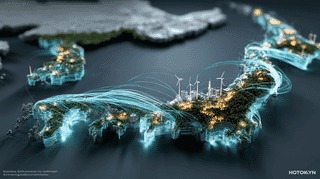
By fiscal 2034, new data centers and semiconductor fabs will add peak electricity demand equal to seven nuclear reactors in Japan, with roughly 60 percent of capacity clustered around Tokyo and the connection queue backed up. The government's answer is Watt-Bit Integration. Set against Virginia's pricing fix, Ireland's renewables mandate, and Singapore's hard area cap, Japan's regional-distribution-plus-decarbonization bet comes into focus.

Technology

Japan's Hydrogen Arterial Plan: METI's $95B Bet on a Hydrogen Society by 2040, Backed by Toyota's 2029 Mass Production

An in-depth look at Japan's Hydrogen Arterial Plan (Suiso Daidomyaku Koso), unveiled by METI in April 2026. Six priority regions connected by arterial highways will receive concentrated investment of 15 trillion yen by 2040, with Toyota and Chiyoda starting mass production of electrolyzers in 2029. How Japan's strategy compares with the US IRA and the EU Hydrogen Bank.

Technology

MOF Revolution: Nobel Laureate Susumu Kitagawa's Vision to Turn Air Into a Resource Reshapes Carbon Capture

Susumu Kitagawa of Kyoto University, joint winner of the 2025 Nobel Prize in Chemistry, has long advocated turning air itself into a resource through metal-organic frameworks (MOFs). His porous crystals can sort and capture CO2, water vapor and other molecules, putting Japan in direct conversation with players like Switzerland's Climeworks in the rapidly evolving direct-air-capture industry. Here is how a basic-science breakthrough from Kyoto could rewrite the economics of decarbonization.

Technology

Solar-Powered Floating Data Center: Yokohama Starts World-First 100% Renewable AI Infrastructure Experiment

On March 25, 2026, five partners, NYK Line, NTT Facilities, Eurus Energy, MUFG Bank, and the City of Yokohama, launched a world-first floating data center powered entirely by solar panels and batteries at Yokohama Port. How does this off-grid demonstration differ from the MOL-Hitachi used-ship concept, and what does it say about Japan's answer to the AI power crisis?

Technology

Wireless EV Charging While Driving: DENSO and University of Tokyo Launch 10-Year Plan to Redefine Mobility

DENSO and the University of Tokyo signed a 10-year partnership starting April 2026 centered on Dynamic Wireless Power Transfer (DWPT). Learn how charging EVs while driving could shrink batteries, cut costs, and reshape energy infrastructure — plus how Japan's approach compares to Sweden, Israel, and the US.