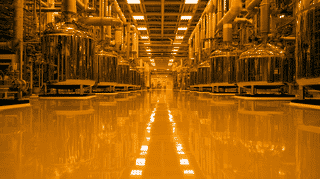
TOK has finished a 23-billion-yen photoresist building in Koriyama. Its 2023 and 2026 releases mention neither AI nor capacity; its earnings documents show how demand and the start date shifted in between.
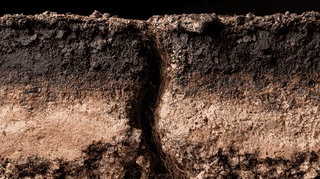
Glassy radioactive particles called cesium balls were thought to stay in Fukushima's topsoil. A Kyoto University team found them inside 39 of 52 earthworms, and one 15.5 centimeters down.
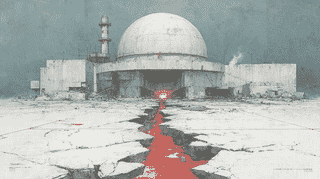
Hamaoka nuclear plant sits right atop the Nankai Trough megaquake zone. Its operator, Chubu Electric, shrank the key seismic-safety figure the plant is built against, and kept altering data even after regulators opened a probe, rewriting 69 of 225 datasets. On July 1 the NRA called it fabrication and a cover-up. The real test isn't the reactor's engineering; it's whether Japan's post-Fukushima watchdog has teeth.
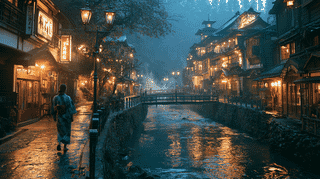
On June 19, 2026, Iizaka Onsen in Fukushima launched a town-wide all-inclusive plan: one ¥25,000 passport for 16 inns, 13 baths, and 25 shops, with local sake, disc gyoza, and day-baths on the house. A look at a shrinking spa town's bet on a whole-district tourism model.
METI has unveiled Japan's first post-Fukushima numeric target for replacing nuclear reactors: up to 5 by the 2040s, 14 by the 2050s. Behind the decarbonization, energy-security and AI-demand drivers lies a harder question: regulatory capture, the Nuclear Village, and whether the regulator can be trusted.
The world's first factory built to mass-produce diamond semiconductors has opened in Okuma, the Fukushima town that hosts the wrecked Daiichi nuclear plant. How a material researchers chased for 40 years found its purpose in the place that needed it most.